
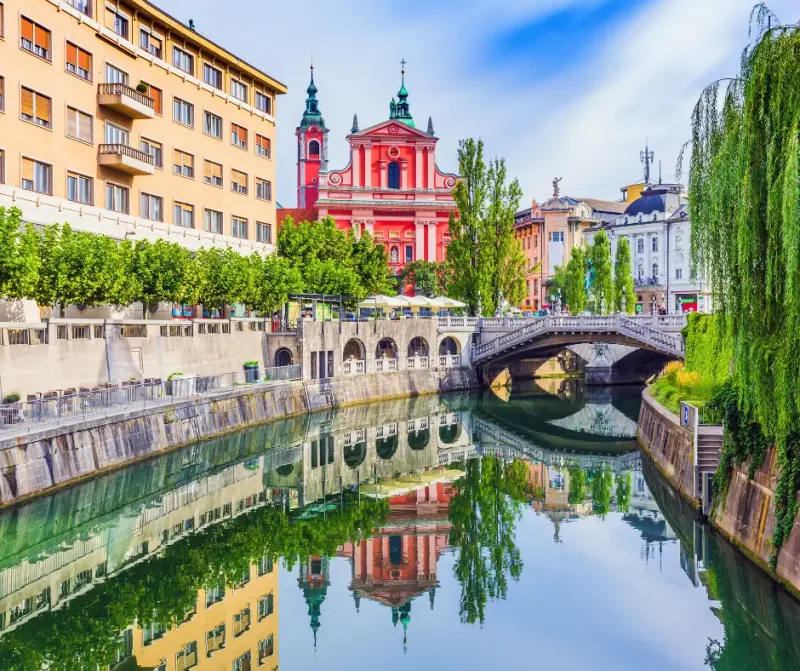
Ljubljana might be the most livable small capital in Europe. The entire old town is pedestrianized along the river, the fourth safest country in the world surrounds it, a dragon guards the bridge, and everything a nomad needs sits within a 20-minute walk.
And since November 2025, Slovenia has something most of Europe still doesn't: an actual digital nomad residence permit. This guide covers how it works, where to stay and work, what a month really costs in 2026, and where to find your people.
🌱 Travel health insurance for Ljubljana
🎯 At a glance
| 🛂 Visa | EU citizens: free movement. Non EU: 90 in 180 days Schengen, or the new nomad permit |
| 🪪 Nomad permit | Live since Nov 2025: 1 year, income about €3,400 per month required, family included |
| 💶 Monthly budget | €1,800 to €2,400 for a solo nomad, one of the calmer price tags among EU capitals |
| 📅 Best time | May to June and September to early October |
| 🧑🏻💻 Top areas | Center, Trnovo, Šiška, Bežigrad |
| 📶 Internet | 120+ Mbps median fixed broadband, fiber standard |
| 🛡️ Safety | 4th safest country in the world (Global Peace Index 2026) |
🇸🇮 Entry requirements for Slovenia
- EU and EEA citizens: Free movement. If you stay longer than 3 months, register your residence at any administrative unit (upravna enota).
- Non-EU citizens: Slovenia is in Schengen, so the standard 90 days in any 180-day window applies for visa-free nationalities.
- Health insurance: Non-EU visitors need travel health insurance. EU visitors are covered for emergencies via the EHIC card at public providers.
Does Slovenia have a digital nomad visa?
Yes, and it's new. Since November 21, 2025, third-country nationals can get a dedicated digital nomad temporary residence permit. The verified rules from the official government source:
- You must work remotely for an employer or clients based outside Slovenia, or run your own foreign-registered business, entirely online. You are not entering the Slovenian labor market, so no work permit is needed.
- The permit runs for up to 1 year and cannot be extended. You can apply again 6 months after it expires, and you can switch to another permit type (like employment or self-employment) while it's valid.
- Income requirement: funds of at least twice the average Slovenian monthly net salary, which works out to roughly €3,400 per month in 2026. The exact figure moves with official salary statistics, so check the current number when applying.
- Family: unusually generous, immediate family reunification with no waiting period.
- Where to apply: at any Slovenian embassy or consulate abroad, or if you're already legally in Slovenia, at any administrative unit in the country.
- Documents: passport, health insurance covering at least emergency care in Slovenia (this is where travel health insurance like Genki Traveler fits), and bank statements showing the income, typically the last 6 months.
✈️ How to get to Ljubljana
- Plane: Jože Pučnik Airport (LJU) is 26 km from town. Public bus 28 runs to the main station in about 50 minutes for €4.10, GoOpti shared shuttles cost €12 to €15 booked ahead, a taxi €35 to €50.
- Overland: Ljubljana sits between Venice, Vienna, and Zagreb, all reachable by direct bus or train in 2 to 4 hours, which makes it a natural stop on any European route. FlixBus and rail connections are frequent.
💰 How much does it cost to stay in Ljubljana?
| 🏛️ Center | 🌳 Trnovo / Šiška / Bežigrad | |
|---|---|---|
| Rent (1BR, month) | €750–1,300 | €650–920 |
| Coworking | €120–200 | €120–200 |
| Food and going out | €450–600 | €400–550 |
| Transport | €0–37 (walkable, bikes almost free) | €37 |
| 💶 Total | €1,900–2,400 | €1,800–2,200 |
Estimates for a solo nomad on a monthly furnished rental with a coworking membership, based on mid 2026 data. Short-term and Airbnb stays add 20 to 40 percent. Ljubljana is not cheap in the Balkan sense, but it comfortably undercuts Vienna, Munich, and Milan.
🏘 Where to stay in Ljubljana
- Center: The car-free old town and its surroundings. Everything within walking distance, riverside cafe life at the door, and the highest rents. For stays of a month or two, it's worth it.
- Trnovo: The charming near south side along the river, old houses, the Špica riverbank, and a 15-minute walk to the center. The favorite for those who want quiet while staying close.
- Šiška: The local value pick northwest of the center, residential, cheaper, with its own cultural anchor in Kino Šiška (concerts, exhibitions).
- Bežigrad: North of the center near the train and bus stations, practical, well connected, and home to Aurora Coworking.
🧑🏻💻 Where to work from in Ljubljana
Coworking spaces
- Impact Hub Ljubljana: The flagship community space on Slovenska cesta in the center. Day pass €29, part-time hot desk €197 per month (€174 with a 3-month commitment), prices plus VAT. Free monthly community meetups.
- Aurora Coworking: Community-run space in Bežigrad near the stations, flex membership €120 per month plus VAT with 24/7 access, meeting rooms included. Runs its own event meetup group.
- Regus: The corporate option with several locations and desks from about €199 per month on longer-term commitments.
- Pisarna Coworking: The budget pick, hot desks from around €69 per month with 24/7 access.
Coffee shops
- Kavarna Rog (riverside, at the Center Rog creative hub): Open late, full menu, explicitly laptop-friendly.
- ČinČin (by Tivoli Park): Repeatedly rated the best work wifi in town, plenty of outlets, quiet daytimes.
- Lolita (Cankarjevo nabrežje, near the Triple Bridge): Bakery cafe with a steady remote worker crowd.
- Špica Caffe (Trnovo riverbank): Terrace working with river views, better for light sessions than call marathons.
- Culture note: with cappuccinos at €2.60, cafe working is genuinely viable here, laptops are tolerated almost everywhere as long as you keep ordering.
🫂 Where to find community in Ljubljana
- Ljubljana International: The city's social engine, over 1,500 members, a weekly Thursday international meetup at 19:00, a dedicated digital nomad and freelancer meetup series, and Saturday language exchange socials. If you go to one thing in your first week, go to the Thursday meetup.
- Facebook groups: Expats in Slovenia and Expats & Foreigners in Slovenia are the main channels for housing leads and daily questions.
- InterNations Ljubljana: Regular official events, the strongest option for the expat and professional crowd.
- Coworking events: Impact Hub's free monthly meetups and Aurora's own event calendar make both spaces community entry points, not just desks.
🚲 How to get around
- Walk: The core is pedestrianized, and everything relevant fits in a 20-minute radius.
- BicikeLJ bike share: The best deal in European transport, €3 per year, and the first hour of every ride is free. Most nomads never pay more than the €3.
- Bus: The LPP network runs on the Urbana card (€2), a ride costs €1.50 with 90 minutes of transfers, a monthly pass €37.
🎖 Must see and day trips
- Lake Bled: The postcard. Buses every 30 minutes, about 1 hour, €7 to €13 one way. Go on a weekday, swim in summer.
- Triglav National Park and Lake Bohinj: The wilder, quieter alternative to Bled, 1.5 hours away. Summiting Triglav is a two-day hut trip and a Slovenian rite of passage.
- Piran and the coast: Venetian old town on the Adriatic, under 2 hours by bus from about €10.
- Postojna Cave and Predjama Castle: The famous cave system an hour away, tickets around €30.
- Ljubljana itself: The castle above town, the Central Market, Tivoli Park, and Metelkova's alternative art quarter.
💡 Good to know
- Internet: Median fixed broadband runs 120+ Mbps and fiber is standard, more than enough for any call stack.
- SIM card: Telekom Slovenije sells a €2 SIM with 100 GB packages for about €10 per month, A1 and Telemach compete closely, and all support eSIM.
- Currency: The euro, no conversion mental math for European nomads.
- Language: Slovene, but English proficiency is among the best in Europe. Daily life works in English without friction.
- Tap water: Excellent, unchlorinated, spring-fed, with free public drinking fountains around town.
- Climate: Continental, warm summers (25 to 32°C) with afternoon thunderstorms, grey winters around 0°C, and a reputation as one of Europe's rainiest capitals, pack accordingly, especially in October and November.
- Sunday closures: Most shops close on Sundays, plan groceries ahead, restaurants and cafes stay open.
🚧 What to avoid
- Bike theft: The one crime that actually happens. Lock properly, especially overnight.
- Old town pickpockets: Rare by European standards but present in peak tourist season.
- Underestimating the rain: October and November can be relentlessly wet. This is a spring and early autumn city at its best.
- Bled on summer weekends: Go midweek, the difference is dramatic.
🚴🏻♀️ How to stay healthy
Stay active
- Tivoli Park and Rožnik hill: The city's daily running and walking terrain, starting a few minutes from the center.
- The river paths: Flat, green running and cycling along the Ljubljanica.
- The Alps as a weekend gym: Hiking in Triglav National Park, and skiing at Krvavec, 30 minutes from the airport, in winter.
Healthcare
Slovenia runs a solid public health system, and UKC Ljubljana, the university medical center, is the country's flagship hospital for anything serious. EU visitors are covered for emergencies via EHIC at public providers. Non-EU visitors need travel health insurance, which is also a requirement of the nomad permit, exactly what Genki Traveler is built for.
⚓️ Long stay
- The nomad permit: One year, non-renewable, with a 6-month gap before reapplying (full details in the visa section above). You can switch to another permit type, employment, self-employment, or study, while it's valid.
- EU citizens: Register at an administrative unit after 3 months and stay as long as you like.
- The tax line, important: Spending more than 183 days per year in Slovenia generally makes you a tax resident, with a progressive income tax rate of 16 to 50 percent on worldwide income (60+ double tax treaties apply). A nomad staying the full year on the permit will usually cross that line, so get tax advice before committing to the full 12 months. The permit itself does not automatically create tax residency, days do.
- Health insurance: Genki Traveler covers the permit's insurance requirement for stays up to a year. If Slovenia becomes a longer chapter without a home system behind you, look at Genki Native.
❓ Frequently asked questions
Does Slovenia have a digital nomad visa?
Yes, since November 21, 2025. It's a 1-year temporary residence permit for non-EU remote workers with an income of roughly twice the Slovenian average salary (about €3,400 per month in 2026), applied for at Slovenian consulates or at administrative units in the country. It cannot be extended, but you can reapply after 6 months away.
How much does a month in Ljubljana cost?
€1,800 to €2,400 for a solo nomad with a furnished one bedroom, a coworking membership, and regular eating out. Cheaper than Vienna or Munich, pricier than the Balkans.
Is Ljubljana safe?
About as safe as cities get: Slovenia ranks 4th in the world on the 2026 Global Peace Index, and the US advisory is at its lowest level. Bike theft is the realistic worst case.
When is the best time to be in Ljubljana?
May to June and September to early October. Summer is lively and warm, winter is grey, and late autumn is very rainy.
 Sarah Kuhlemann
 Sarah Kuhlemann
 Sarah Kuhlemann