
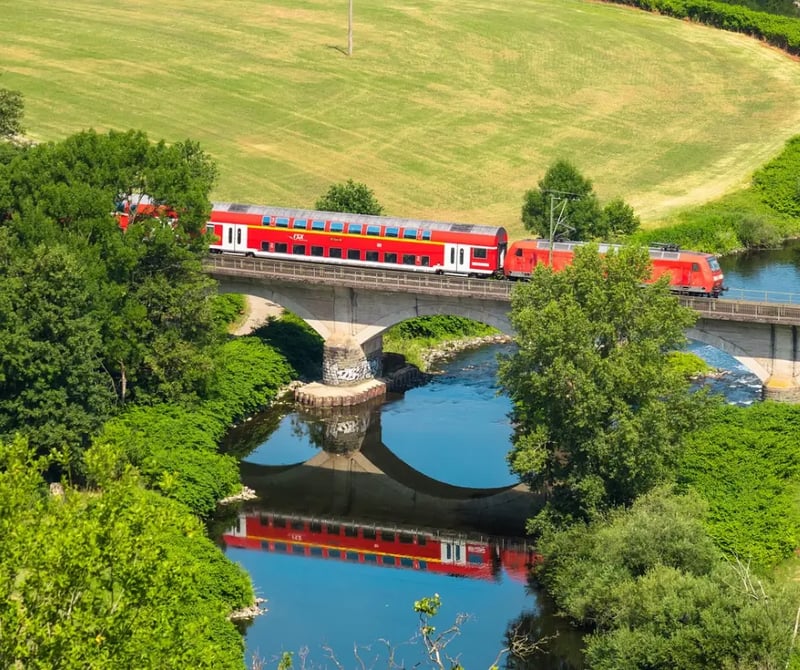
Prague to Sofia is one of the great overland routes through Central and Eastern Europe: five capitals and cities, four countries, and a landscape that shifts from Bohemian towns to the Hungarian plain, the Banat, the Danube and the Balkan mountains. It is also a route where the rail map has changed a lot in recent years. The northern half still runs on comfortable direct trains, but south of Timișoara the trains stop at the border and the buses take over.
This guide covers how each leg works in 2026, what it costs and how long it takes, and what to know about living and working in Prague, Budapest, Timișoara, Belgrade and Sofia along the way.
🌱 Health insurance for Europe
Summary
🎯 The route at a glance
| 🚆 Route | Prague, Budapest, Timișoara, Belgrade, Sofia |
| ⏱ Travel time | About 22 to 25 hours in total, split over four travel days |
| 🚌 Train or bus | Trains from Prague to Timișoara, buses from Timișoara to Belgrade and from Belgrade to Sofia |
| 🎟 Tickets | From around €100 for all four legs when booked early |
| 🎫 Interrail | Covers the two train legs, not the buses |
| 🌤 Best months | April to June and September to October |
| 💶 Monthly budget | From about €950 in Timișoara to €2,300 in Prague |
| 🆕 Coming soon | Direct trains Budapest to Belgrade in about 3h15, expected from December 2026 |
🚆 How the route works in 2026
The northern half is easy. Direct EuroCity, railjet and RegioJet trains link Prague and Budapest via Brno and Bratislava in about 6.5 to 7 hours, and direct InterCity trains run from Budapest to Timișoara via Arad.
South of Timișoara, the rail network breaks. Trains between Timișoara and Belgrade were discontinued in 2017 and now stop at the border, so the practical way to Belgrade is a 3-hour FlixBus. Between Belgrade and Sofia there has been no direct train since the pandemic, and in 2026 even the cross-border train from Dimitrovgrad to Sofia has stopped. Take a direct bus, or a train from Belgrade to Niš followed by a bus to Sofia.
A big change is coming: the rebuilt Budapest–Belgrade railway will link the two capitals in about 3 hours 15 minutes. After repeated delays, international passenger trains are now expected from December 2026. Once they run, you can travel Budapest to Belgrade by train and visit Timișoara as a detour.
Booking tips: book Prague to Budapest early with České dráhy or RegioJet for the cheapest fares. The Budapest to Timișoara train is sold by the Hungarian and Romanian railways. Buses are bookable on FlixBus and at the bus stations. Interrail and Eurail passes cover the trains but not the buses.
🗺 The route leg by leg
| Leg | How | Time | Price |
|---|---|---|---|
| Prague to Budapest | Direct train (EuroCity, railjet or RegioJet) | 6.5–7h | From about €20 booked early |
| Budapest to Timișoara | Direct InterCity train via Arad | 5.5–6.5h | From about €30 |
| Timișoara to Belgrade | FlixBus (no trains since 2017) | About 3h | From about €12–18 |
| Belgrade to Sofia | Direct bus, or train to Niš + bus | 6.5–8.5h | From about €40 |
| Whole route | Two trains, two buses | About 22–25h | From about €100 |
The route works best slowly, with a week or more in each city. Here is what to know about each stop.
Prague
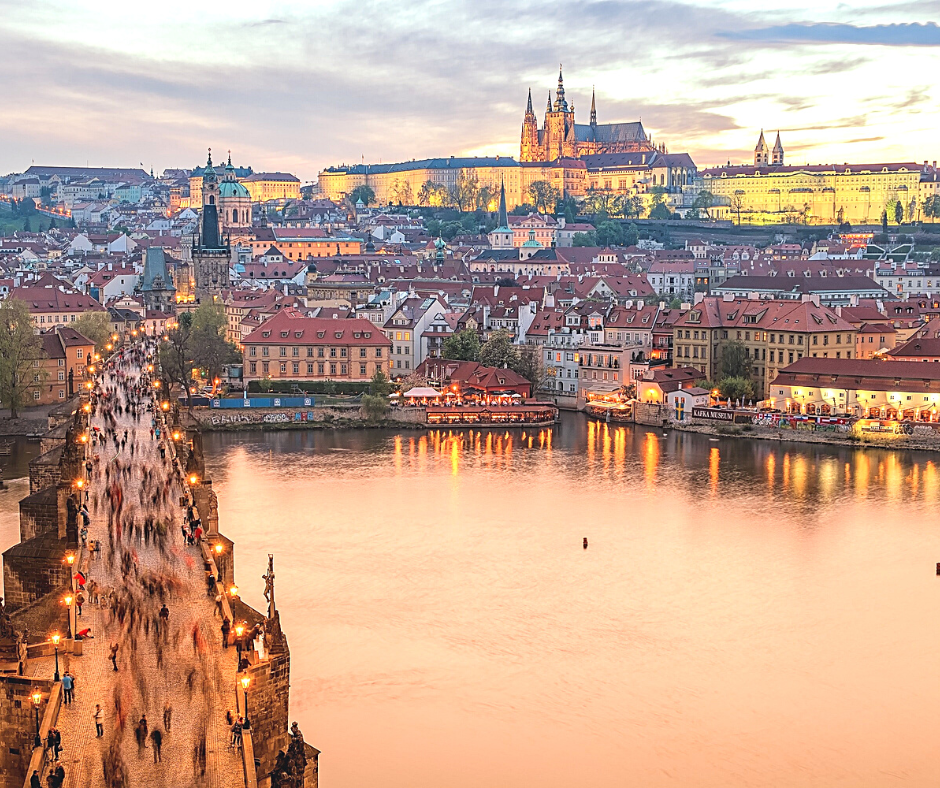
- In a nutshell: Gothic towers, cobblestone streets and a lively cultural scene, plus reliable public transport, plenty of coworking and laptop-friendly cafés. Spring and autumn are the best seasons; summer brings festivals and crowds.
- Arriving: From Václav Havel Airport, the Airport Express bus runs to the main station, or take a city bus to the metro on a regular 90-minute ticket (50 CZK, about €2).
- How to get around: Metro, trams and buses share one ticket system. A 30-minute ticket costs 39 CZK, a 90-minute ticket 50 CZK and a monthly pass 550 CZK, see the DPP fare list. Tickets are cheaper in the official app. Uber, Bolt and Liftago all operate.
- Where to stay: Old Town or Lesser Town (central, walking distance), or Vinohrady and Žižkov for local experience and vibes.
- Where to work: Work Lounge, Locus Workspace or Node5 in Smíchov.
- Laptop-friendly cafés: National Library of Technology for a quiet and relaxed atmosphere, Cafedu, or Místo with fresh blends and vegan options.
- Where to find community: Prague Digital Nomads.
- Train to Budapest: Direct trains leave Praha hlavní nádraží several times a day and reach Budapest-Keleti in about 6.5 to 7 hours via Brno and Bratislava, from about €20 when booked early.
 Sarah Kuhlemann
Budapest
- In a nutshell: Hungary's capital combines grand architecture, thermal baths, a thriving tech scene and some of the best café culture in the region. Spring (April to June) and autumn (September to October) are the most pleasant seasons for the Parliament, Buda Castle and the Danube banks.
- Arriving: From the airport, the 100E shuttle bus runs to the center for 2,500 Ft.
- How to get around: Metro, trams and buses cover the city. A single ticket costs 500 Ft and a monthly Budapest pass 8,950 Ft (about €23).
- Where to stay: District V (Belváros-Lipótváros) is very central, and District VII (Jewish Quarter) is for youthful and artsy vibes.
- Where to work: Muse, a community office for creative freelancers, or Loffice.
- Laptop-friendly cafés: Kino Cafe, Magvető Café, Massolit Budapest Books and Café.
- Where to find community: Budapest Digital Nomads.
- Train to Timișoara: Direct InterCity trains run from Budapest-Keleti to Timișoara Nord via Arad in about 5.5 to 6.5 hours, from about €30.
Sarah Kuhlemann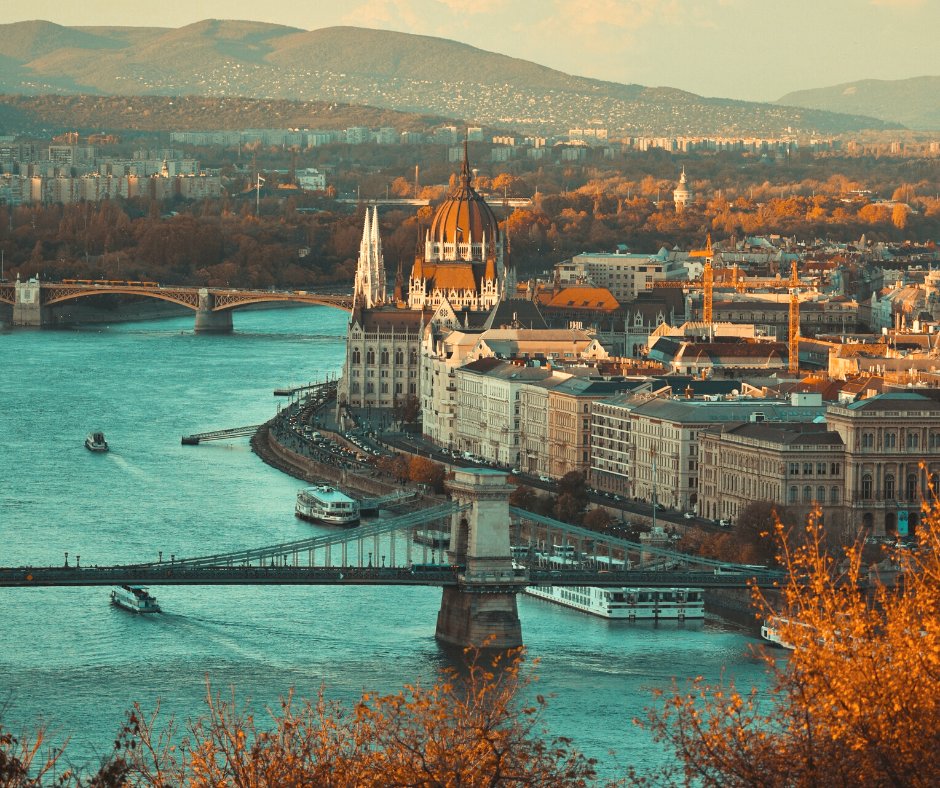
Timișoara
- In a nutshell: Known as the "City of Flowers" and European Capital of Culture in 2023, Timișoara has elegant squares, Secession architecture, the Orthodox Cathedral and a relaxed, affordable pace. It is the best-value stop on the route.
- How to get around: Trams and buses cover the city, and taxis, Uber and Bolt are available. For longer stays, get a reloadable travel card from STPT, or simply tap your contactless bank card on board.
- Where to stay: The areas around Union Square (Piața Unirii) and Victory Square (Piața Victoriei) are the most popular.
- Where to work: Cowork Timișoara or DevPlant, which is not only for developers.
- Laptop-friendly cafés: Coffeerize Botanic, full of plants and good coffee, busy at weekends.
- Where to find community: Expats in Timisoara.
- Bus to Belgrade: There have been no trains across this border since 2017. FlixBus runs twice a day to Belgrade in about 3 hours, from about €12 to €18.
Sarah Kuhlemann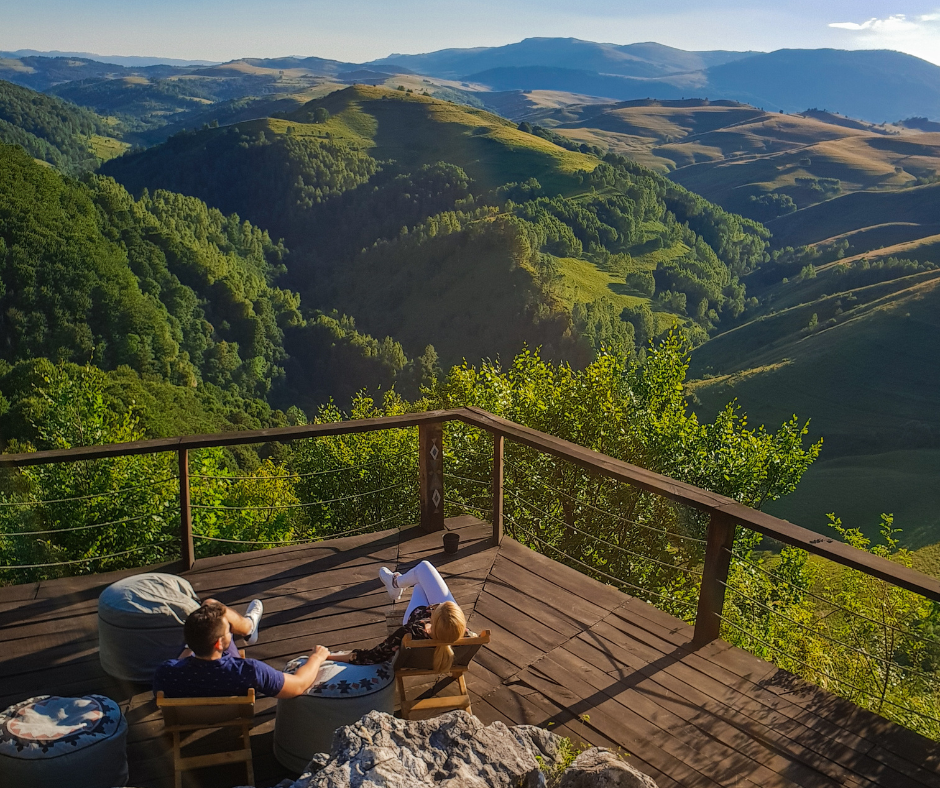
Belgrade
- In a nutshell: One of Europe's oldest cities, at the meeting of the Sava and the Danube, with a famous nightlife that includes floating river clubs (splavovi). Spring and autumn are the best times to visit. Serbia is outside the EU and Schengen, so days here do not count toward your Schengen clock.
- Arriving: Long-distance buses now use the new bus station in New Belgrade, as the old central bus station closed in 2024.
- How to get around: Public transport is free for everyone since January 2025, covering buses, trams and trolleybuses. Uber, Bolt and the local app CarGo are also available.
- Where to stay: Dorćol (very central), Savamala (vibrant, artsy), Vračar (residential, relaxed). Expect €700 to €1,000 a month for a furnished one-bedroom on a short stay.
- Where to work: Impact Hub, or Open Hub, where 10 day passes cost €100 and a dedicated desk €220 a month plus VAT.
- Laptop-friendly cafés: Kafeterija BW, Koffein with a work area on the mezzanine, or Smokvica with its shaded garden.
- Bus to Sofia: There is no direct train in 2026. Direct buses take about 6.5 to 8.5 hours from about €40, or take the train to Niš and continue by bus to Sofia, about 4 hours.
Sofia
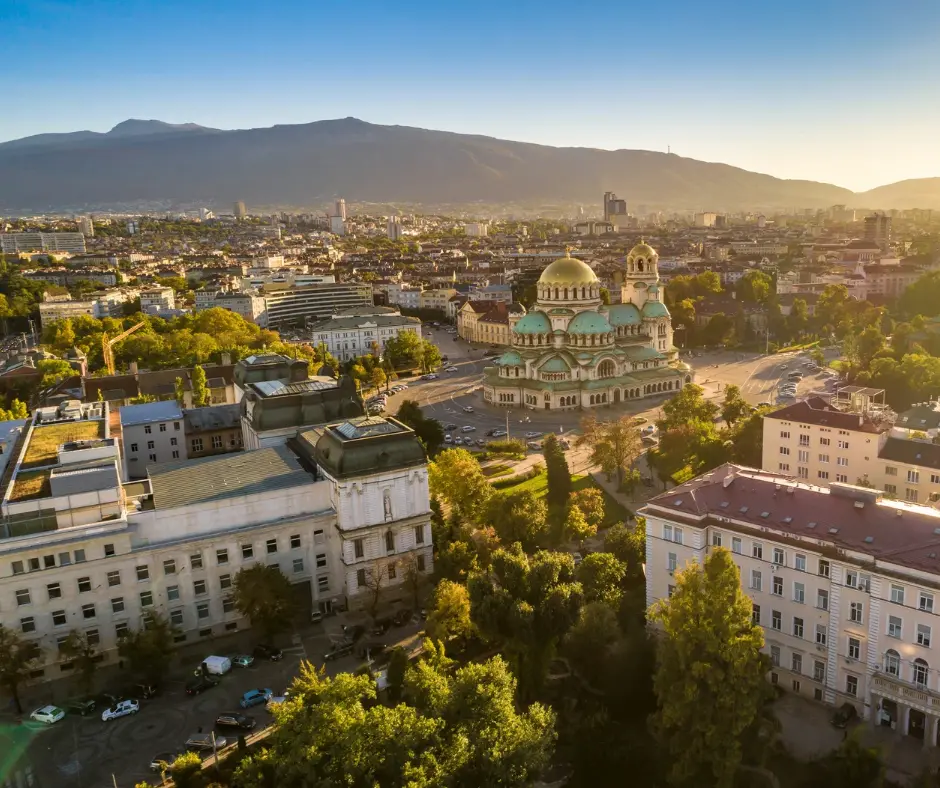
- In a nutshell: Bulgaria's capital sits at the foot of Mount Vitosha, with Roman ruins, Orthodox churches and a growing café and tech scene. Bulgaria has used the euro since January 2026, and Bansko, the country's best-known nomad town, is about three hours away.
- Arriving: From Sofia Central Station, metro line M2 runs to the center, Lozenets and Boulevard Vitosha. Sofia is connected with Istanbul in Turkey and Thessaloniki in Greece, and the airport has its own metro line.
- How to get around: A metro ride costs €0.80, and tapping a bank card caps your day at €2. See the current fares. Trams, buses and trolleybuses fill the gaps.
- Where to stay: The center for a short first visit, Lozenets for better value, or the area around Boulevard Vitosha. Expect €550 to €850 a month for a furnished one-bedroom on a short stay, more in June to August. Check the Facebook groups Foreigners Sofia Rent and Sofia apartments rent.
- Where to work: betahaus, Sofia's first coworking space, from €85 a month for 7 visits or €200 for open space with 24/7 access. Work&Share starts at €74 a month for a flexible desk, and Soho at €215 a month.
- Laptop-friendly cafés: Barter Community Hub, a rooftop café where you work for free and pay for what you order, and Café Parallel 43° on Boulevard Vitosha. There are many more on laptopfriendly.co.
- Where to find community: The Facebook group Sofia Digital Nomad and Remote Worker, and events on meetup.com.
- Continue to Istanbul: Read the full itinerary for Bulgaria and Turkey by train.
Sarah Kuhlemann Sarah Kuhlemann
💶 How much does the route cost?
| Per month | Timișoara | Sofia | Budapest | Belgrade | Prague |
|---|---|---|---|---|---|
| Furnished 1BR, short stay | €450–650 | €550–850 | €700–1,000 | €700–1,000 | €1,100–1,500 |
| Coworking | €100–180 | €75–215 | €100–160 | €100–220 | €100–220 |
| Food | €350–450 | €400–500 | €400–500 | €400–500 | €450–550 |
| Transport | €15–25 | €25–30 | About €23 | Free | About €22 |
| Realistic total | €950–1,300 | €1,100–1,550 | €1,250–1,700 | €1,250–1,700 | €1,700–2,300 |
This is one of the better-value routes in Europe. Prague is the expensive start, and Timișoara and Sofia bring the average down. Rent is where the money goes, and furnished short stays cost more than the long-term averages you see online. The tickets themselves are a small part of the budget: from around €100 for all four legs booked early. A good way to save is to pick accommodation you can work from and use coworking only a few days a week.
🌤️ When to go
Spring and early autumn are the best times for this route: mild temperatures, manageable crowds and normal prices. Summers are hot, especially on the Hungarian plain and in Belgrade, and winters are cold, with temperatures often below freezing. In Sofia, winter brings skiing on Vitosha and in Bansko, but also smog on still days.
🧳 Who this route is for
With Romania, Bulgaria and Serbia among the cheaper countries in Europe, this route suits budget-conscious slow travelers who don't mind a couple of bus days. It is for you if you can check the following points:
- Light luggage, carry-on luggage.
- Flexible working hours/days.
- You enjoy changing scenery overland.
- Tolerance for delays, ad-hoc changes of travel plans, and waiting time.
- You don't mind walking from the station to your accommodation, although Uber or Bolt and taxis are available in every city on the route.
❓ Frequently asked questions
Can you travel from Prague to Sofia by train?
Only part of the way. Trains run from Prague to Budapest and from Budapest to Timișoara, but there are no trains from Timișoara to Belgrade or directly from Belgrade to Sofia in 2026. Those two legs are by bus.
How long is the train from Prague to Budapest?
About 6.5 to 7 hours on a direct EuroCity, railjet or RegioJet train via Brno and Bratislava, from about €20 when booked early.
Is there a train from Belgrade to Sofia?
Not directly. The direct train has been suspended since the pandemic, and in 2026 the Dimitrovgrad to Sofia train has also stopped. Take a direct bus (about 6.5 to 8.5 hours) or a train to Niš followed by a bus.
Is the Budapest to Belgrade train running?
Not yet. The rebuilt line will connect the two capitals in about 3 hours 15 minutes, and international passenger trains are expected from December 2026 after several delays. Check the current status before you book.
Can I use Interrail on this route?
Yes for the trains from Prague to Budapest and from Budapest to Timișoara. The buses from Timișoara to Belgrade and from Belgrade to Sofia are not covered.
How much does the Prague to Sofia route cost?
From around €100 for all tickets when booked early. Living costs range from about €950 a month in Timișoara to €2,300 in Prague.
🎯 Conclusion
Prague to Sofia is a route of two halves: comfortable trains through Central Europe, then buses across the borders where the old rail links have broken. Done slowly, it gives you five very different bases, from Prague's grandeur and Budapest's cafés to affordable Timișoara, free-transit Belgrade and euro-new Sofia, at costs well below Western Europe.
Book the Prague to Budapest leg early, keep an eye on the new Budapest–Belgrade line, and plan the bus days as part of the trip.
Sarah Kuhlemann Sarah Kuhlemann