
Portugal has more good surf per kilometer of coast than anywhere else in Europe, and it also has fiber internet, affordable coffee, and a nomad scene that goes far beyond Lisbon. Strangely, nobody writes about both at once. Surf guides tell you where the barrels are and never mention wifi. Nomad guides know exactly one surf town, Ericeira, and could not tell you when the waves there stop being friendly.
This guide does both. Six bases compared on the four things that decide whether a surf town works as a home: the waves at your level, somewhere to work, what a month really costs, and whether you will find people. Plus an overview of when to be where.
🌱 Travel health insurance for Portugal
Summary
🏄 Six surf towns at a glance
| Town | Waves for | Coworking | 1BR rent | Best months |
|---|---|---|---|---|
| Ericeira | All levels, reefs for pros | Yes, from €145 | €850–1,000 | Sep–Oct |
| Peniche & Baleal | All levels, Supertubos for pros | Coliving-based | €600–900 (winter) | Sep–Nov |
| Lisbon coast | Learners (Caparica), winter pros (Carcavelos) | Yes, plus all of Lisbon | €700–1,300 | Sep–Oct |
| Figueira da Foz | Uncrowded, long rights | Not really | €400–850 | Sep–Nov |
| Porto & Matosinhos | Learners, city surfers | Yes, from €100 | €850–1,150 | Sep–Oct |
| Lagos & Sagres | Year-round learners, west coast for more | Yes, from €210 | €900–1,250 (winter) | Oct–May |
Rents for a one-bedroom, monthly, as reported by Numbeo as of mid 2026. Ericeira, Peniche, Figueira, and Lagos are based on small samples. So treat them as orientation, not gospel 😉.
🗺 Where the towns are
🇵🇹 Town by town
🏄♀️ Ericeira
Europe's first World Surfing Reserve, five kilometers of coast with a break for every level, and the most complete surf-nomad setup in the country. Beginners learn at Foz do Lizandro, the rivermouth beach where the surf schools run. Intermediates graduate to Praia do Sul and the long rights of Ribeira d'Ilhas. The famous northern reefs, Coxos and Pedra Branca, are advanced territory with lineups that expect you to earn your waves. A €1 surf shuttle connects the main breaks with board storage on board.
The work side is equally sorted. Kelp Cowork sits thirty seconds from Praia do Norte with gigabit fiber, a fixed desk at €199 a month and a 12-days-a-month flexible plan at €145. Salt Studio offers dedicated desks with 24/7 access. Outsite runs three houses in town, and Coworksurf lists three more colivings, so arriving alone is a solved problem here.
| 🌊 Waves | 💻 Work | 🏠 1BR rent | 🫂 Scene | 🗓 Best months |
|---|---|---|---|---|
| All levels, pro reefs | Kelp €199, Salt Studio, Outsite ×3 | €850–1,000 | The surf-nomad capital | Sep–Oct |
Group lessons cost €45 at the established schools, with five-lesson packs around €200. The catch is that everyone knows all of this. The reefs are the busiest in Portugal year-round, and summer beginner beaches fill with school groups.
Where to stay: the walkable old town for cafes and coworking, or south near Foz do Lizandro if you are learning.
🏄 Peniche & Baleal
Peniche's peninsula catches swell from three directions, which means somewhere nearby almost always works. Beginners get Prainha and the long protected curve of Cantinho da Baía, where you simply move down the beach as you improve. At the other end of the scale sits Supertubos, one of the world's great beach breaks and a World Surf League contest venue. This is a surf-industry town first, with board factories and serious winter surfers rather than a nomad community.
There is no classic coworking space. The work infrastructure is coliving-shaped: Onda Co-Living in Casais do Baleal runs on 800 Mbps to 1 Gbps fiber with desks in every room and cuts prices 40 percent from December. RIDE Surf Resort sells coworking day passes for €7 to €12 that come back as bar credit, and SwellDesk in Atouguia da Baleia has private rooms with a Zoom room from €32 a night.
| 🌊 Waves | 💻 Work | 🏠 1BR rent | 🫂 Scene | 🗓 Best months |
|---|---|---|---|---|
| All levels, Supertubos for pros | Colivings, RIDE day pass €7–12 | €600–900 in winter | Seasonal, surf-first | Sep–Nov |
Baleal Surf Camp, teaching since 1993, prices lessons by season: €38 in low season, €48 in high, with five-lesson packs from €160. That seasonal logic applies to everything here. Accommodation drops hard in winter, and November is the local sweet spot: light offshore winds, head-high waves and empty peaks.
Where to stay: Baleal village or Casais do Baleal, walking distance to the learner waves and the colivings. Peniche town itself is cheaper but less charming.
🌉 Lisbon coast: Caparica & Carcavelos
Live in the capital's orbit, and surf before work. Costa da Caparica, twenty minutes from Lisbon across the bridge, is around 22 kilometers of continuous beach break and probably the best learner coast in the region, with schools clustered at the town jetties and quieter peaks the further south you walk. Carcavelos, 25 to 30 minutes by train from Cais do Sodré, is where Lisbon goes surfing. Small and friendly in summer, hollow and serious in winter, and never empty. Just leave the peak under the fort to the regulars, they guard it, and the beach has plenty of other waves.
The coworking scene reflects the location. Cowork Cascais charges €220 to €230 plus VAT for a dedicated desk with 24/7 access. Caparica has small local studios, and central Lisbon, with the country's densest coworking supply, is half an hour away. Rents split the same way: around €700 to €1,300 for a one-bedroom on the Caparica/Almada side, €1,500 and up in central Cascais.
| 🌊 Waves | 💻 Work | 🏠 1BR rent | 🫂 Scene | 🗓 Best months |
|---|---|---|---|---|
| Learners at Caparica, winter pros at Carcavelos | Cowork Cascais €220+, all of Lisbon | €700–1,300 (Caparica side) | Biggest in Portugal | Sep–Oct |
Lesson prices are the lowest of any base here: Gecko Surf School in Caparica charges €30 for a two-hour group session, with a four-pack at €100. Carcavelos Surf School starts at about €42.
Where to stay: Costa da Caparica town or São João for learners, the Carcavelos to Parede train line if you split time between waves and the city.
🤫 Figueira da Foz
The quiet one. Figueira's town hall literally markets the place with the slogan "Surf No Crowd", and it is the only town on this list where that is true. The prize is Buarcos, a right-hand point along the north end of the bay that on the right swell links into one of the longest rides in Europe. Learners have Cabedelo across the rivermouth, where the schools run mellow peaks beside a jetty that turns hollow for the advanced crowd.
There is no real coworking scene and only a thin expat community. The municipal Quartel da Imagem offers workspace by application rather than walk-in day passes, so in practice you work from home on cheap fiber. In exchange you get the lowest rents of any surf town in Portugal, a one-bedroom runs €400 to €850, and a beach town with a casino, a huge sandy bay and no queue at the peak.
| 🌊 Waves | 💻 Work | 🏠 1BR rent | 🫂 Scene | 🗓 Best months |
|---|---|---|---|---|
| Long rights, no crowds | Work from home | €400–850 | Thin, self-sufficient only | Sep–Nov |
Dude Surf School at Cabedelo charges €35 for a group lesson and €150 for a five-pack. Come here if you already have your routine and want waves plus savings. Do not come here to find your people.
Where to stay: Buarcos village at the base of the point, or the beachfront grid in town for cafes.
🌆 Porto & Matosinhos
Porto offers city surfing, literally. Praia de Matosinhos is the only break in Portugal you can reach by metro, and the harbor breakwater tames the Atlantic into stable, forgiving peaks that made this the learn-to-surf beach of the north. Intermediates get more at Leça da Palmeira and, with a car, the beach breaks north and south of the city. One mention: water quality after heavy rain is a known issue near the port, locals wait a day or two.
Matosinhos Sul has quietly become Porto's remote-work-plus-surf neighborhood. Seaside Cowork sits two blocks from the sand with surf racks, showers, and a dedicated desk at €170 a month plus VAT, part-time from €100. Porto i/o Seaside is a minute from the beach and metro. Behind it all stands Portugal's second city: a real nomad community, a tech scene, an airport 15 minutes away, and Porto's food at Matosinhos prices.
| 🌊 Waves | 💻 Work | 🏠 1BR rent | 🫂 Scene | 🗓 Best months |
|---|---|---|---|---|
| Learners, city convenience | Seaside Cowork €170, Porto i/o | €850–1,150 | Big city, year-round | Sep–Oct |
Surfaventura, on the beach since 2003, charges €30 for a group lesson with packs down to €18 per session. September and October are the reward months here, when the summer crowds leave, the water is at its warmest and the north gets clean groundswell with morning offshores.
Where to stay: Matosinhos Sul, the grid between the metro and the sand.
☀️ Lagos & Sagres, the Algarve
The winter answer. While the west coast storms, the Algarve's south shore stays sheltered and mild, which makes Lagos the only base in Portugal where a complete beginner can learn comfortably in January. The town beaches, wide Meia Praia and the cliff-backed right at Porto de Mós, need a proper swell, so local schools run daily surf safaris, driving you to whichever beach works, from Tonel and Beliche at Sagres to the west coast at Zavial and Amado. Water is the warmest in the country, boardshorts weather in late summer.
Lagos also has an actual scene: NEST Coworking in the center charges €250 a month, with day passes at €20. CENTRO Lagos does an all-inclusive desk at €210, and the Algarve Digital Nomads community counts several thousand members with Lagos as its center of gravity. The catch is seasonal. In July and August, long-term rentals evaporate into holiday lets, and the south coast often goes flat. The nomad window is October to May, when rents come back down, the community is at its most sociable, and the west coast delivers.
| 🌊 Waves | 💻 Work | 🏠 1BR rent | 🫂 Scene | 🗓 Best months |
|---|---|---|---|---|
| Year-round learners, west coast for more | NEST €250, CENTRO €210 | €900–1,250 in winter | Algarve's nomad capital | Oct–May |
Budget €40 to €55 for group lessons here, the safari transport is usually included.
Where to stay: Lagos old town near the marina. Base in Sagres only if surf-first isolation beats social life.
🌊 A word on Nazaré
Nazaré is not a nomad base, it is a pilgrimage. The giant waves of Praia do Norte run from October to March, with the biggest days most likely from November to February, and the lighthouse fort above the beach is the free front-row seat. In summer, the town beach, Praia da Vila, is a normal, sandy learner spot with lessons from about €25. Go as a day trip: 45 minutes from Peniche, 90 from Lisbon, and check the forecast before you commit, because even in season the giants only show when a long-period Atlantic swell arrives.
📅 When to surf where
| Region | Jan | Feb | Mar | Apr | May | Jun | Jul | Aug | Sep | Oct | Nov | Dec |
|---|---|---|---|---|---|---|---|---|---|---|---|---|
| North | 🔴 | 🔴 | 🔴 | 🟠 | 🔵 | 🟢 | 🟢 | 🟢 | 🔵 | 🟠 | 🔴 | 🔴 |
| Silver | 🔴 | 🔴 | 🟠 | 🔵 | 🔵 | 🟢 | 🟢 | 🟢 | 🔵 | 🟠 | 🔴 | 🔴 |
| Ericeira | 🔴 | 🔴 | 🟠 | 🔵 | 🔵 | 🟢 | 🟢 | 🟢 | 🔵 | 🟠 | 🔴 | 🔴 |
| Lisbon | 🟠 | 🟠 | 🔵 | 🔵 | 🟢 | 🟢 | 🟢 | 🟢 | 🔵 | 🔵 | 🟠 | 🟠 |
| West | 🔴 | 🔴 | 🟠 | 🔵 | 🔵 | 🟢 | 🟢 | 🟢 | 🔵 | 🟠 | 🟠 | 🔴 |
| South | 🟢 | 🟢 | 🟢 | 🟢 | 🟢 | 🟢 | 💤 | 💤 | 🟢 | 🟢 | 🟢 | 🟢 |
Legend: 🟢 small and friendly, best for learning · 🔵 fun for most levels · 🟠 solid, intermediate and up · 🔴 big winter surf, experienced only · 💤 often flat. Regions: North is Porto and Matosinhos, Silver is Figueira to Peniche, Lisbon is Caparica and Carcavelos, West is Sagres to Arrifana, South is Lagos to Faro.
Three patterns: September and October are the best months almost everywhere, with clean swell, warm water, and empty lineups after the first week of September. July and August are the weakest surf months on the west coast, small waves, afternoon Nortada wind and maximum crowds. And winter flips the map, the west coast turns expert-only while the Algarve's south shore becomes Portugal's best value classroom.
Wetsuit reality: this is the Atlantic, not the Mediterranean. Winter means a 4/3 with boots from Lisbon northward. Summer means a 3/2 nearly everywhere, and only the Algarve's south coast reaches boardshorts territory in late summer.
💶 What it actually costs
| Town | Group lesson | Lesson pack | Coworking / month |
|---|---|---|---|
| Ericeira | €45 | 5 for €200 | €145–199 |
| Peniche & Baleal | €38–48 by season | 5 from €160 | Day pass €7–12 |
| Lisbon coast | €30–42 | 4 for €100 | €220 + VAT |
| Figueira da Foz | €35 | 5 for €150 | — |
| Porto & Matosinhos | €30 | 10 for €180 | €170 + VAT |
| Lagos & Sagres | €40–55 | — | €210–250 |
Group lessons run €30 to €48 almost everywhere, cheapest at Caparica and Matosinhos (€30), around €35 in Figueira, €38 to €48 in Baleal depending on season, and €45 in Ericeira. All include board, wetsuit, and insurance. Five-lesson packs bring that down to €30 to €40 per session. Private coaching runs €60-€120, and a private day with one of the local legends on The Rush costs around €100.
One comparison that's often missing is the camp versus the month. A surf camp week in Portugal costs roughly €400 to €1,200 all-in depending on comfort level. A nomad month in Ericeira looks like this instead: around €900 for the flat, €199 for the coworking desk, €200 for a five-lesson pack, and you are surfing four times a week for less than two camp weeks cost, while keeping your job. The further you move from Ericeira, the better that math gets. In Figueira, the same month starts around €700 all-in.
If comparing schools across six towns already sounds like work, that is exactly the problem The Rush was built to solve. More on that below.
🏄♂️ Book the locals, not the package
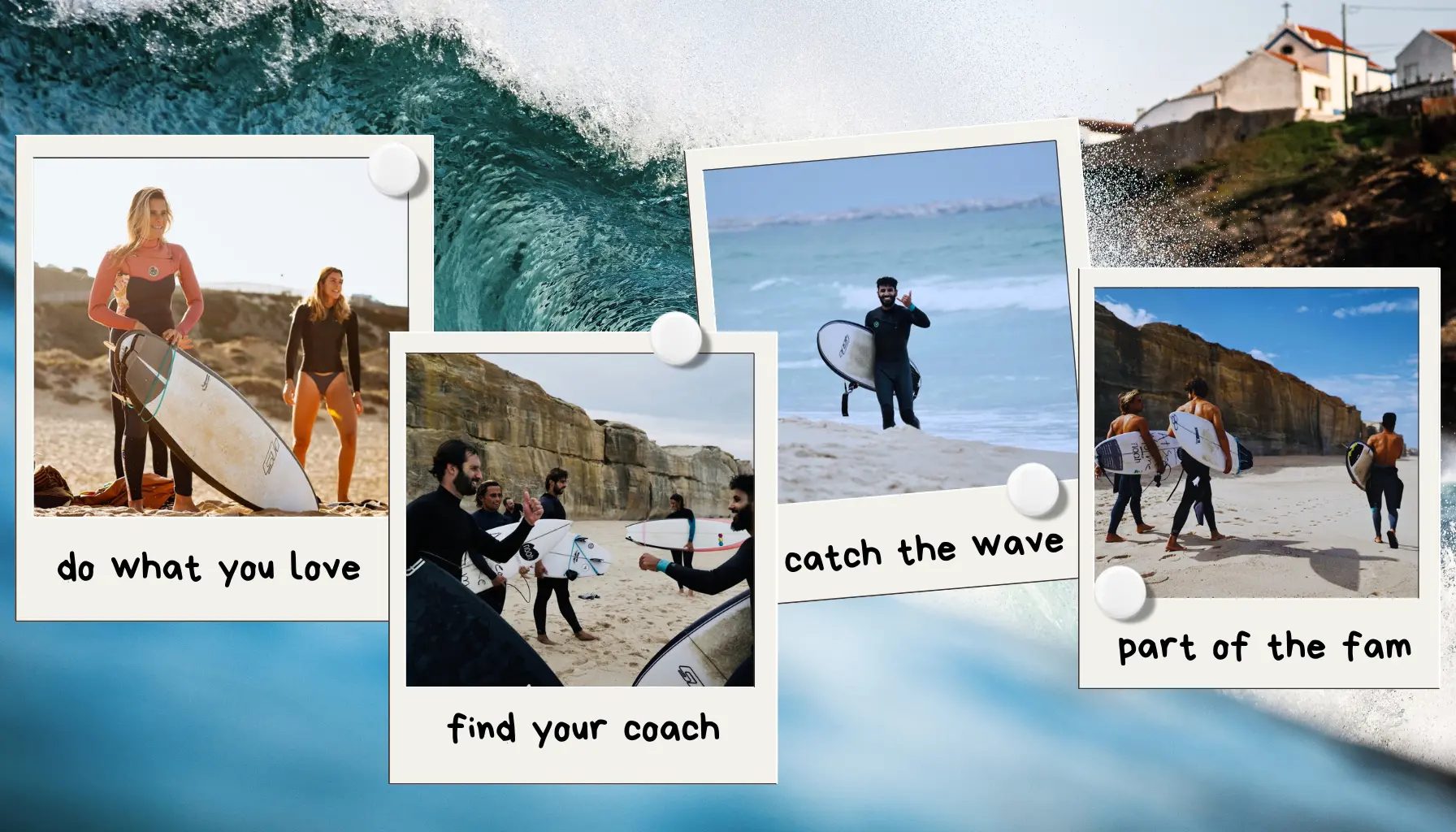
The gap between a surf-school conveyor belt and a session with someone who has surfed a break their whole life is enormous. This is exactly the gap The Rush was built to close. The platform connects you with vetted local coaches, guides, and photographers across seven Portuguese destinations, from certified instructors to former national, European, and world champions.
No package deals, no fixed dates, no group minimums. You book the parts you want.
The hard part of booking in a new town is not the price. It is knowing who is good. The schools that are easiest to find online might be the ones spending the most on marketing, not the ones with the best coaches. Every beach in Peniche and Ericeira has seen a beginner walk out of the water swearing never to surf again after landing with the wrong one. The Rush vets every provider before they can list and matches you by level and goals, so the guesswork is gone.
Genki readers get 10% off everything on The Rush
GENKI10
The discount applies automatically at checkout. Valid until September 2027.
Transparency note: The Rush is a Genki partner. The recommendation stands on its own. This guide's structure follows the same seven destinations because they are simply where Portugal's surf lives.
🫂 Arriving alone
When The Rush asks new bookers what their trip is for, one of the most common answers is to find a community. The mechanics of getting one are simple.
A group lesson is a better icebreaker than any networking event, you meet five people and share mild embarrassment before lunch. Social accommodation adds a second circle, layday activities a third. And booking a full day with a local guide gets you something better still: you get adopted. The good guides here do not just find you waves:
They show you their favorite cafes, introduce you to their friends, and hand over a lifetime of local tips.
Ricardo Lourenço of Truster Stoked Club in Baleal is what that looks like in practice. Clients get treated as friends, and it runs both ways: people who arrived as customers now invite him on surf trips around the world. It sticks, too. One of The Rush's first repeat bookings is a solo traveler who joined group lessons in Peniche last year and is coming back this season with a friend, a campervan, and the same surf school.
For the easiest solo landing, head south. The Sagres and Lagos corner is the most nomad-friendly of the seven, with community spaces like Off The Hook Coworking & Coliving in Sagres, eight rooms and a proper office building minutes from the surf, doing the introductions for you. Ericeira is the most social of the central towns. Peniche is more localized but warms up fast if you do. Elsewhere, the proven starting points stand: Coworksurf houses in Ericeira, Onda's community dinners in Baleal, Outsite's weekly events, and the Algarve Digital Nomads WhatsApp groups around Lagos.
One etiquette note that buys a lot of goodwill. Surf culture is protective. It deals with a wild environment, limited waves, and real danger, so come open, curious, and patient, and you will be welcomed. Learner beaches are friction-free. The famous reefs have pecking orders. Watch a lineup before you paddle into it, especially at Coxos and at Carcavelos' fort peak, and no one will ever be unfriendly.
🛂 Practical
EU citizens just move. Everyone else gets 90 days visa-free in the Schengen area, and for longer stays, Portugal's D8 digital nomad visa requires proof of remote income around the €3,680-per-month mark. Our Portugal D8 guide covers the full application.
 Sarah Kuhlemann
Getting around: Lisbon connects to Ericeira, Peniche and Nazaré by direct bus, Porto and Figueira sit on the rail network, and only the Algarve west coast and the swell-chasing lifestyle really demand a car. Boards fly free or cheap on TAP within reason, but every town on this list rents decent equipment.
❓ FAQ
When is the best time to surf in Portugal?
September and October, everywhere. Clean groundswell, the warmest water of the year, offshore mornings and lineups that empty out after the first week of September. Spring (April and May) is the runner-up.
Where should a complete beginner start?
Costa da Caparica, Matosinhos or Baleal between May and September, or Lagos in winter. All four have sandy bottoms, protected peaks and schools with group lessons from €30.
Can I really work remotely and surf every day?
In Ericeira, Matosinhos, Lagos and the Lisbon coast, yes, that is the whole point of those bases: fiber internet and coworking sit minutes from the waves. In Peniche and Figueira plan to work from home. Daily surf is a September to November reality, in summer expect small waves and in winter pick your town by your level.
Is Ericeira too expensive now?
It is the priciest small town on this list, around €850 to €1,000 for a one-bedroom, and the busiest water. You pay for the best infrastructure and the biggest community. If you want the waves without the scene, Figueira da Foz costs half as much.
Do I need a wetsuit in Portugal?
Yes. A 3/2 covers summer everywhere, winter needs a 4/3 with boots from Lisbon north. Only the Algarve's south coast reaches boardshorts temperatures, and only in late summer.
Sarah Kuhlemann Sarah Kuhlemann
 Sarah Kuhlemann
 Sarah Kuhlemann