

Loneliness hits every nomad eventually, including the ones surrounded by people. This article is about the feeling itself: who it tends to catch, how to know your own social limits, and when it's worth talking to someone. For where to meet people, and why meeting them isn't always enough, I've written separately.
🌱 Travel health insurance for digital nomads
🫥 Loneliness can hit everyone
- The introvert: Loneliness can visit the introvert nomad. Just because someone is more introverted than extroverted doesn't mean living like an eremite. Introverts can have a hard time making new friends, and some may be better at maintaining long friendships. Sometimes, introverts prefer fewer superficial acquaintances and deeper friendships.
- The extrovert: Although they shine as social butterflies, when extroverts lack deep friendships, they can feel lonely, too. For some, it might be easy to meet new people, but the connections don't go beyond a surface-level friendship. Some extroverts have a hard time maintaining existing friendships and focusing on the friends they have because they are constantly making new friends.
- The solo-traveling nomad: Traveling solo can lead to feelings of loneliness, especially when starting in the nomad life with limited nomad friendships. Maybe existing friends back home fade away as the nomadic journey continues, or long-time friends still exist, but life on the road still feels rather lonely.
- The nomadic couple: Just because you are in a relationship doesn't mean you feel a fulfilled social life. Especially when one partner is more outgoing and the other prefers staying in, this imbalance can create a mismatch in the desired social life.
- The hustler: Some nomads are hyper-focused on work, which shows a high level of discipline - a great attitude to have. However, when work takes up most of your day, and there is little to no time left for socializing, this can lead to feelings of loneliness, too. Maybe your life and your work are in different time zones, and whenever your coworkers go out for social dinners, you have client calls.
- The adventurer: This nomad is traveling to remote destinations, swims against the swarm, and there is hardly anyone to connect with, because you don't find other nomads in the Patagonian countryside or the outskirts of Samarkand in Uzbekistan. Your bucket list — or simply your travel interests —doesn't bring you to the typical nomad hotspots, à la Lisbon, Bali, Chiang Mai, and Hoi An.
Loneliness on the road comes and goes, and most of what's in this article is about the coming and going. But if the low mood stays for weeks, if you've lost interest in things you used to enjoy, or if you find yourself withdrawing from people even when they're right there, that's worth talking to someone about. Not because something is wrong with you, but because the nomad lifestyle makes it unusually easy to slip past the point where a friend would normally notice. Many therapists now work online across time zones, and your travel health insurance may cover sessions. Reaching out early is the practical move, not the dramatic one.
🧁 Know your social capacity
Be aware of your social capacity. It's important to know your limits and understand how much social interaction you need to feel fulfilled. If you prefer a more solitary lifestyle, that's okay, too. You can still combat loneliness by finding activities you enjoy that let you connect with others.
- You like working with others: If you want to spend your workday in a shared environment, consider joining a coworking or coliving space. Coworking spaces allow you to spend your workday in a community while living on your own. Coliving spaces combine work and private life with other nomads.
 Sarah Kuhlemann
 Sarah Kuhlemann
- You like living with others: As mentioned already, coliving spaces let you live with other nomads in one house or have your own space on the same property. Popular coliving communities include Outsite. If you want to combine coliving with a retreat, check out Nomad Cruise or Wifi Tribe.
Sarah Kuhlemann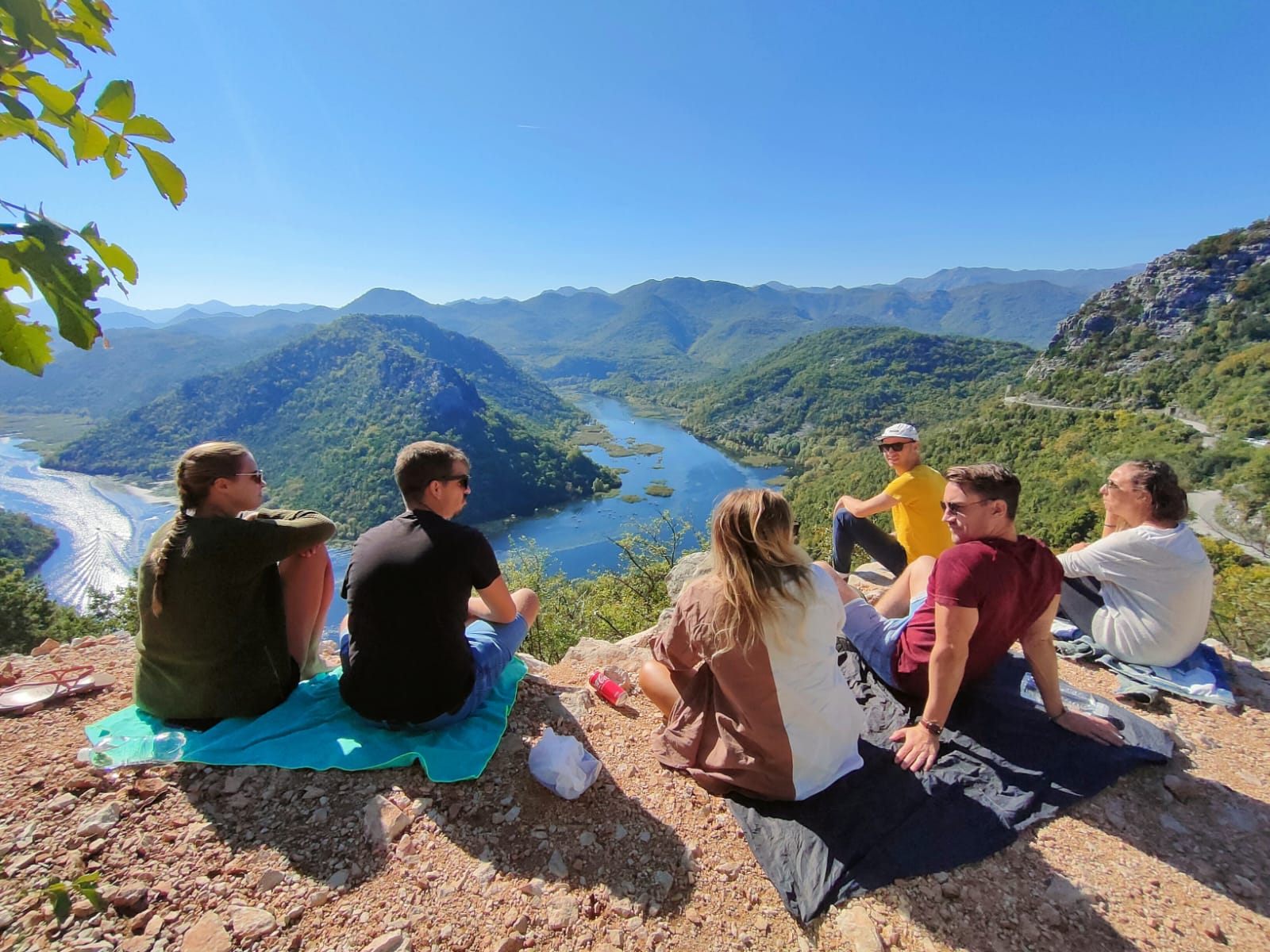 Sarah Kuhlemann
 Sarah Kuhlemann
- You want to share experiences with others: If you want to share business or personal development experiences, look at nomad retreats, conferences and events. If you'd rather share fun activities, start from your own hobbies and interests. Run clubs, padel, dance classes, yoga studios, cooking classes and language exchanges all work, and most cities have a WhatsApp group or Meetup page for each. The point is repetition: one weekly class does more than five one-off events.
🤩 Ideas to feel less lonely
Most of what helps with loneliness is practical: meeting people and then turning those meetings into friendships. I've written about this in depth. Start with where and how to make friends as a nomad, covering the places, tools, and tactics that actually work.
If you already meet plenty of people and still feel lonely, that is a different problem, and a more common one than most nomads admit. 500 contacts and no one to call is about why connections stay shallow and what builds depth.
🥰 4 types of people you want to have in your life
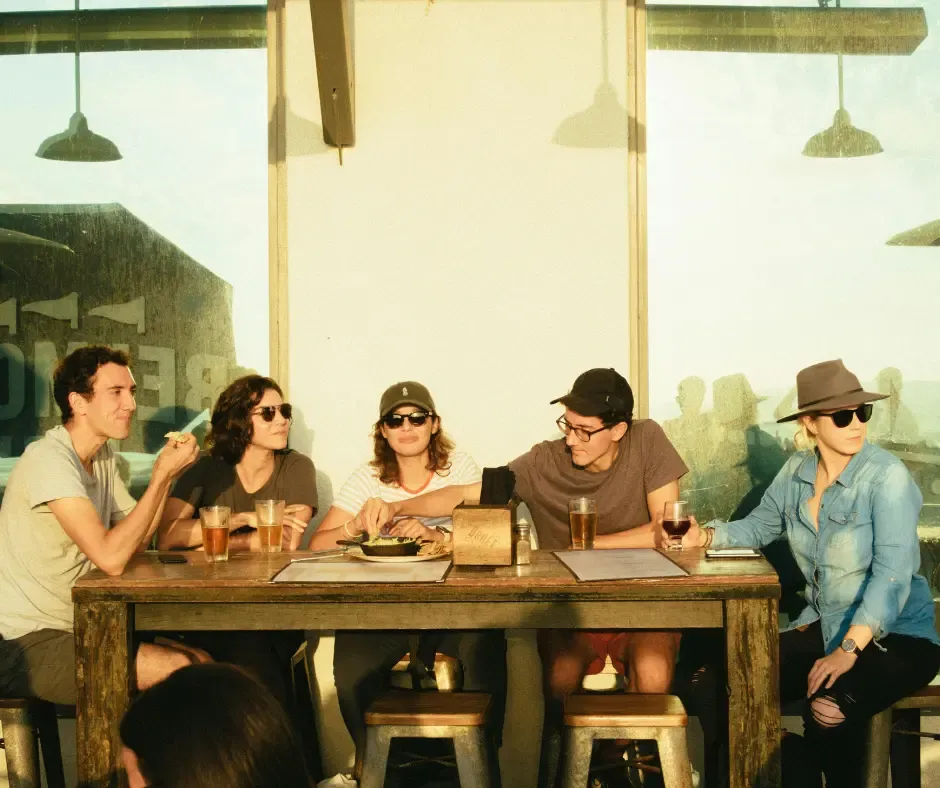
- Peers: Your peers are other digital nomads or traveling remote workers. Make sure you meet people who sit in the same boat and go through similar travel- and work-related challenges. You find your peers in coworking and coliving spaces, at digital nomad meetups, and at other nomad events. Peers can be travel buddies or work-related friends.
- Cheerleaders: Your cheerleaders are people who believe in you and cheer you up along your journey. This can be any person you know, from a family member to a lifelong friend, as long as they believe in you and help you to push through hard times. Cheerleaders don't necessarily need to work in the same field, work at all, or live a nomadic life. They are people who want you to succeed in your nomadic journey.
- Lifelong friends: From friends you met in school to former colleagues, it's essential to maintain lifelong friendships. Old friends help us feel grounded; they remind us of past chapters of our lives and of a different version of ourselves. They keep us down-to-earth and open-minded, not just in looking forward but also in looking back. Just because our school friend is settled in with the house and kids doesn't mean we've grown apart entirely.
- New friends: While cheerleaders and life-long friends depend a little bit more on your past, there is always the chance to meet new people and make new friends. Maybe you have a hobby or interest, such as dancing, reading, cooking, or hiking. You could join a dance class or a book club, attend a cooking school, or seek out local hiking groups.
🎯 Conclusion
Loneliness is part of this life, not a sign you're doing it wrong. Knowing which kind of nomad you are, and which kind of people you're missing, is most of the work. The rest is in the two articles above.
For further reading, I suggest looking at this study I found: Miguel, C. (2021). It's Not All Shiny and Glamorous: Loneliness and Fear of Missing Out among Digital Nomads. Journal of Global Mobility, 9(1), 39-53. doi:10.1108/JGM-12-2020-0079.
Sarah Kuhlemann Sarah Kuhlemann
 Sarah Kuhlemann