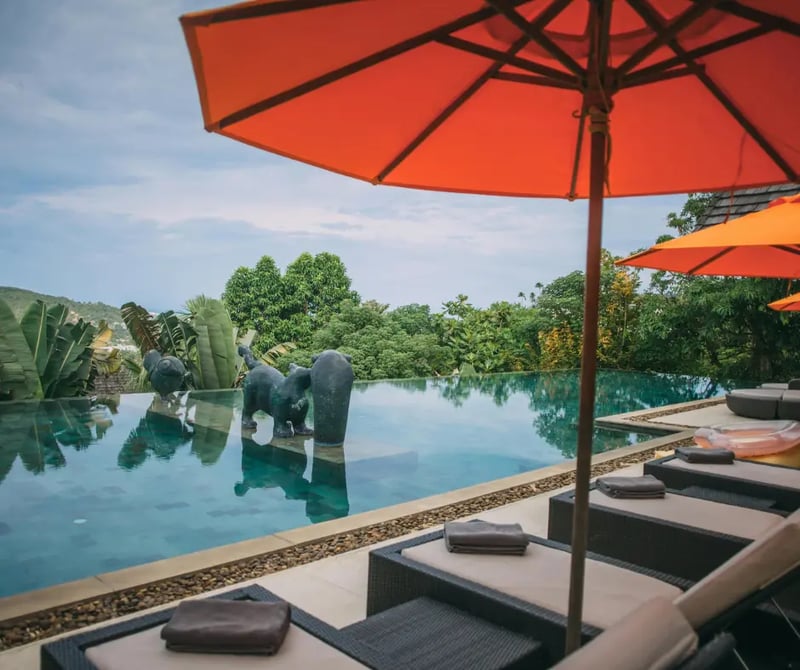


Asia is not one destination but a set of very different bases, and the right first one depends on three things: your budget, your passport, and the month you land. Chiang Mai, Bangkok and Koh Lanta, Bali, Kuala Lumpur and Penang, Da Nang, Cebu, Japan and Taipei all have real remote-work scenes, but their costs range from about €700 to more than €3,000 a month, their visa rules changed a lot in 2026, and their good seasons barely overlap.
This page puts the ten bases side by side: what a month really costs on a short stay, which visa actually works where, the internet, the weather, and two sensible routes for your first three months. Every visa line links to the full, verified guide for that country.
🌱 Health insurance for Asia
Summary
🎯 The ten bases compared
| Base | Monthly cost (short stay) | Visa in one line | Internet | Best season | Best for |
|---|---|---|---|---|---|
| 🇹🇭 Chiang Mai | €1,000–1,500 | 30 days visa-free (+30), DTV for longer stays | Fast fiber, coworking everywhere | Nov–Jan | First-timers, community, mountains |
| 🇹🇭 Bangkok | €1,400–2,000 | 30 days visa-free (+30), DTV for longer stays | Fast fiber, coworking everywhere | Nov–Feb | Big-city life, food, flight hub |
| 🇹🇭 Koh Lanta | €1,300–1,900 | 30 days visa-free (+30), DTV for longer stays | Good in the main areas, check your bungalow | Nov–Apr | Island life with a working community |
| 🇮🇩 Bali (Canggu, Ubud) | €1,100–2,200 | 30-day visa on arrival (+30), 60-day visit visa, E33G at US$60,000 | Good in hubs, fiber and Starlink, power cuts | Apr–Oct | Wellness, surf, the biggest scene |
| 🇲🇾 Kuala Lumpur | From ~€950 | 90 days visa-free for many passports, DE Rantau pass | Fast fiber in condos and coworking | Year-round | Value city comfort, English, food |
| 🇲🇾 Penang (George Town) | From ~€1,000 | 90 days visa-free for many passports, DE Rantau pass | Fast in George Town | Dec–Mar | Heritage, street food, a slower Malaysia |
| 🇻🇳 Da Nang (and Hoi An) | €700–1,100 | 90-day e-visa, no nomad visa | Some of the fastest in Southeast Asia | Feb–Aug | Lowest cost, beach, food |
| 🇵🇭 Cebu | €800–1,200 | 30 days visa-free, extendable up to 36 months, nomad visa not open | ~87 Mbps median, brownouts outside cities | Dec–May | English everywhere, islands |
| 🇯🇵 Japan (Fukuoka to Tokyo) | €1,100–1,700 (Fukuoka) to €1,900–3,200 (Tokyo) | 90 days visa-free, 6-month nomad visa at ¥10M | Among the fastest on earth | Mar–May, Oct–Nov | Safety, culture, efficiency |
| 🇹🇼 Taipei | €1,150–1,900 | 90 days visa-free for many passports, nomad visa from US$20,000 (under 30) | Fast and reliable | Oct–Dec, Mar–Apr | Safe, calm city life, young-nomad visa |
Costs are realistic figures for a furnished monthly rental plus coworking, food and local transport, taken from the country guides below. Japan and Taipei are the exceptions to the "Asia is cheap" rule; Da Nang, Cebu, Kuala Lumpur and Penang are the value end. Koh Lanta's community runs on KoHub's November to April season.
🗺 Where the bases are
The bases cluster in three zones with very different rhythms. Mainland Southeast Asia (Thailand, Vietnam, Malaysia's peninsula) is connected by cheap flights and land routes. The islands (Bali, the Philippines, Thailand's two island coasts) run on monsoon calendars that often run opposite to each other. East Asia (Japan, Taiwan) costs more and wants spring or autumn. Picking a zone for the season is half the decision.
Beyond these ten, the Guide covers Koh Phangan, Siargao, Pokhara, Weligama, Goa and more; the underrated picks are collected in one place.
 Sarah Kuhlemann

🛂 Visas at a glance
The visa decides how long a base can actually be yours. Thailand cut its visa-free stay from 60 to 30 days on 15 September 2026 and now refuses entry to people who look like they live there on tourist stamps, so the old visa-run playbook is over. Here is the current route in each country, matching the dedicated guides.
| Country | Route that works for nomads | Duration | Income or funds bar | Full guide |
|---|---|---|---|---|
| 🇹🇭 Thailand | Destination Thailand Visa (DTV); short stays on 30 days visa-free (+30) | 5 years, up to 180 days per entry, extendable once by 180 | 500,000 THB (about €12,500) in the bank | Thailand DTV guide |
| 🇮🇩 Indonesia (Bali) | E33G remote worker visa, or the 60-day visit visa | E33G 1 year; visit visa 60 days, extendable to about 180 | E33G: US$60,000 a year; visit visa: none | E33G guide |
| 🇯🇵 Japan | Digital nomad visa (Designated Activities) | 6 months, no extension | ¥10,000,000 a year (about €54,000) | Japan digital nomad visa |
| 🇵🇭 Philippines | Tourist entry; the nomad visa exists in law but you cannot apply yet | 30 days, extendable up to 36 months | None for tourist entry | Philippines visa status |
| 🇲🇾 Malaysia | DE Rantau Nomad Pass | 3 to 12 months, renewable to 48 | US$36,000 a year (tech) or US$60,000 (non-tech) | Malaysia guide |
| 🇹🇼 Taiwan | Digital nomad visa; short stays on 90 days visa-free | 6 months, renewable to 2 years | US$40,000 a year (30 and over), US$20,000 (20 to 29) | Taiwan guide |
| 🇻🇳 Vietnam | 90-day e-visa; no nomad visa | Up to 90 days, not extendable in-country | None (US$25 single, US$50 multiple entry) | Vietnam guide |
Two details that catch people out. Taiwan's 90 days visa-free can only be extended to 180 days for British and Canadian passport holders, according to the Bureau of Consular Affairs. And Vietnam's e-visa should only be applied for on the Vietnam Immigration Department's e-visa portal, a .gov.vn address; lookalike sites charge several times the US$25 or US$50 fee.
Sarah Kuhlemann Sarah Kuhlemann
 Sarah Kuhlemann
 Sarah Kuhlemann

The tax reality
A visa decides whether you can stay; it says nothing about where you owe tax. Most Asian countries tax you as a resident once you spend 183 days or more there in a year, and some visas make that more likely: the DTV allows up to 360 continuous days, and the E33G guide flags Indonesian tax residency after 183 days. Moving every few months does not automatically make you tax-free either, because your home country may still count you as resident. The Guide's explainer on digital nomad taxes covers how this works across a nomad year, and the 183-day rule and its exceptions explains when a stay makes you resident. This is general information, not tax advice.
🌤 When to be where
| J | F | M | A | M | J | J | A | S | O | N | D | |
|---|---|---|---|---|---|---|---|---|---|---|---|---|
| Mainland Southeast Asia | ||||||||||||
| Chiang Mai | ☀️ | 🌫 | 🌫 | 🌫 | 🌧 | 🌧 | 🌧 | 🌧 | 🌧 | ⛅ | ☀️ | ☀️ |
| Bangkok | ☀️ | ☀️ | ⛅ | ⛅ | 🌧 | 🌧 | 🌧 | 🌧 | 🌧 | 🌧 | ☀️ | ☀️ |
| Kuala Lumpur | ⛅ | ⛅ | ⛅ | ⛅ | ⛅ | ⛅ | ⛅ | ⛅ | ⛅ | ⛅ | ⛅ | ⛅ |
| Penang | ☀️ | ☀️ | ☀️ | ⛅ | 🌧 | 🌧 | 🌧 | 🌧 | 🌧 | 🌧 | 🌧 | ⛅ |
| Da Nang & Hoi An | ⛅ | ☀️ | ☀️ | ☀️ | ☀️ | ☀️ | ☀️ | ☀️ | ⛅ | 🌧 | 🌧 | 🌧 |
| Islands | ||||||||||||
| Andaman coast (Phuket, Lanta) | ☀️ | ☀️ | ☀️ | ⛅ | 🌧 | 🌧 | 🌧 | 🌧 | 🌧 | 🌧 | ⛅ | ☀️ |
| Gulf islands (Samui, Phangan) | ☀️ | ☀️ | ☀️ | ☀️ | ⛅ | ⛅ | ☀️ | ☀️ | ⛅ | 🌧 | 🌧 | 🌧 |
| Bali | 🌧 | 🌧 | 🌧 | ☀️ | ☀️ | ☀️ | ☀️ | ☀️ | ☀️ | ☀️ | 🌧 | 🌧 |
| Cebu & most of the Philippines | ☀️ | ☀️ | ☀️ | ☀️ | ☀️ | 🌧 | 🌧 | 🌧 | 🌀 | 🌀 | 🌧 | ☀️ |
| East Asia | ||||||||||||
| Japan (Tokyo, Osaka, Fukuoka) | ⛅ | ⛅ | ⛅ | 🌸 | ☀️ | 🌧 | 🥵 | 🥵 | 🌀 | ☀️ | 🍁 | ⛅ |
| Taipei | ⛅ | ⛅ | ☀️ | ☀️ | 🌧 | 🌧 | 🥵 | 🌀 | 🌀 | ☀️ | ☀️ | ☀️ |
☀️ best · ⛅ mixed or cooler · 🌧 rainy season · 🌫 smoke (burning season) · 🥵 very hot · 🌀 typhoon risk · 🌸 spring blossom · 🍁 autumn colors
The January wave has it easy: November to February is peak season in Thailand, the Andaman islands, Penang and the Philippines. The catches are Chiang Mai's burning season, roughly February to April, when the smoke is a genuine health issue and many nomads leave for the islands, and central Vietnam's flooding from October to December. Bali runs the other way, with its dry season from April to October. Kuala Lumpur is warm and rainy in bursts all year, which makes it a solid fallback in any month. Japan and Taiwan want spring or autumn and are best avoided in high summer and typhoon season.
💶 What budget fits which base
| Profile | Monthly budget | What it buys | Bases that fit |
|---|---|---|---|
| Lean | €700–1,100 | A furnished studio or one-bedroom away from the most popular streets, local food, a coworking membership or cafe working | Da Nang and Hoi An, Cebu, Kuala Lumpur, Penang, Chiang Mai at the low end |
| Comfortable | €1,100–1,800 | A modern condo or villa room in the nomad neighborhoods, coworking, eating out most days, the odd weekend trip | Chiang Mai, Bangkok, Koh Lanta, Bali (Ubud), Fukuoka, Taipei |
| Soft life | €1,800–3,200 | A pool villa or central apartment, premium coworking, restaurants and regular flights | Bali (Canggu), central Bangkok, Osaka and Kyoto, Tokyo |
Short stays always cost more than the figures locals quote. Monthly bookings on short notice, beachfront locations and high season push rent to the top of each range, and a second month in the same place is usually noticeably cheaper than the first.
Budget for health costs too. In Thailand, Genki's claims data puts most doctor visits at €90 to €200 and a hospital stay at €2,136 at the median.
Sarah Kuhlemann
🧭 Your first three months: two sample routes
Route 1: the classic Southeast Asia loop (November to February)
Bangkok to land and adjust, then Chiang Mai for November to January, Koh Lanta on the Andaman coast when the smoke arrives in the north, and Kuala Lumpur or Penang to finish. The visa logic: Thailand's 30 days visa-free plus one 30-day extension covers about two months, and Malaysia's 90 days visa-free (for many passports) takes over from there. If you want longer than two months in Thailand, the DTV is the route, because back-to-back tourist entries now get refused. Flights between Chiang Mai, Phuket and Kuala Lumpur are short and cheap.
Route 2: value first, then East Asia in spring (February to May)
Start in Da Nang in February and March on a 90-day e-visa (take the US$50 multiple-entry version if you might leave and come back), when central Vietnam is at its best and cheapest. Fly on to Taipei for April, on 90 days visa-free for many passports, then Fukuoka or Osaka for May. For a stay under 90 days, visa-exempt nationals do not need Japan's nomad visa; for the full six months, the Japan digital nomad visa is the legal route, with its ¥10 million income bar and new fees from July 2026. This route trades the beach for the best of two climates, with budgets rising as you go north.
👥 Finding your people
Community is often the deciding factor for a first base, and it is unevenly spread. Chiang Mai, Bali and Da Nang have the biggest nomad crowds and the most events, and Koh Lanta has a tight-knit island community in season; Bangkok and Kuala Lumpur have large expat and professional scenes; Penang, Cebu, Taipei and Japan's cities have smaller nomad communities but welcoming coworking spaces. The fastest ways in are a coworking membership, a coliving stay for the first month, and an event in your first weeks.
Sarah Kuhlemann
❓ Frequently asked questions
Where should I start as a digital nomad in Asia?
Chiang Mai between November and January is the classic first base: a large community, coworking everywhere and a comfortable budget around €1,000 to €1,500 a month. Bali is the alternative from April to October, and Kuala Lumpur works in any month.
What is the cheapest good base in Asia?
Da Nang and Hoi An in central Vietnam, at around €700 to €1,100 a month with fast internet and the beach on the doorstep. Cebu, Kuala Lumpur and Penang are close behind.
Can I just use tourist visas?
For a stay of a month or two, yes, in most of these countries. For living somewhere, no longer: Thailand cut its visa-free stay to 30 days in September 2026 and refuses people who appear to live there on tourist stamps. The Philippines remains the generous exception, with tourist stays extendable up to 36 months.
When is monsoon season in Southeast Asia?
It depends on the coast. Mainland Thailand and the Andaman islands are wettest from May to October, the Gulf islands from October to December, central Vietnam from October to December, the Philippines from June to November, and Bali from November to March.
Is Japan too expensive for digital nomads?
Not anymore for everyone. Fukuoka runs around €1,100 to €1,700 a month and Tokyo €1,900 to €3,200, with a weak yen making it 30 to 40 percent cheaper for foreign earners than in 2019. The nomad visa's ¥10 million income bar is the bigger hurdle than daily costs.
Which Asian bases are best for solo nomads?
Chiang Mai, Bali and Da Nang are the easiest for meeting people, thanks to their large communities and events. Japan and Taipei are among the safest places anywhere for solo travel, with smaller but welcoming scenes.
🎯 Conclusion
There is no single best country in Asia for digital nomads, but there is a best first move for most people: pick your base by season and visa, not by Instagram. Come in the dry months, start where the community is big enough to catch you, and check the visa rules for your passport before you book, because 2026 changed several of them.
Chiang Mai or Bangkok for the classic start, Koh Lanta or Bali for island life in their dry seasons, Da Nang, Kuala Lumpur or Penang when the budget matters, and Japan or Taipei when spring comes around.
Keep planning: Asia events and coliving.
Sarah Kuhlemann Sarah Kuhlemann