
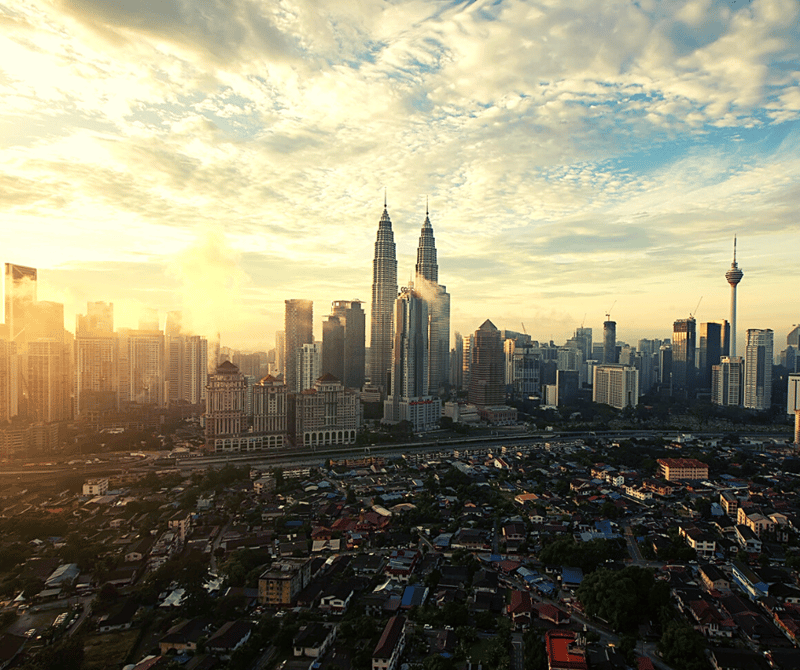
Malaysia gives nomads two very different bases a short train ride apart. Kuala Lumpur is a modern Southeast Asian capital with fast fiber, cheap rides and some of the region's best food courts. Penang is a heritage island where George Town's shophouses and hawker stalls set a slower pace. Add the Cameron Highlands, Langkawi and Borneo for long weekends, plus English spoken almost everywhere, and Malaysia becomes one of the easiest countries in Asia to land in.
The honest part: Malaysia's nomad pass got noticeably harder to get in November 2026, the nomad community is smaller and more spread out than in Chiang Mai or Bali, and smoke from regional fires can haze over the skies in the dry months. This guide covers what a month really costs on a short stay, the visa rules as MDEC currently publishes them, and where to live and work in each base.
🌱 Health insurance for Malaysia
Summary
- 🌱 Health insurance for Malaysia
- 🎯 Malaysia at a glance
- 🇲🇾 Entry requirements for Malaysia
- ✈️ How to get to Malaysia
- 🗺 Where to base yourself
- 💶 How much does it cost?
- 🧑🏻💻 Where to work from
- 👥 Finding community
- 🛜 Internet and SIM cards
- 🌤 When to go where
- 🚌 Getting around
- 🚧 Safety
- 🏥 Healthcare
- 🎖 Must see
- ❓ Frequently asked questions
🎯 Malaysia at a glance
| 🛂 Visa | 90 days visa-free for most EU, UK and US passports. DE Rantau Nomad Pass for longer stays |
| ⏳ Max stay | Up to 90 days per entry as a visitor. 3 to 12 months on DE Rantau, renewable up to 48 months in total |
| 💶 Monthly budget | €950 to €1,700 in Kuala Lumpur, €1,000 to €1,650 in Penang (short stay) |
| 🌤 Best time | Kuala Lumpur year-round. Penang and Langkawi December to March. East coast islands April to September |
| 🏝 Top areas | Mont Kiara, Bangsar, KLCC and Bukit Bintang (Kuala Lumpur). George Town and Tanjung Tokong (Penang) |
| 🛜 Internet | ~181 Mbps median fixed broadband, ~170 Mbps mobile (Ookla, September 2026) |
| 🛡 Safety | US advisory Level 1 (normal precautions). Increased caution only for the islands off eastern Sabah |
🇲🇾 Entry requirements for Malaysia
Visiting visa-free. Citizens of the EU, the UK, the US and many other countries receive a social visit pass of up to 90 days on arrival. Most neighbours in ASEAN get under one month visa-free, Myanmar excepted. A few nationalities need a visa, including Serbia, Montenegro, Pakistan, Bangladesh and Sri Lanka, and Indian citizens are visa-exempt until 31 December 2026, according to the Immigration Department. Your passport needs at least 6 months of validity on the day you arrive.
Malaysia Digital Arrival Card (MDAC). Every foreign visitor completes the free MDAC online within 3 days before arrival, at the Immigration Department's MDAC portal. Lookalike sites charge for it, the official one does not.
Working on a tourist stay. The social visit pass is issued for social visits and does not cover work in Malaysia. Remote work for a foreign employer during a short visit is not addressed directly. For stays built around work, the DE Rantau Nomad Pass is the route made for it.
DE Rantau Nomad Pass. Malaysia's digital nomad pass is a Professional Visit Pass run by MDEC, the national digital economy agency. MDEC's official FAQ (version 11, dated 1 November 2026) changed several key figures, so older guides, including many still ranking on Google, are out of date.
- Who qualifies: two tracks. Tech and digital professionals (software, UX, cloud, cybersecurity, AI, data, digital marketing, content creation) and, since June 2024, non-tech professionals (founders, managers, consultants, finance, HR, legal, technical writers and similar). Open to all nationalities except Israel.
- Income: above about €32,800 a year for tech professionals (MDEC sets it at US$36,000, raised from US$24,000 in November 2026) and above about €54,700 a year for non-tech professionals (US$60,000).
- Work rules: remote employees must work for an employer not registered in Malaysia. Freelancers submit contracts with foreign clients. Contracts must have started at least 3 months before you apply, and you can work for up to 3 clients or employers at a time.
- Duration: 3 to 12 months at first, then up to three 12-month renewals, so up to 48 months in total.
- Costs: processing fee €239 (RM1,080 including 8% service tax) per applicant and €120 (RM540) per dependent, non-refundable even if rejected. On approval, an immigration pass fee of €80 (RM360) per year and a refundable personal bond: €332 (RM1,500) for European passports, €443 (RM2,000) for US and Canadian passports.
- Process: apply online through MDEC from anywhere. Processing takes 6 to 8 weeks and there is no appeal. A tourist pass cannot be converted: if you are approved while in Malaysia, you leave and re-enter through a regular immigration counter, then complete endorsement within one month. Endorsement requires health insurance covering Malaysia and a tax registration with the Inland Revenue Board (LHDN).
- Where it is valid: Peninsular Malaysia and Labuan. Sabah and Sarawak on Borneo can be visited, but on a tourist pass.
- Family: spouses, children and, unusually, the main applicant's parents can join as dependents. Spouses cannot work.
The countries with nomad visas overview compares DE Rantau with the other Asian programs, and Asia made easy shows which visa works where across the region.
✈️ How to get to Malaysia
- Kuala Lumpur International Airport (KUL): the main hub, with Terminal 1 for full-service airlines and Terminal 2 for AirAsia and other low-cost carriers. The KLIA Ekspres train runs nonstop to KL Sentral for €12 (RM55) one way, rising to €14.40 (RM65) from 1 January 2027.
- Penang International Airport (PEN): regional flights from Singapore, Bangkok and other Asian hubs, plus domestic flights from Kuala Lumpur. Grab is the simplest way into George Town.
- Train from Thailand: cross at Padang Besar, then take KTMB's ETS electric trains south to Butterworth (for Penang), Ipoh and Kuala Lumpur. ETS Ekspres services do Kuala Lumpur to Butterworth in about 3.5 hours.
- From Singapore: the KTM Shuttle Tebrau runs from Woodlands to JB Sentral, where ETS trains continue to Kuala Lumpur. The new RTS Link between Woodlands North and Johor Bahru is expected to open in February 2027.
- Ferry from Koh Lipe: seasonal speedboats connect Koh Lipe in Thailand with Langkawi, roughly from late October to May.
🗺 Where to base yourself
- Kuala Lumpur is the default base: the biggest choice of furnished condos, coworking spaces and flights. Mont Kiara is the condo district favoured by long-stay expats, with pools and gyms in most buildings, but you will rely on Grab more. Bangsar has the best café and bar streets around Jalan Telawi plus LRT access. KLCC puts you next to the Petronas Towers and the park, at the top of the rent range. Bukit Bintang is the loud, central option with the best transit links and street food until late.
- Penang is the slower, more atmospheric base. George Town is the UNESCO-listed heritage core, with shophouse apartments and hawker centres on every corner. Tanjung Tokong offers sea-view condos a short ride north, quieter but still close to town. Batu Ferringhi is the beach strip on the north coast, good if you want swims after work and do not mind a longer ride into George Town.
- Ipoh is the underrated alternative: smaller, cheaper and famous for its food, two hours from Kuala Lumpur on the ETS Ekspres. Ookla named it the city with Malaysia's fastest median mobile download speed among the most populous cities in the first half of 2026.
- Langkawi works for an island month in the drier season, roughly December to March. Expect a scooter or car lifestyle and far fewer coworking options.
- Kota Kinabalu is the gateway to Sabah and Mount Kinabalu. Keep in mind that DE Rantau does not cover Sabah, so a stay here runs on a regular tourist pass.
💶 How much does it cost?
| Per month | Kuala Lumpur (Mont Kiara, Bangsar, KLCC) | Penang (George Town, Tanjung Tokong) |
|---|---|---|
| Furnished studio or 1BR, monthly booking | €550-1,000 (RM2,500-4,500) | €600-1,000 (RM2,700-4,500) |
| Coworking | €64-177 (RM290-799) | €71-155 (RM320-699) |
| Food | €250-400 (RM1,130-1,800) | €250-350 (RM1,130-1,580) |
| Transport | €30-60 (RM135-270) | €30-60 (RM135-270) |
| Utilities, SIM and extras | €50-100 (RM225-450) | €50-100 (RM225-450) |
| Realistic total | €950-1,700 | €1,000-1,650 |
Rents are short-stay figures for furnished monthly bookings, not the lower rates locals pay on 12-month leases. A hawker or food court meal costs a few euros, while condos in the nomad areas push the budget up quickly, especially in KLCC. A second month in the same flat is usually cheaper than the first. Conversions at €1 = RM4.51 (ECB, 18 November 2026).
For how Malaysia compares with other low-cost bases, see the 11 affordable countries for digital nomads.

🧑🏻💻 Where to work from
Kuala Lumpur
- Common Ground: a coworking network with spaces in Bukit Bintang, KLCC, Bangsar South, Ampang, Damansara Heights and more. Hot desks from €111 (MYR 499) a month, day passes €11 (MYR 50).
- WORQ: a network of community-focused spaces across KLCC, Bangsar South, Bangsar, KL Sentral and TTDI. The FLEX10 pass gives 10 coworking days a month at any outlet for €64 (RM290).
- Colony: design-led spaces at The MET in Mont Kiara, KLCC and KL Eco City. Day passes from €13 (RM60), weekdays 9 am to 5:30 pm.
- Sandbox: an independent space in Sri Petaling (south KL) and Bandar Sunway, with 24/7 access. Hot desks €89 (RM400) a month, day passes €6 (RM28).
Penang
- Common Ground Penang: boutique coworking in Pulau Tikus, just outside the heritage core. Hot desks from €111 (MYR 499) a month, fixed desks from €155 (MYR 699), day passes €11 (MYR 50).
- Settlements: George Town's independent coworking in Livingston Tower. Monthly hot desks €71 (RM320), fixed desks €89 (RM400), day passes €7 (RM30).
 Sarah Kuhlemann
👥 Finding community
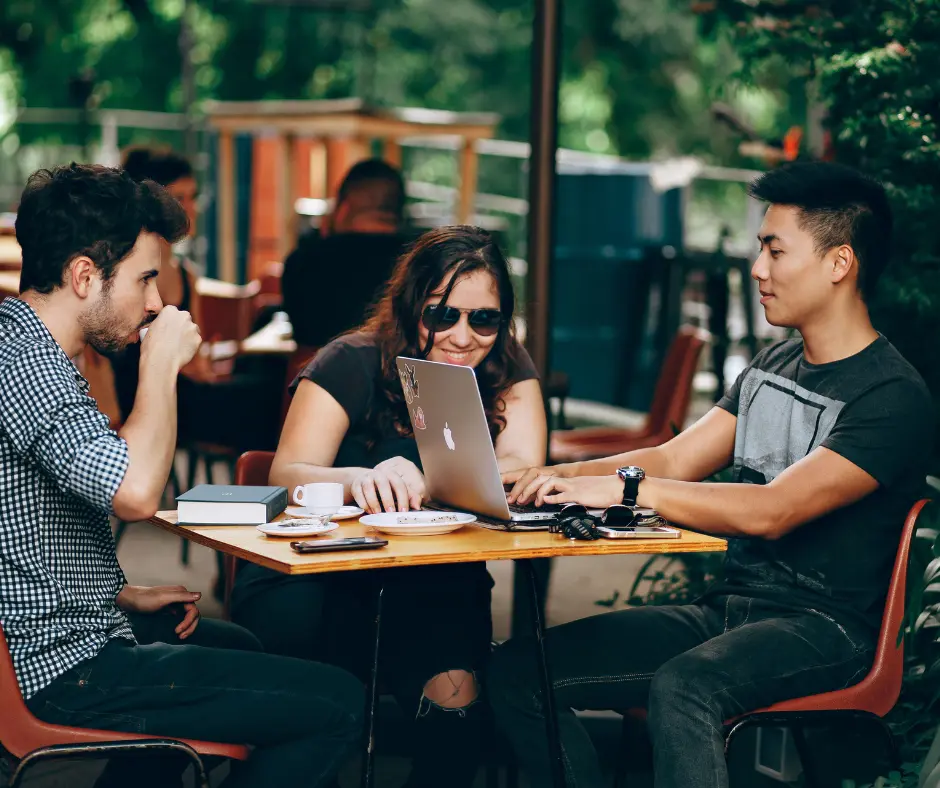
Kuala Lumpur and Penang do not have a weekly nomad fixture on the scale of Chiang Mai's or Da Nang's. Community here runs through coworking spaces and coliving, so choosing the right one matters more than in other hubs.
- Coworking events: Common Ground and WORQ both run member events, which is the easiest way to meet other remote workers in Kuala Lumpur.
- Komune Living: a large coliving operator with locations in Bangsar South (next to Common Ground Bangsar South) and Cheras, taking both short and long stays.
- Nomads.com meetups: members post ad hoc meetups in Kuala Lumpur a few times a year, usually small coffee or drinks evenings.
- Ramadan 2027 runs roughly from 8 February to 9 March. Expect changed opening hours and a festive atmosphere, especially at the evening bazaars.
Sarah Kuhlemann Sarah Kuhlemann
🛜 Internet and SIM cards
Malaysia's internet is among the best in Southeast Asia: Ookla's Speedtest Global Index (September 2026) puts the median fixed broadband speed at about 181 Mbps and mobile at about 170 Mbps. Ookla named U Mobile the best mobile network and fastest 5G network in Malaysia for the first half of 2026.
The simplest way to stay connected is a global eSIM from Pangia: one plan that covers Malaysia and whatever country comes next, set up before you land. For a longer stay, a local tourist SIM is a cheap backup. U Mobile's ULTRA Tourist plans for non-Malaysian passports cost €3.30 (RM15) for 100 GB over 7 days or €11 (RM50) for 500 GB over 30 days, as an eSIM or a physical SIM. Maxis (Hotlink) and CelcomDigi also sell tourist SIMs at the airport.

Stay connected wherever you go: Get 7 days of free global data and a discounted monthly rate through Pangia Pass. But their best-ever discount won't last, so grab it soon.
🌤 When to go where
| Region | 🌞 Best time | 🌧 Avoid | Why |
|---|---|---|---|
| Kuala Lumpur | Year-round | — | Hot and humid all year with short afternoon storms. Haze is possible in the dry months, roughly June to September |
| Penang & Langkawi | Dec-Mar | Sep-Nov | Driest, sunniest months on the west coast. Autumn brings the heaviest rain |
| East coast islands | Apr-Sep | Nov-Mar | Perhentian, Redang and Tioman: the northeast monsoon brings heavy rain and rough seas, and many island resorts close |
| Cameron Highlands | Year-round | — | Cool hill station, a classic escape from Kuala Lumpur's heat |
| Borneo (Sabah, Sarawak) | Mar-Sep | Nov-Feb | The northeast monsoon also hits Sarawak and northern Sabah hardest |
Malaysia's seasons follow two monsoons: the northeast monsoon from November to March and the drier southwest monsoon from May to September, according to the Malaysian Meteorological Department. Kuala Lumpur and Penang sit on the sheltered west coast, which makes Malaysia one of the few Asian countries where a winter stay works well.
Sarah Kuhlemann
🚌 Getting around
- Rail in Kuala Lumpur: Rapid KL's MRT, LRT and monorail lines cover most nomad neighbourhoods except Mont Kiara. A Touch 'n Go card works on trains and buses, and the eWallet app is accepted widely.
- Grab: the default ride-hailing app across Malaysia, including in Penang and Langkawi. Cheap enough to use daily.
- ETS trains: KTMB's electric trains link Padang Besar, Butterworth, Ipoh, Kuala Lumpur and Johor Bahru. Book on KTMB's site at weekends and holidays.
- Long-distance buses: comfortable express coaches connect all major cities and are often the cheapest option.
- Domestic flights: AirAsia and Malaysia Airlines fly to Penang, Langkawi and Borneo. Flying is the only practical way to reach Sabah and Sarawak from the peninsula. For onward trips north, the Thailand DTV guide covers the visa side.
🚧 Safety
Malaysia is one of the safer countries in Southeast Asia. The US State Department rates it Level 1, exercise normal precautions (advisory issued 22 February 2026), with Level 2 for the islands and maritime areas off eastern Sabah because of a kidnapping risk. The UK Foreign Office also advises against all but essential travel to parts of that same coastline.
- Petty crime: watch your phone and bag in crowded areas, especially in Bukit Bintang and on busy rail lines.
- Scams: use the KLIA Ekspres, Grab or official taxi counters at the airport, and avoid touts.
- Drug laws: among the strictest anywhere. Penalties for possession are severe.
- Haze: smoke from land and forest fires in the region can push air quality into unhealthy territory, mostly in the dry southwest monsoon months. Check the Department of Environment's APIMS air quality index and keep a mask in your bag.
- Dengue: the CDC lists dengue as a year-round risk. Use repellent, especially at dawn and dusk.
- Respect local customs: dress modestly at mosques and temples, and be discreet with food and drink in public during Ramadan.
🏥 Healthcare
Private healthcare is a real strength. Malaysia promotes itself as a medical travel destination through the Malaysia Healthcare Travel Council, and private hospitals in the main cities have English-speaking staff and modern equipment. In Kuala Lumpur, foreigners often use Prince Court Medical Centre, Gleneagles Kuala Lumpur and Pantai Hospital Kuala Lumpur. In Penang, Island Hospital, Gleneagles Penang and Loh Guan Lye Specialists Centre are the main options. Hospitals usually expect payment or a guarantee from your insurer before treatment.
Stick to filtered or bottled water, as most residents do.
🎖 Must see
- Petronas Twin Towers: the Skybridge and observation deck. Book timed tickets ahead.
- Batu Caves: Hindu temple caves just north of Kuala Lumpur, with their own KTM Komuter station. Dress modestly.
- George Town heritage zone: street art, clan houses and temples, a UNESCO World Heritage Site together with Melaka.
- Cameron Highlands: tea plantations and cool jungle trails around Tanah Rata.
- Langkawi: beaches, mangrove tours and the Sky Bridge, reached by the SkyCab cable car.
- Kinabalu Park: a UNESCO-listed park in Sabah and the trailhead for Mount Kinabalu, Malaysia's highest peak.
❓ Frequently asked questions
Does Malaysia have a digital nomad visa?
Yes. The DE Rantau Nomad Pass runs for 3 to 12 months and can be renewed up to 48 months in total. Since November 2026, tech professionals need an income above about €32,800 a year (US$36,000) and non-tech professionals above about €54,700 (US$60,000). The processing fee is €239 (RM1,080).
How long can I stay in Malaysia without a visa?
Most EU, UK and US passport holders get up to 90 days on arrival. Fill in the free MDAC arrival card within 3 days before you land. A tourist pass cannot be converted into DE Rantau from inside the country.
Kuala Lumpur or Penang?
Kuala Lumpur for choice, coworking and flights. Penang for heritage, food and a slower pace. Many nomads do both: Kuala Lumpur for the first month, then Penang between December and March, when the island is at its best.
How much does it cost to live in Malaysia as a nomad?
Plan for €950 to €1,700 a month in Kuala Lumpur and €1,000 to €1,650 in Penang on a short stay, including a furnished flat, coworking, food and transport.
Is the internet good enough for remote work?
Yes. Median fixed broadband is about 181 Mbps and mobile about 170 Mbps (Ookla, September 2026), and tourist SIMs with 100 GB cost a few euros.
Do I pay tax in Malaysia as a nomad?
Possibly. MDEC's own FAQ says remote employees can become liable for Malaysian tax on their salary once they stay more than 60 days, and every pass holder registers with the Inland Revenue Board before the pass is issued. The guide to how digital nomad taxes work explains the principles. This is general information, not tax advice.
Traveling that area? Check out Malaysia's neighborhood.