
Thailand is where modern digital nomadism was more or less invented. Long before "digital nomad" was a LinkedIn headline, remote workers were filling the cafes of Chiang Mai, and the country has spent the decade since cementing its place as the most established nomad destination on earth.
The appeal is the same as ever, only better. Bangkok is one of Asia's great cities: chaotic, modern, and endlessly good to eat in. Chiang Mai remains the scene's spiritual home: cheap, walkable, cafe-dense, and full of people doing exactly what you are doing. And the islands, from party-and-yoga Koh Phangan to diving-capital Koh Tao, offer a version of the tropical cliché that actually delivers.
The game-changer is the visa. Thailand's DTV, introduced in 2024, gives remote workers five years of legal stays with a low financial bar, turning a country you used to do on visa runs into one you can properly settle into. Here is everything for 2026.
🌱 Health insurance for Thailand
📌 At a glance
| 🛂 Visa | 30 days visa-free (from 15 Sep 2026), extendable once by 30 days |
| 🪪 Nomad visa | DTV: 5 years, 180-day stays, about €12,500 in the bank |
| 📱 Before you fly | Digital Arrival Card (TDAC), free, within 72 hours of arrival |
| 💶 Monthly budget | From €1,000 (Chiang Mai) to €1,400+ (Bangkok) for a 4-week stay |
| 🌤 Best time | November to February, but avoid Chiang Mai in burning season (Jan to Apr) |
| 🧑🏻💻 Top bases | Bangkok, Chiang Mai, Koh Phangan |
| 🛜 Internet | Excellent: fast fiber in most condos, coworking everywhere |
| 🗣 Language | Thai. English is widely spoken in the nomad hubs |
| 💱 Currency | Thai baht (THB). €1 is around 38 THB |
🇹🇭 Entry requirements for Thailand
- Visa-free entry: from 15 September 2026, most Western nationalities (60 countries including the US, UK, EU, Canada and Australia) get 30 days visa-free on arrival, down from the previous 60. It can be extended once by 30 days at a local immigration office.
- Important, the visa-run era is over: Thailand has cracked down hard on people living in the country on back-to-back tourist entries. Land-border visa-exempt entries are capped at two per calendar year, and immigration now reviews your whole passport history, refusing entry to anyone who looks like they are living here on tourist stamps. If you want to stay long-term, get a proper visa (the DTV below), do not plan on border runs.
- Digital Arrival Card (TDAC): required for every entry, free, within 72 hours of arrival at tdac.immigration.go.th.
- Passport validity: at least six months.
💻 Thailand's digital nomad visa (DTV)
With the crackdown on visa runs, the DTV is now the main legal route for anyone wanting to stay in Thailand longer than a month or two.
Thailand's Destination Thailand Visa, launched in 2024, is one of the best-value nomad visas anywhere.
- Duration: valid for five years, with stays of up to 180 days per entry, extendable once by another 180 days.
- Financial requirement: proof of roughly €12,500 (500,000 THB) in your bank account.
- Who it is for: remote workers, freelancers, and people coming for activities like Muay Thai training or Thai cooking courses (the "soft power" category).
- Tax: the visa itself creates no tax obligation, though spending more than 180 days in a calendar year can make you a Thai tax resident, so take advice if you stay long.
- Cost: around €270 (10,000 THB), applied for at a Thai embassy abroad.
For most nomads, the DTV has replaced the old cycle of tourist entries and visa runs. For a short stay, the 30-day visa-free entry plus a 30-day extension covers you for up to about two months without any visa.
 Sarah Kuhlemann
✈️ How to get to Thailand
- Bangkok is the main gateway, served by two airports: Suvarnabhumi (BKK) for most international flights and Don Mueang (DMK) for budget and regional carriers. Thai Airways is the national airline; Bangkok Airways covers regional Asia.
- Chiang Mai (CNX) has direct flights from across Asia and easy domestic connections from Bangkok.
- The islands: fly into Phuket (HKT), Koh Samui (USM) or Krabi (KBV) for the south, then ferry onward.
- Airport transfer: in Bangkok, the Airport Rail Link into the city is cheap and fast; a Grab or metered taxi runs around €8 to €15.
🗺 Where to base yourself
Bangkok is a vast, fast, modern city, and where you stay shapes everything. Ekkamai, in the Sukhumvit area, is a mid-budget favorite with easy BTS access, malls, gyms, and a blend of traditional and modern Thai life; expect around €800 for a condo. Thong Lo next door is where upper-class Thais and many expats live, trendy and pricier at around €900 a month. Sathorn is central and green, near Lumpini Park. Phra Kanong is the budget-friendly, more local option with a smaller expat community.
Chiang Mai is the nomad capital, 20 to 30 percent cheaper than Bangkok, with expat living from around €800 to €1,000 a month. Nimmanhaemin (Nimman) is where most people land first: the cafe-dense, coworking-rich heart of the scene northwest of Old Town, with everything from groceries to gyms within walking distance. Old Town, inside the ancient moat and walls, offers traditional Lanna life, temples, walkable streets, and coworking like Punspace. Nong Hoi is quieter and more local, good for families and budget travelers.
Each Thai island has its own character and coworking scene. Koh Lanta has KoHub, the island's community-focused coworking and coliving space, open November to April. Beyond its Full Moon Party reputation, Koh Phangan has quietly become a wellness and nomad hub, with spaces like Beachub and Koh Space. Koh Samui mixes resort life with a real remote-work community around Coffee Connextions. Koh Tao is Thailand's diving capital, with coworking built around dive schedules.
💶 How much does it cost?
| Per month | Chiang Mai | Bangkok | Islands |
|---|---|---|---|
| Rent (1-month) | €400–650 | €550–1,000 | €450–800 |
| Coworking | €70–105 | €90–160 | €90–160 |
| Food | €210–320 | €260–400 | €260–420 |
| Transport | €40–80 | €50–100 | €80–110 |
| Realistic total | €1,000–1,500 | €1,400–2,000 | €1,300–1,900 |
Treat these as figures for a single nomad staying four weeks with a short-term apartment, regular eating out, and a coworking membership, outside high season. From November to February, expect to pay noticeably more, especially for island accommodation. Staying longer pays off fast: 6- to 12-month leases cut rent by 30 to 50 percent. A plate of pad thai from a street stall is under €2, and Chiang Mai remains one of the best value nomad cities in the world.
🧑🏻💻 Where to work from
Bangkok
Coworking:
- Wolf Coworking in Silom/Sathorn: a professional space with a good mix of nomads, expats and local Thai entrepreneurs. Memberships from €96 a month.
- The Work Loft in Silom: a well-designed loft-style space with 24/7 access and several floors. One month around €110.
Cafes:
- Too Fast to Sleep in Siam: open 24/7, student-heavy and a little noisy, but the hours are unbeatable for other time zones.
- Yolo Cafe 15 in Sukhumvit Soi 15: serious baristas, good tables, wifi and plugs.
- AIS Design Center in Sukhumvit: lightning-fast internet around 600 Mbps on a day pass. Bring a jacket, the aircon is fierce.
Chiang Mai
Coworking:
- Alt runs two spaces: Alt_ChiangMai in Old Town and Alt_PingRiver, a quieter riverside spot in Wat Ket. Both have fast wifi, hot and cold desks, private offices and a full events calendar. Day passes from €9 (320 THB), hot-desk memberships from around €114 a month (4,000 THB). Note that passes are not shared between the two locations.
- Punspace: a serious coworking space with locations at Wiang Kaew and Tha Phae Gate, known for community lunches and a focused atmosphere. Memberships from €70 a month.
- Yellow Coworking: 16,000 square feet of shared and private space, meeting rooms, soundproof booths and streaming rooms, surrounded by greenery. From €90 a month.
Cafes:
- Artisan Cafe: a hidden gem in the southern districts, dark wood and specialty coffee, good for a few hours in a quiet nook.
- Ombra Caffe in Nimman: great brunch, indoor and outdoor seating, solid work tables.
- Buristro at Buri Siri: a boutique hotel doubling as cafe and coworking, strong wifi and a pool. Day pass required.
The islands
- KoHub on Koh Lanta: the island's community coworking and coliving, open November to April, around €1,200 a month including accommodation and meals.
- Coffee Connextions on Koh Samui: a community-driven coworking cafe run by Marina and Luke.
- Beachub, Koh Space and The Hustle Club on Koh Phangan: beachside coworking for the wellness-and-work crowd.
- Blacktip and Tao Hub on Koh Tao: built around the island's dive schedules.
👥 Finding the community
Thailand has the deepest, longest-established nomad community in Asia, and it is concentrated in two places.
Chiang Mai is the spiritual home. The coworking spaces are the way in: Alt's founder John Ho runs a genuinely active community of local entrepreneurs, freelancers and international nomads, and Punspace's community lunches are an institution. Beyond that, Chiang Mai has a dense calendar of meetups, run clubs, language exchanges and skill-shares, most announced through coworking spaces and the big Facebook groups.
Bangkok has a weekly digital nomad meetup that runs every Thursday and draws a large, rotating crowd, plus a WhatsApp community. The scene is more spread out than Chiang Mai's but just as real once you plug in. On the islands, community forms around the coworking spaces and colivings, especially KoHub on Koh Lanta and the Koh Phangan spaces.
Wherever you base yourself, our guide to making friends as a nomad applies here as much as anywhere.
Sarah Kuhlemann Sarah Kuhlemann
🛜 Internet and SIM cards
Thailand's internet is genuinely excellent, and one of the reasons the scene took root here. Fixed broadband runs a median of roughly 189 Mbps for downloads, fiber is standard in condos, and coworking spaces are fast and reliable across all the major bases.
AIS, TrueMove and DTAC are the main operators, all with strong urban coverage; DTAC is the popular tourist choice for quick setup. A prepaid tourist SIM with generous data costs a few euros from the airport, convenience stores or phone shops, and eSIMs are widely supported. Keep mobile data as a backup, though you will rarely need it in the cities.
🌤 When to come
| J | F | M | A | M | J | J | A | S | O | N | D | |
|---|---|---|---|---|---|---|---|---|---|---|---|---|
| Bangkok | ☀️ | ☀️ | ⛅ | ⛅ | 🌧 | 🌧 | 🌧 | 🌧 | 🌧 | 🌧 | ☀️ | ☀️ |
| Chiang Mai | ☀️ | 🌫 | 🌫 | 🌫 | 🌧 | 🌧 | 🌧 | 🌧 | 🌧 | ⛅ | ☀️ | ☀️ |
| Gulf islands (Samui, Phangan) | ☀️ | ☀️ | ☀️ | ☀️ | ⛅ | ⛅ | ☀️ | ☀️ | ⛅ | 🌧 | 🌧 | 🌧 |
| Andaman (Phuket, Lanta) | ☀️ | ☀️ | ☀️ | ⛅ | 🌧 | 🌧 | 🌧 | 🌧 | 🌧 | 🌧 | ⛅ | ☀️ |
The cool, dry season, November to February, is the best time nearly everywhere and the peak nomad stretch. Two things to plan around. Chiang Mai's burning season, roughly January or February through March or April, fills the valley with genuinely hazardous smoke, and many nomads leave for the islands during it. And the two coasts run opposite: the Andaman side (Phuket, Krabi, Koh Lanta) is best November to April, while the Gulf islands (Samui, Phangan, Tao) stay drier through the middle of the year and get their rain October to December.
🚌 Getting around
- BTS and MRT (Bangkok only): the modern Skytrain and metro link the airports and districts. Get a Rabbit card and top it up. The easiest way around the capital by distance.
- Grab: the ride-hailing app for both cars and motorbike taxis, the default in the cities. Not always cheaper than a metered taxi, but simpler.
- Taxis: cheap and metered in Bangkok, which has one of the highest taxi-to-person ratios in the world. Insist on the meter.
- Motorbike taxis: the fastest way through Bangkok traffic for short hops, from around €1.
- Tuk tuk: the iconic three-wheeler, fun once, and usually pricier than a taxi. Agree the fare first.
- Songthaew: shared pickup trucks with bench seating, the cheap local way around Chiang Mai and smaller towns. Flag one down, press the buzzer to stop, pay a few baht.
- Scooter rental: around €65 a month, and essential on the islands. An international driving permit is legally required, police checks happen, and helmets are mandatory. Thailand's road-accident rate is high and mostly involves motorbikes, so ride carefully or not at all.
- Trains and buses between cities: Thailand has one of the region's better rail networks, cheap and scenic, plus extensive long-distance buses that reach everywhere the train does not.
🚧 Safety and health
- General safety: Thailand is one of the safer countries in Southeast Asia for travelers, and crime in tourist areas is rare. There is a history of occasional political unrest, but it seldom touches visitors.
- Traffic is the real risk. Road accidents are a leading cause of injury, and around three-quarters of deaths involve motorbikes. If you ride, wear a helmet and stay sober; many nomads simply use Grab.
- Burning season: Chiang Mai's air quality from roughly January to April is a genuine health issue, not a nuisance. Check AQI readings and consider leaving if you have respiratory sensitivity.
- Mosquito-borne illness: dengue is present countrywide and the mosquito bites by day, so repellent matters. Malaria risk is low and limited to rural border areas, not the cities, islands or main resorts.
- Tap water: not for drinking anywhere, even in Bangkok where it meets standards at the plant. Use filtered or bottled.
- ATMs: Thai banks charge around 220 THB (€6) per foreign-card withdrawal, so take out larger amounts less often. Thailand is still largely cash-based.
- Healthcare: excellent and affordable, with world-class private hospitals in Bangkok, Chiang Mai and Phuket. Thailand is a major medical-tourism destination. Insurance still matters for anything serious.
- Emergency number: 191 for police, 1669 for medical.
Staying active
- Muay Thai: train the national martial art at its source, in gyms everywhere from Bangkok to the islands. Genki's insurance covers it.
- Yoga and wellness: retreats and drop-in classes across Chiang Mai, Koh Phangan and the islands.
- Diving: Koh Tao is one of the cheapest places on earth to get certified, with Koh Phangan and Koh Samui next door.
- Outdoors: hiking and waterfalls around Chiang Mai and Pai, sea kayaking and island-hopping in the south.
🎖 Must see
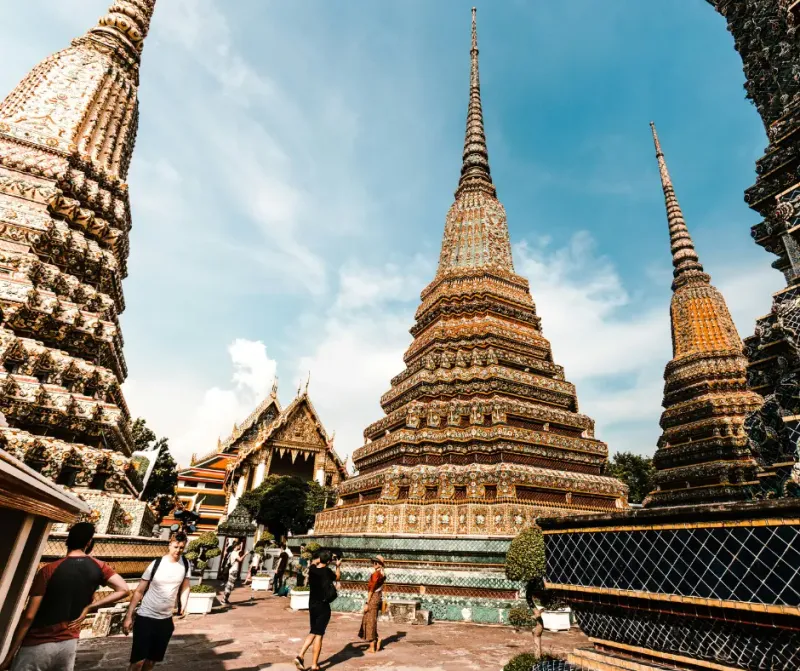
- Bangkok: the Grand Palace, Thailand's most visited site, and the Golden Mount temple for a 360-degree view over the city.
- Chiang Mai: Doi Suthep, the mountaintop temple and best viewpoint, plus Wat Chedi Luang and Wat Phra Singh inside the Old City, and the Sunday Walking Street market.
- Northern Thailand: laid-back Pai for hot springs and waterfalls, Chiang Rai's mirrored White Temple, and the 600km Mae Hong Son Loop, one of Southeast Asia's great motorbike rides.
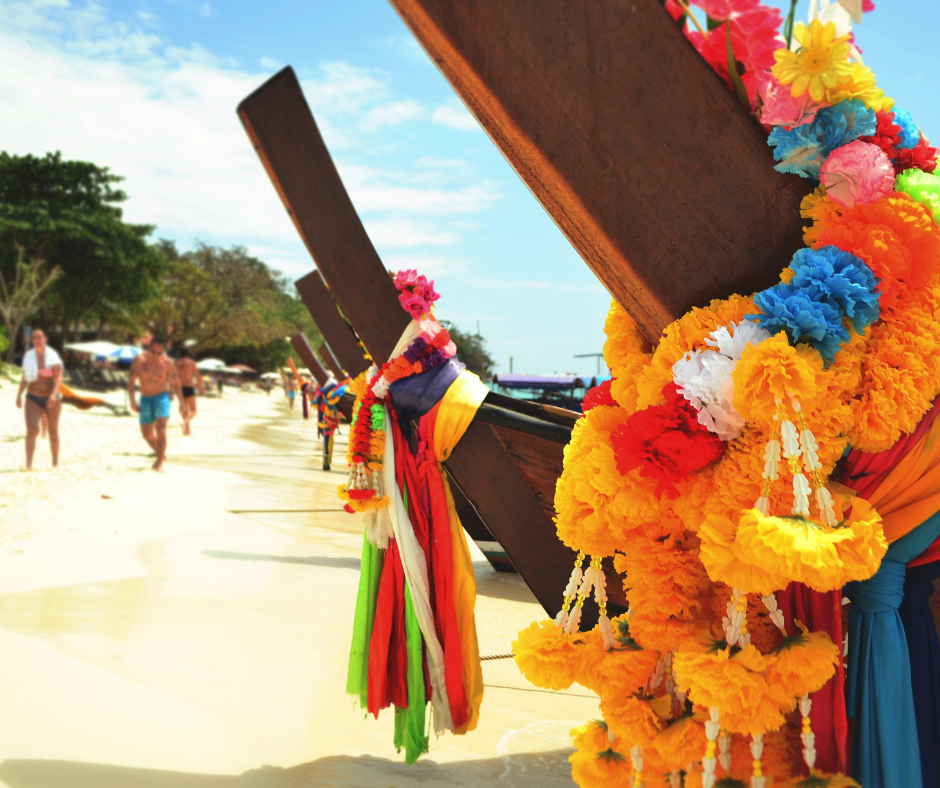
- The southern islands: Koh Samui's Big Buddha, Koh Tao's diving, Koh Phangan's beaches and, in Krabi, the boat-only climbing peninsula of Railay.
- National parks: Khao Yai's rainforest and grassland a few hours from Bangkok, and Khao Sok's ancient jungle and floating bungalows on Cheow Lan Lake.
❓ Frequently asked questions
Does Thailand have a digital nomad visa?
Yes, the DTV (Destination Thailand Visa), introduced in 2024. It runs five years with 180-day stays, needs about €12,500 in the bank, and costs around €270. For stays up to about two months, the 30-day visa-free entry plus a 30-day extension is enough without any visa.
Which city is best for digital nomads in Thailand?
Chiang Mai for the biggest, cheapest, most established scene; Bangkok for the energy, infrastructure and job market; the islands for beach life with a real coworking community. Most nomads start in Chiang Mai.
How much does it cost to live in Thailand?
Around €1,000 to €1,500 a month in Chiang Mai, €1,400 to €2,000 in Bangkok, and €1,300 to €1,900 on the islands, for a comfortable single-nomad setup. Long leases cut costs sharply.
Is the internet good enough to work?
Yes, some of the best in the region. Fiber is standard in condos and coworking spaces are fast and reliable, with a national median around 189 Mbps.
When is the best time to visit?
November to February is the cool, dry peak nearly everywhere. Avoid Chiang Mai from January to April for the burning season, and note the two coasts have opposite rainy seasons.
Do I need to speak Thai?
Not to get by. English is widely spoken in the nomad hubs and tourist areas. A few polite phrases go a long way and are appreciated, but you can live comfortably without fluency.
🎯 Conclusion
Thailand invented the modern nomad life and then kept improving. The scene is deeper and the infrastructure better than almost anywhere, the food is a daily pleasure, the internet is fast, and the DTV finally makes it a place you can stay for years rather than string together on visa runs.
Start in Chiang Mai if you want community and value, Bangkok if you want a great city, the islands if you want the beach. Get the TDAC done before you fly, sort the DTV if you are staying long, avoid Chiang Mai in burning season, and ride carefully or not at all. Do that and Thailand is as good as the nomad life gets.
Sarah Kuhlemann Sarah Kuhlemann
 Sarah Kuhlemann
 Sarah Kuhlemann
 Sarah Kuhlemann