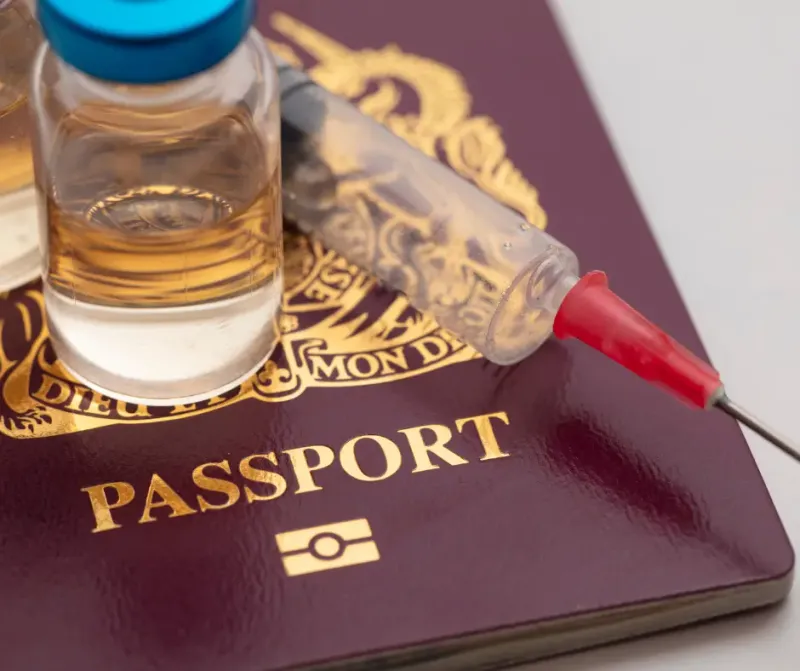


You probably received the standard vaccines as a child: measles, polio, tetanus, hepatitis. As a nomad, the practical questions are different. Which of them need refreshing as an adult, which never do, and what does a booster cost when your family doctor is eight time zones away?
Here is the answer, checked against current WHO and CDC guidance: fewer than you might think. Only one of the four needs a routine booster. This article covers the routine vaccines. For rabies, typhoid, yellow fever and friends, read our guide to travel vaccines for nomads.
⛵️ Vaccines recommended by the World Health Organization
You probably got the standard vaccinations recommended by the World Health Organization when you were born. You received follow-up shots as a child, and after that most of us stopped thinking about it.
Not sure how vaccinations are recorded where you are from, but in Germany they go into a small yellow booklet. That booklet (or a digital copy of it) becomes surprisingly important once you live out of a backpack, because it is the only proof of what you already have.
The World Health Organization recommends routine coverage against measles, mumps and rubella, polio, tetanus, diphtheria and pertussis, and hepatitis A and B. Being fully immunized against these diseases reduces your health risks anywhere in the world.
For nomads, two questions matter: which of these standard vaccines still need attention as an adult and what do booster shots cost out of pocket? The good news on the first question is that the answer is shorter than most people expect.
💡 Standard vaccinations cheat sheet
There is a high chance you are already vaccinated against measles, mumps, and rubella (MMR), tetanus, diphtheria, and pertussis (Tdap), polio, and hepatitis A+B. These are standard vaccinations in many countries, for example in Europe and the USA.
Here is the whole article in one table:
| Standard vaccination |
Booster as a healthy adult? | Out-of-pocket costs per full vaccination |
|---|---|---|
| Measles, mumps, rubella (MMR) |
No routine booster. Travelers should have 2 documented doses | EU: €40–50 USA: $175 Asia: $70 |
| Polio | No routine booster. One lifetime booster only if traveling to increased-risk countries | EU: €35 USA: $75 Asia: $35 |
| Tetanus, diphtheria, pertussis (Tdap) |
Yes: every 10 years | EU: €35 USA: $75 Asia: $30 |
| Hepatitis A+B | No routine booster after the completed series | Hep A: 2 doses, Hep B: 3 doses (combination available) EU: ~€50 per dose USA: ~$100 per dose Asia: ~$45 per dose |
*The estimated costs are per full vaccination, including all necessary doses, as of September 2026. Prices vary by country and clinic.
📅 The only standard vaccine with a routine booster
#1 Tetanus, diphtheria, and pertussis (Tdap) vaccine
| DTaP | 1st dose | Booster dose | Out-of-pocket costs Total costs per vaccination |
|---|---|---|---|
| Diphtheria, Tetanus, pertussis | child | every 10 years | EU: €35 USA: $75 Asia: $30 |
- Tetanus: Also known as lockjaw, is a bacterial disease that can cause muscle stiffness, spasms, and even seizures. It is usually contracted through open wounds or cuts and can be fatal if left untreated.
- Diphtheria: Diphtheria is a bacterial disease that can cause a sore throat, fever, and breathing difficulties. It can also lead to serious complications such as heart failure, paralysis, and even death.
- Pertussis: Also known as whooping cough, is a highly contagious bacterial disease that can cause severe coughing fits, difficulty breathing, and vomiting. It can be especially dangerous for infants and young children.
Short facts about the Tdap vaccine
- Transmitter: Tetanus, diphtheria, and pertussis are three bacterial infections that can enter the body through a wound or cut, or spread through respiratory droplets.
- Who should get vaccinated: everyone who has not had a booster shot within the last 10 years. Tetanus lives in soil worldwide, so this one is relevant no matter where you travel.
- Vaccinal immune protection: 10 years per booster.
- Full protection: the childhood series, then one booster every 10 years.
- Estimated out-of-pocket costs: between €20 and €50 in Europe, between $50 and $100 in the USA, and between $20 and $50 in many Asian countries.
- Costs for treatments: the cost of hospitalization for a severe case of pertussis in the USA can exceed $50,000 and the cost of tetanus treatment can exceed $20,000.
- Good to know: this is the one recurring vaccination date worth putting in your calendar. If you cannot remember your last tetanus shot, it has probably been more than 10 years.
👍 Standard vaccinations without routine boosters
Here is the part most people get wrong, because recommendations changed over the years. None of the following three need routine boosters for healthy adults.
#2 Measles, mumps, and rubella (MMR) vaccine
- Measles: Measles is a highly contagious viral disease that can cause fever, rash, cough, and respiratory symptoms. It can also lead to serious complications such as pneumonia, encephalitis (inflammation of the brain), and even death, especially in young children and individuals with weakened immune systems.
- Mumps: Mumps is another highly contagious viral disease that can cause fever, headache, and swelling of the salivary glands. It can also lead to complications such as meningitis, encephalitis, and deafness.
- Rubella: Rubella, also known as German measles, is a viral disease that can cause fever, rash, and arthritis. It can cause serious complications if a woman contracts the disease during pregnancy, including miscarriage, stillbirth, and congenital rubella syndrome.
Short facts about the MMR vaccine
- Transmitter: All three diseases are viral infections and spread through respiratory droplets and contact with infected surfaces.
- Who should get vaccinated? The MMR vaccine is recommended for all individuals who have not been previously vaccinated or who have not had these diseases. International travelers should be able to document 2 doses.
- Vaccinal immune protection: long-lasting and usually life-long for measles and rubella. Immunity against mumps can decrease over time, but no routine booster is recommended. An extra dose can be advised during outbreaks.
- Full protection: 2 documented doses.
- Estimated out-of-pocket costs: 1 dose costs between €40 and €50 in Germany, between $75 and $100 in the USA, and between $20 and $50 in many Asian countries. For full protection, 2 doses are necessary.
- Costs for treatments: without vaccination, treatment costs for a serious MMR infection can exceed tens of thousands of Euros or Dollars once hospitalization is needed.
- Good to know: measles outbreaks still happen regularly, including in Europe and Southeast Asia, and proof of vaccination can be your fast lane out of quarantine rules during an outbreak. Keep your records with you.
#3 Polio vaccine
Polio, also known as poliomyelitis, is a highly infectious viral disease that primarily affects young children. It can lead to paralysis and in severe cases it can be life-threatening.
Short facts about the polio vaccine
- Transmitter: Polio is transmitted through contact with the feces of an infected person or through respiratory secretions. The virus can spread easily in areas with poor sanitation.
- Symptoms: fever, sore throat, headache, nausea and vomiting, fatigue, general weakness, and in severe cases paralysis.
- Who should get a booster: adults who were fully vaccinated in childhood need at most one single lifetime booster, and only when traveling to countries with increased polio risk. Unvaccinated adults need a 3-dose series.
- Vaccinal immune protection: the childhood series protects for life for most purposes. The one-time adult booster is a travel precaution, not a recurring appointment.
- Full protection: completed childhood series, plus at most one lifetime booster for risk-country travel.
- Estimated out-of-pocket costs: between €20 and €50 in Europe, between $50 and $100 in the USA, and between $20 and $50 in many Asian countries.
- Costs of treatment: costs for severe cases requiring hospitalization and long-term care can be significant. There is no cure for polio, treatment can only manage symptoms.
- Good to know: if you stay longer than 4 weeks in a country with active poliovirus, WHO rules can require proof of a polio dose given between 4 weeks and 12 months before you leave that country. Check the current list of affected countries before planning a long stay.
#4 Hepatitis A+B vaccine
| Standard vaccination |
Full protection | Booster |
|---|---|---|
| Hepatitis A | 2 doses, 6 months apart | None recommended, protection lasts at least 20 years |
| Hepatitis B | 3 doses over 6 months | None for most healthy people |
Hepatitis A+B: Hepatitis A and B are viral infectious diseases that affect the liver.
Hepatitis A is usually spread through contaminated food or water. Hepatitis B is primarily spread through blood, semen, or other bodily fluids. The vaccination can be given single or as a combination vaccine against hepatitis A and B.
Short facts about the Hepatitis A+B vaccine
- Transmitter: Hepatitis A is typically spread through contaminated food or water, or through close contact with an infected person. Hepatitis B is typically spread through exposure to infected blood or bodily fluids, such as through unprotected sex, sharing needles, or from mother to baby during childbirth.
- Symptoms: fatigue, nausea and vomiting, loss of appetite, dark urine, jaundice (yellowing of the skin and eyes).
- Who should get vaccinated: anyone who never completed the series, and especially travelers to regions where hepatitis A is common. For nomads eating street food across Asia and Latin America, hepatitis A protection is one of the most useful vaccines there is.
- Vaccinal immune protection: long-term. Hepatitis A antibodies persist for at least 20 years after the 2-dose series and no booster is recommended. For hepatitis B, most healthy people never need a booster after the completed series. Boosters exist only for special medical groups, for example dialysis patients.
- Full protection: Hepatitis A: 2 doses, 6 months apart. Hepatitis B: 3 doses over a period of 6 months.
- Costs for vaccination: 1 dose of hepatitis A or hepatitis B costs between €20 and €80 in Europe, around $100 in the USA, and between $20 and $70 in many Asian countries.
- Costs for treatment: in the USA, the cost of hepatitis treatment can range from $20,000 to $100,000 or more, depending on the type of treatment, duration, state, and clinic.
- Good to know: if you are unsure whether you ever completed the series, a doctor can check your antibody levels (titers) with a simple blood test. Chronic hepatitis B infection can lead to long-term liver damage, including cirrhosis and liver cancer.
🎯 Conclusion
You probably received all four standard vaccines as a child. As a healthy adult, only one needs routine refreshing: the tetanus, diphtheria and pertussis booster every 10 years.
MMR and the completed hepatitis A+B series need no routine boosters. Polio needs at most one lifetime booster, and only if you travel to countries with increased polio risk.
That makes the 10-year Tdap reminder the only recurring date for your calendar, and your vaccination records the thing to keep organized. Which brings us to the next section.
🗂️ How to organize vaccines
Once we enter adulthood, it is on us to organize our routine and travel vaccinations.
Especially for traveling nomads who have no long-term family doctor who stores all vaccination records for us, it is important that we find ways to organize ourselves.
There are several ways to organize your vaccination status depending on your specific needs and preferences.
- Collect your vaccine data: Collect all your vaccination data, from newborn age and childhood to adulthood. You might have a vaccination booklet, a vaccination passport, vaccination cards, or any other proof of the vaccinations you have received so far.
- Organize your vaccine data: Once you have all your vaccine data together, organize it in any form it suits you. You can use an Excel file or you might want to use a digital form. When having your data digitalized you can access it at any time with your phone which comes in handy when traveling or in any emergency situations.
- The Vaccine App: This application allows you to keep track of your vaccination status. It keeps a digital record of all your past vaccinations as well as provides reminders once you need a booster. You can also upload PDFs or files so that you have all data in one place, handy whenever you need information.
💶 Are vaccines covered by insurance?
Paying standard vaccines out-of-pocket can be very costly.
If you have international health insurance, check whether your plan includes vaccines. If you do have national health insurance in your home country or another country of residence, check if the standard vaccine boosters are covered.
⭐️ Genki Native Premium covers vaccines
Genki Native Premium covers vaccines, while Genki Native Basic doesn't.
Additionally, Genki Native Premium covers travel vaccines, such as rabies, and yellow fever. Vaccines are covered up to €500 per year after a 3-month waiting period.
🛟 Travel health insurance with Genki
Genki Traveler
A flexible, worldwide travel health insurance subscription for up to 1 year.
- Who is this for: Frequent and long-term international travelers (like digital nomads) who want the freedom to go anywhere and to change plans on a moment's notice.
- Region of cover: Worldwide cover, outside of your home country.
- What’s covered: Up to €1,000,000 of medical care for unexpected injuries and illnesses. That includes doctor’s visits, treatment at public and private hospitals, emergency medical transport, and medically necessary return transport to your home country. It doesn’t cover prior health conditions, preventive care, dental, vision, or maternity care.
- Length of cover: From one month up to one year. Monthly billing. Cancel anytime. You should have other long-term health cover in your home country.
☂️ Genki Native international health insurance
- Who is this for: Digital nomads, expats, and other long-term travelers who want complete health cover.
- Region of cover: Worldwide (limited in USA).
- Period of cover: No maximum, you can stay covered life-long if you wish. The minimum is one month, and you pay monthly.
- Home country: Genki Native is available for people from every country (even nomads without any legal residence). You can choose to have limited or full cover in your country of citizenship.
- Genki Native Basic: Genki Native Basic covers necessary medical treatment (inpatient and outpatient treatments) at any licensed doctor or hospital up to €1,000,000 per year. That includes accidents and emergencies, as well as common illnesses and injuries.
- Genki Native Premium: Genki Native Premium covers necessary medical treatment (inpatient and outpatient treatments) at any licensed doctor or hospital up to €3,500,000 per year. Genki Native Premium also covers preventive care/check-ups, plus dental, vision, maternity, mental health, and also includes full cover in your country of citizenship.
- Monthly costs: Genki Native costs €189 per month (example price for Genki Native Basic for someone aged 24 with €0 deductible). The price depends on your age, chosen deductible, and the result of a medical questionnaire.
 Sarah Kuhlemann
 Sarah Kuhlemann
 Sarah Kuhlemann
 Sarah Kuhlemann
 Sarah Kuhlemann