

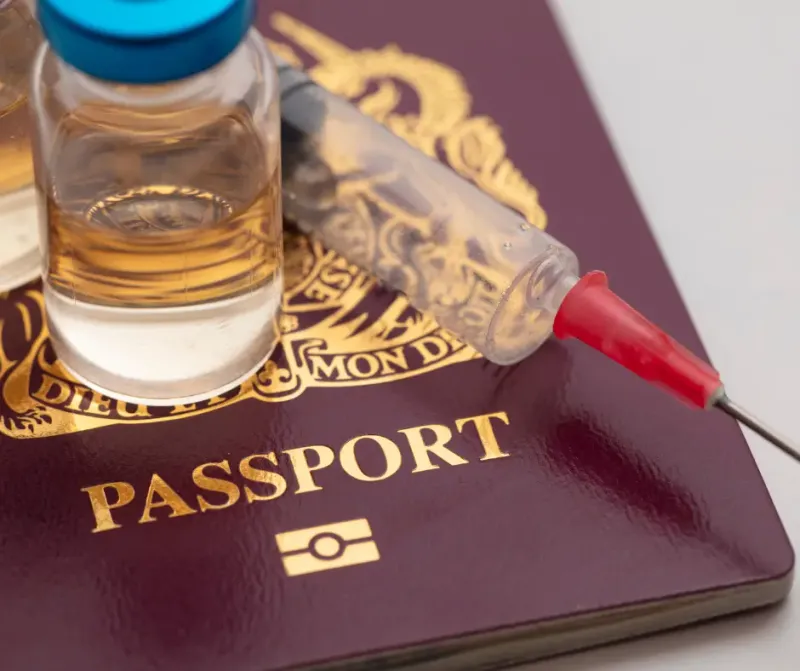
Standard vaccines cover the diseases you can meet anywhere. Travel vaccines cover the ones that come with specific places: typhoid where water quality is poor, rabies where street dogs roam, yellow fever in parts of Africa and South America. This guide covers the six that matter for long-term travelers, checked against current WHO and CDC guidance. Your routine shots come first, here is our guide to the 4 standard vaccines.
In Germany, before going on vacations, we (most Germans) would bring our yellow vaccination booklet to our family doctor and according to the suggestions, we would get additional vaccines.
For example, I spent my 9th grade at a boarding school in Tamil Nadu in India. I remember that I got all the standard vaccinations up-to-date plus additional vaccines against typhoid fever, rabies, and the Japanese encephalitis virus (JEV).
When I moved to Vietnam in 2016, I made sure to have the standard vaccinations up to date, and I took my yellow vaccination booklet with me. I still carry it around (out of nostalgia) but today I use The Vaccine App, which helps me to keep track of my vaccinations and their expiry dates.
🦠 #1 Typhoid fever
Typhoid fever is a bacterial infection caused by the bacterium Salmonella typhi.
It is primarily spread through contaminated food and water and can cause symptoms such as fever, abdominal pain, and diarrhea.
| Travel vaccine against |
Travel to | Protection | Out-of-pocket costs |
|---|---|---|---|
| Typhoid fever | Regions with poor water and food hygiene | 2–5 years depending on vaccine type | EU: €35 USA: $100+ |
Short facts about typhoid vaccines
- Transmitter: The bacterium is usually spread through contaminated food or water, or through close contact with someone who is infected.
- Symptoms: High fever (39.4°C to 40°C), weakness and fatigue, headache, diarrhea, nausea and vomiting, and a rash of flat, rose-colored spots.
- Who should get vaccinated: Recommended if you are traveling to areas where food and water hygiene may be poor. For nomads spending months in South Asia, Southeast Asia, Africa or Latin America, this is one of the most commonly recommended travel vaccines.
- Vaccinal immune protection: depends on the type of vaccine. The injectable vaccine protects for about 2 years, the oral vaccine for about 5 years.
- Full protection: the oral vaccine needs 4 capsules taken over a week, with a booster after 5 years. The injectable vaccine requires 1 dose, with a booster every 2 years if you remain at risk.
- Cost for vaccination: Without health insurance, average costs in European countries are €20 to €50 per dose. The USA charges more than $100 per dose.
- Treatment cost without vaccination: In the US, the cost of typhoid fever treatment can range from several hundred to several thousand dollars, depending on the duration of the illness, the type of treatment required, and the need for hospitalization.
- Good to know: The typhoid vaccine does not provide 100% protection, so keep taking precautions: practice good hygiene, drink boiled or bottled water, and be careful with food that may be contaminated.
🐶 #2 Rabies
Rabies is a viral infection that affects the nervous system and is transmitted through the saliva of infected animals, most commonly through a bite or scratch.
Once symptoms appear, rabies is almost always fatal, which is why prevention matters so much.
| Travel vaccine against |
Travel to | Protection | Out-of-pocket costs |
|---|---|---|---|
| Rabies | Worldwide (animal exposure risk) | Long-term after the 2-dose series | EU: €100–200 USA: ~$400 (2 doses) |
- Transmitter: Rabies is primarily transmitted to humans through the bite or scratch of an infected animal, most commonly dogs, bats, raccoons, and foxes. In nomad hotspots across Asia and Latin America, street dogs and monkeys are the realistic risk.
- Symptoms: During the first stage, which typically lasts 2 to 10 days, individuals may experience fever, headache, weakness, and pain or tingling at the site of the bite or scratch. Later symptoms include anxiety or confusion, hallucinations, insomnia, paralysis, or coma.
- Who should get vaccinated: Recommended if you will be spending time in rural areas or regions with many street animals, and especially if you travel with limited access to medical care. Runners, cyclists, cave visitors and animal lovers have elevated risk.
- Vaccinal immune protection: long-term after the 2-dose series. For travelers with ongoing risk beyond 3 years, one single additional booster (or a one-time antibody check) is advised. Routine boosters every few years are no longer recommended for typical travelers.
- Full protection: the pre-exposure schedule is 2 doses, on day 0 and day 7 (simplified in 2022 from the old 3-dose series). This makes it much more practical to fit in before a trip.
- Costs: Without health insurance, average costs in European countries are between €50 and €100 per dose. The US charges around $200 per dose. With only 2 doses needed, the full series is about a third cheaper than the old schedule.
- Treatment cost without vaccination: Average post-exposure treatment in the US ranges around $15,000, and the immunoglobulin part of it can be hard to find in many countries.
- Crucial to know: pre-exposure vaccination does NOT remove the need for treatment after a bite or scratch. You still need 2 additional vaccine doses (days 0 and 3) after any exposure. What the vaccine buys you is time to reach a clinic and the elimination of the expensive, hard-to-find immunoglobulin treatment.
🤢 #3 Meningococcal disease
Meningococcal disease is a bacterial infection caused by the bacterium Neisseria meningitidis.
It can cause inflammation of the membranes surrounding the brain and spinal cord, leading to symptoms such as fever, headache, and a stiff neck, and in severe cases, it can be life-threatening.
| Travel vaccine against |
Travel to | Protection | Out-of-pocket costs |
|---|---|---|---|
| Meningococcal disease |
African meningitis belt, Hajj (Saudi Arabia) | 5 years | EU: €70–140 USA: $165–330 |
- Transmitter: The bacteria are spread from person to person through close contact with respiratory and throat secretions, such as coughing, sneezing, or kissing. The bacteria can also spread by sharing items such as utensils, drinking glasses, or cigarettes.
- Symptoms: high fever, severe headache, stiff neck, nausea and vomiting, and a rash that may be red or purple, from small pinpoint spots to larger flat patches. The rash can be a late sign and may not appear in all cases.
- Who should get vaccinated: Recommended if you travel to areas with increased risk, such as the sub-Saharan African meningitis belt, especially in the dry season. Saudi Arabia requires proof of vaccination within the previous 5 years for the Hajj pilgrimage.
- Vaccinal immune protection: at least 5 years. A booster every 5 years is recommended while you remain at risk.
- Full protection: For adults, a single dose of the conjugate vaccine (MenACWY) is usually enough. Some individuals at high risk of exposure may require additional doses.
- Costs: Without health insurance, average costs in European countries are between €40 and €100. In the USA a single dose can range from $165 to $330.
- Treatment cost without vaccination: The average cost of hospitalization for meningococcal disease in the USA is approximately $40,000.
- Good to know: Meningococcal disease is a medical emergency. If you suspect exposure or develop symptoms, seek medical care immediately.
🤒 #4 Yellow fever
Yellow fever is a viral disease transmitted by infected mosquitoes, primarily found in tropical areas of Africa and South America. It can cause fever, muscle pain, and other symptoms and in severe cases, it can lead to organ failure and death.
| Travel vaccine against |
Travel to | Protection | Out-of-pocket costs |
|---|---|---|---|
| Yellow fever | Africa & South America | Life-long (1 dose) | EU: €35 USA: $100 |
- Transmitter: Yellow fever is transmitted to humans through the bite of infected mosquitoes, typically the Aedes aegypti species.
- Symptoms: Symptoms usually appear within 3 to 6 days after infection: high fever, headache, fatigue, yellowing of the skin and eyes (jaundice), and in severe cases bleeding from the nose, mouth, and eyes.
- Who should get vaccinated: Required for entry to certain countries in Africa and tropical South America, and some countries require proof of vaccination if you arrive from a yellow fever region.
- Vaccinal immune protection: life-long from a single dose.
- Full protection: 1 dose.
- Costs for vaccination: between €25 and €50 per dose in most European countries. The USA charges up to $100 per dose. Note that yellow fever vaccination is only given at certified centers, so plan ahead.
- Treatment cost without vaccination: According to the US CDC, the median hospitalization cost for yellow fever in the USA was approximately $33,000 (2016 report).
- Good to know: Since 2016, yellow fever vaccination certificates are valid for life, so old 10-year-validity rules no longer apply at borders. A booster is only considered in specific situations, like travel to areas with ongoing outbreaks when your dose is more than 10 years old. Keep the yellow certificate with your passport, some borders do check it.
🐒 #5 Japanese encephalitis
Japanese encephalitis is a viral infection transmitted by infected mosquitoes, primarily found in rural areas of Asia.
It can cause inflammation of the brain and can lead to symptoms such as fever, headache, and seizures, and in severe cases, it can be life-threatening.
| Travel vaccine against |
Travel to | Protection | Out-of-pocket costs |
|---|---|---|---|
| Japanese encephalitis |
Rural Asia (1+ month stays) | Long-lasting after booster dose | EU: €160–240 USA: ~$400 (2 doses) |
- Transmitter: The virus is transmitted by mosquitoes and can cause inflammation of the brain (encephalitis) in humans.
- Symptoms: high fever, headache, nausea and vomiting, stiff neck, mental confusion, seizures, coma.
- Who should get vaccinated: Recommended if you spend a month or longer in endemic areas of Asia, travel there frequently, or spend lots of time in rural and agricultural areas. For nomads basing themselves in Southeast Asia long-term, this one is worth discussing with a travel doctor.
- Vaccinal immune protection: long-lasting after the booster dose. An exact duration is not officially specified.
- Full protection: 2 doses, usually 28 days apart (adults can compress the schedule to days 0 and 7 to 28), plus a booster dose if your primary series was more than a year ago and you continue to be at risk.
- Costs: Without health insurance, average costs in Europe are between €80 and €120 per dose. The USA charges around $200 per dose. The 2-dose series comes to roughly €160 to €240 in Europe and around $400 in the USA, plus the booster if needed.
- Treatment cost without vaccination: According to a study published in the Journal of Travel Medicine, the median cost of hospitalization for Japanese encephalitis in the United States was $47,000, with an average hospital stay of 13 days. Long-term rehabilitation can add to that.
- Good to know: Not everyone infected with the virus will show symptoms, but in severe cases the infection can lead to permanent brain damage or death. Seek medical attention if you experience these symptoms after traveling in an area where Japanese encephalitis is common.
🌏 #6 COVID-19
COVID-19 is an infectious respiratory illness caused by the SARS-CoV-2 virus.
It can cause a range of symptoms from mild to severe and can be transmitted from person to person through respiratory droplets.
| Travel vaccine against |
Travel to | Protection | Out-of-pocket costs |
|---|---|---|---|
| COVID-19 | Worldwide | At least 6 months (seasonal booster) | Free or insurance-covered in many countries, not all |
- Transmitter: The coronavirus (COVID-19) is mainly transmitted through respiratory droplets that are released when an infected person talks, coughs, or sneezes.
- Symptoms: Fever or chills, cough, shortness of breath, fatigue, muscle or body aches, headache, loss of taste or smell, nausea or vomiting.
- Who should get vaccinated: Health authorities recommend staying up to date with COVID-19 vaccination, with current advice focusing on seasonal boosters for adults, similar to the flu shot. Recommendations vary by country and age group.
- Vaccinal immune protection: protection against severe illness lasts at least 6 months, which is why boosters are now seasonal.
- Full protection: for most adults today, one updated dose per season is the norm. If you were never vaccinated, the primary schedule depends on the specific vaccine.
- Costs: no longer free everywhere. Many countries cover it through public or statutory health insurance (Germany does for recommended groups), but in the USA the vaccines moved to the commercial market in 2023, so uninsured adults can pay out of pocket. Check your insurance rather than assuming it is free.
- Treatment costs without vaccination: Average cost of hospitalization for COVID-19 in the US was $73,000 in 2020.
- Good to know: Entry requirements tied to COVID vaccination have been dropped almost everywhere, so this one is about your health rather than your passport.
🗂️ How to organize vaccines
Once we enter adulthood, it is on us to organize our routine and travel vaccinations.
Especially for traveling nomads who have no long-term family doctor who stores all vaccination records for us, it is important that we find ways to organize ourselves.
There are several ways to organize your vaccination status depending on your specific needs and preferences.
- Collect your vaccine data: Collect all your vaccination data, from newborn age and childhood to adulthood. You might have a vaccination booklet, a vaccination passport, vaccination cards, or any other proof of the vaccinations you have received so far.
- Organize your vaccine data: Once you have all your vaccine data together, organize it in any form it suits you. You can use an Excel file or you might want to use a digital form. When having your data digitalized you can access it at any time with your phone which comes in handy when traveling or in any emergency situations.
- The Vaccine App: This application allows you to keep track of your vaccination status. It keeps a digital record of all your past vaccinations as well as provides reminders once you need a booster. You can also upload PDFs or files so that you have all data in one place, handy whenever you need information.
💶 Are vaccines covered by insurance?
Paying for travel vaccines out-of-pocket can be very costly.
If you have international health insurance, check whether your plan includes vaccines. If you do have national health insurance in your home country or another country of residence, check if the standard vaccine boosters are covered.
⭐️ Genki Native Premium covers vaccines
Genki Native Premium covers vaccines, while Genki Native Basic doesn't.
Additionally, Genki Native Premium covers travel vaccines, such as rabies and yellow fever. Vaccines are covered up to €500 per year after a 3-month waiting period.
🛟 Travel health insurance with Genki
Genki Traveler
A flexible, worldwide travel health insurance subscription for up to 1 year.
- Who is this for: Frequent and long-term international travelers (like digital nomads) who want the freedom to go anywhere and to change plans on a moment's notice.
- Region of cover: Worldwide cover, outside of your home country.
- What’s covered: Up to €1,000,000 of medical care for unexpected injuries and illnesses. That includes doctor’s visits, treatment at public and private hospitals, emergency medical transport, and medically necessary return transport to your home country. It doesn’t cover prior health conditions, preventive care, dental, vision, or maternity care.
- Length of cover: From one month up to one year. Monthly billing. Cancel anytime. You should have other long-term health cover in your home country.
☂️ Genki Native international health insurance
- Who is this for: Digital nomads, expats, and other long-term travelers who want complete health cover.
- Region of cover: Worldwide (limited in USA).
- Period of cover: No maximum, you can stay covered life-long if you wish. The minimum is one month, and you pay monthly.
- Home country: Genki Native is available for people from every country (even nomads without any legal residence). You can choose to have limited or full cover in your country of citizenship.
- Genki Native Basic: Genki Native Basic covers necessary medical treatment (inpatient and outpatient treatments) at any licensed doctor or hospital up to €1,000,000 per year. That includes accidents and emergencies, as well as common illnesses and injuries.
- Genki Native Premium: Genki Native Premium covers necessary medical treatment (inpatient and outpatient treatments) at any licensed doctor or hospital up to €3,500,000 per year. Genki Native Premium also covers preventive care/check-ups, plus dental, vision, maternity, mental health, and also includes full cover in your country of citizenship.
- Monthly costs: Genki Native costs €189 per month (example price for Genki Native Basic for someone aged 24 with €0 deductible). The price depends on your age, chosen deductible, and the result of a medical questionnaire.
 Sarah Kuhlemann
 Sarah Kuhlemann
 Sarah Kuhlemann
 Sarah Kuhlemann