
Colombia has spent the last decade doing something few countries manage: shedding a reputation. The country that filled the cartel documentaries of the 1990s now draws more digital nomads than anywhere else in Latin America, and Medellín has become the unofficial capital of the movement.
The appeal is easy to see. Medellín sits at an altitude that gives it spring weather every day of the year. Bogotá has the culture, the restaurants, and the widest job market. Cali is the salsa capital and the cheapest of the big cities. Cartagena brings the Caribbean. And underneath all of it is a genuinely good digital nomad visa: up to two years, a low income requirement, and a straightforward process.
There is a real conversation to be had about safety, and this guide has it honestly rather than either pretending the risks do not exist or recycling a reputation the country has largely outgrown. But the headline is simple: in the cities nomads actually live in, with sensible precautions, Colombia is one of the best remote-work bases in the world.
🌱 Travel health insurance for Colombia
🎯 Colombia at a glance
| 🛂 Visa | 90 days visa-free for EU, US, UK, Canada, Australia and most Western passports, extendable to 180 |
| 💻 Nomad visa | Visa V Nómadas Digitales: up to 2 years, ~€1,370/month income |
| 💶 Monthly budget | €800 in Cali to €1,600 in Bogotá or Cartagena |
| ⚠️ Safety | US Level 3, but the do-not-travel zones are remote. Nomad cities are not on them |
| 🌤 Best time | December to March and July to August are driest |
| 🏙 Top areas | Medellín, Bogotá, Cali, Cartagena, the Coffee Region |
| 🛜 Internet | 200+ Mbps in city coworking; national average around 51 Mbps |
| 🗣 Language | Spanish. English is limited outside tourist and nomad areas |
| 💱 Currency | Colombian peso (COP). €1 is around 4,300 COP |
⚠️ Is Colombia safe? An honest read
This is the first thing a nomad searching Colombia wants answered, so here is the honest version. Safe in the places nomads actually go, with real precautions, and genuinely dangerous in specific remote regions you have no reason to visit.
The governments mostly agree, and the Europeans are the clearest about it. Germany's Foreign Office issues no general travel warning for Colombia. It warns only about specific border and jungle regions, and rates the tourist cities, Bogotá, Medellín, Cali, Cartagena and the Coffee Region, at the same "increased caution" level it applies to Mexico, Brazil or South Africa. Austria puts most of the country at its Level 2, reserving its highest warning for Norte de Santander and Arauca near the Venezuelan border. The US rates the country Level 3, Reconsider Travel, which sounds more alarming until you read its regional detail, which says the same thing.
The "do not travel" zones are specific and remote: Norte de Santander, Arauca, Cauca outside Popayán, the rural parts of Valle del Cauca outside Cali, and anywhere near the Venezuela and Ecuador borders. These are conflict and cartel regions, jungle and mountains, hundreds of kilometers from any normad city. A standard Colombia route does not come within 500km of them.
What the risk actually looks like in the cities:
- Phone theft is the number one problem, usually grab-and-go from a motorbike. Keep it out of sight on the street. Locals say "no dar papaya", do not give an opportunity.
- Never hail a taxi on the street. Use Uber, Didi or Cabify, day and night.
- Scopolamine ("Devil's Breath") is real, and Germany's advisory warns about it explicitly, including deaths from overdose. It is used in robberies, mostly through spiked drinks, and increasingly via dating apps. Never leave a drink unattended, and be cautious with people you have just met online.
- Comuna 13 and similar are safe on the daytime guided circuit, not for wandering alone at night.
- Demonstrations follow political events, and with 2026 an election year they are more frequent. Usually peaceful, but they close roads.
For context, Bogotá's homicide rate is lower than several large US cities, and Medellín has gone from one of the most dangerous cities on earth to one of Latin America's most popular expat bases. Handled with the precautions above, Medellín's Poblado and Laureles, Bogotá's Chapinero and Usaquén, and Cali's Granada function as full nomad economies where tens of thousands of remote workers have completely uneventful stays.
🛂 Entry requirements for Colombia
- Visa-free entry: nationals of the EU, UK, US, Canada, Australia, New Zealand, and most of Latin America get 90 days on arrival, extendable to a maximum of 180 days in a calendar year.
- Extension: apply through Migración Colombia online or in person before your first 90 days expire. Around COP 60,000.
- Passport validity: valid for the duration of your stay, ideally six months.
- Onward ticket: airlines and immigration frequently ask for proof of onward travel.
- Entry stamp: check the days written on your stamp, and keep it. Overstaying carries a fine on exit.
- Covid requirements: none. Any guide still listing a vaccination certificate or test is out of date.
- Yellow fever: a certificate is recommended, and sometimes required, if you are visiting the Amazon, Tayrona or other lowland areas, and some onward countries will ask for it.
💻 Colombia's digital nomad visa (Visa V Nómadas Digitales)
Colombia introduced its digital nomad visa in 2023, and it is one of the most accessible in the world.
- Income requirement: three times the Colombian minimum wage, which works out at roughly €1,370 a month in 2026, far below Spain or Portugal. Shown over the previous three months.
- Duration: up to two years.
- Cost: around €150 in total, split between the study fee and the visa issuance.
- Cédula de Extranjería: once your visa is over three months, you register for a foreigner ID card, around €77, which you will need for banking and rentals.
- Who it is for: remote workers employed by or contracting with companies outside Colombia, and remote-working entrepreneurs. You cannot use it to work for Colombian employers.
- Health insurance: valid cover for your whole stay is required as part of the application.
For the full process, documents and current figures, see our dedicated guide: Colombia digital nomad visa.
Do you even need it? For a stay of up to six months, the 90-day entry plus a 90-day extension covers you without any visa at all, which is why many nomads never apply. The visa is worth it if you want a year or two, a path to longer residency, or the stability of a cédula for leases and banking.
 Neville Mehra
✈️ How to get to Colombia
- Bogotá El Dorado (BOG) is the main hub and one of the busiest airports in Latin America, with direct flights from across the Americas and Europe.
- Medellín José María Córdova (MDE) connects widely across the Americas and is 45 minutes from the city in the hills above it.
- Cartagena (CTG) and Cali (CLO) have growing international connections, mostly via Panama, Miami and regional hubs.
- Airport transfer: in Bogotá and Medellín, use the official airport taxi desks or an Uber. Medellín to the city runs around €15 to €20; Bogotá from El Dorado around €8 to €15.
🗺 Where to base yourself
Medellín is the capital of the nomad world in Latin America, and its weather is the reason: at 1,500m it holds a spring-like 22°C year round, which is why they call it the City of Eternal Spring. Laureles is the nomad favorite, a flat, walkable, grid-planned neighborhood that feels authentically Colombian, with tree-lined streets, local bakeries and the best coworking cluster in the city. El Poblado is the upscale option: modern towers, mountain views, and the densest concentration of bars, restaurants and yoga studios, though it is busier, pricier and more of a gringo bubble. The Metro and Metrocable make the whole city easy.
Bogotá is the capital and the biggest city, at a cool 2,640m, so pack a jacket. It has the country's best museums, restaurants and nightlife, and the widest job market. Chapinero is the nomad and LGBTQ+ heart, packed with cafés, coworking and bars. Usaquén to the north is calmer and leafier with a village feel. La Candelaria is the historic center, wonderful by day and a place to leave by Uber at night.
Cali is the salsa capital, hotter, cheaper and less polished than the other two, with a nomad scene that is smaller but growing. Granada and San Fernando are the walkable neighborhoods where nomads gather. Come here to dance and to stretch your budget.
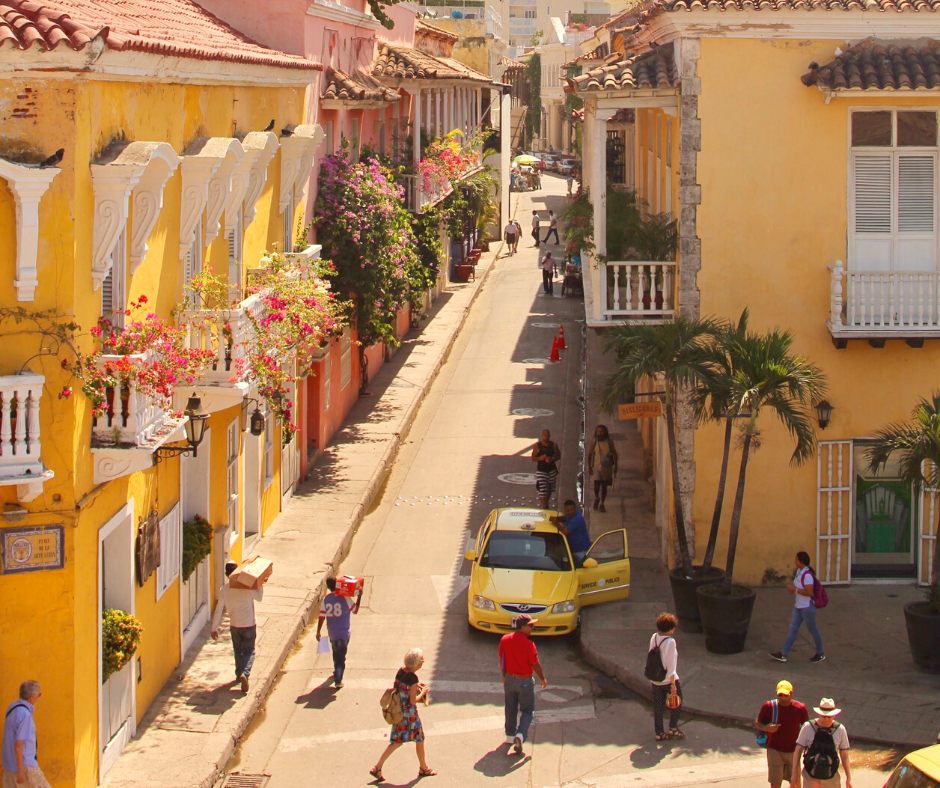
Cartagena is the Caribbean jewel: a walled colonial old town, Caribbean color and heat, and a smaller nomad scene centered on Getsemaní, the walkable barrio outside the walls full of street art, cafés and nightlife. Hotter, more humid and pricier than the Andean cities, but the setting is unmatched.
The Coffee Region (Eje Cafetero) around Salento is the green heart of the country: wax palms in the Cocora Valley, coffee farms to tour and stay on, and a slow small-town pace. Not a work base, but the best long weekend from Medellín, three hours by road.
💶 How much does it cost?
| Per month | Cali | Medellín | Bogotá | Cartagena |
|---|---|---|---|---|
| Room or 1BR | €350–550 | €450–700 | €500–750 | €550–850 |
| Coworking | €60–120 | €60–140 | €100–200 | €90–160 |
| Food | €180–280 | €200–320 | €220–350 | €230–360 |
| Transport | €25–50 | €25–50 | €30–60 | €30–60 |
| Realistic total | €800–1,200 | €900–1,400 | €1,100–1,600 | €1,100–1,600 |
Colombia is mid-priced for Latin America, cheaper than Costa Rica or Mexico's nomad hubs, pricier than Bolivia. A menú del día, the set lunch, runs €3 to €5. A domestic beer is €1. A metro ride in Medellín is under €1. The biggest factor is rent, and local monthly rentals cost far less than short-term listings aimed at foreigners.
Sarah Kuhlemann
🧑🏻💻 Where to work from
Medellín
- Cbox Coworking in Laureles: formerly Circular Coworking Redonda, now rebranded and run by the same team, and consistently rated the best coworking in Laureles. 200+ Mbps, private call rooms, social events and a strong community. Around COP 529,000 a month (€138). Note that the old "Circular" name now points to a different, unrelated space, so search for Cbox.
- Semilla Café Coworking in Laureles: the most popular café-coworking hybrid in the neighborhood, fast wifi, good food, buzzy. Loud at peak hours, which is either the appeal or the problem. Around COP 448,000 a month (€117). Open daily.
- Coworking Inspira in Laureles: fair day passes around COP 50,000, phone booths, an open-air area and lunch delivery. Reviews are split between lively and noisy, so it suits people who want sociable over silent.
- Ivy Laureles: coworking combined with an excellent wellness center and spa (cold plunge, sauna, massage) and furnished apartments. 24/7 member access, around COP 230,000 a month (€60). The wellness side is rated 4.9 and is a genuine draw.
Bogotá
- BDC, Bogotá Downtown Coworking in La Candelaria: a friendly, well-run space in the historic center, rated 4.9, with hosts who bring coffee and arrange lunch. Central and social, around $20 a day. Some street noise.
- WeWork Chapinero in Zona Rosa: reliable infrastructure, central, indoor and outdoor seating. Pricey, and the day-pass experience gets mixed reviews, so it suits members rather than drop-ins.
Cali
- El Lab Coworking in San Fernando: Cali's best-known space, modern and popular with international remote workers, good for meetups. On the pricey side and the main room can be noisy, so budget for a meeting room if you need quiet.
- Épico Workspace in central Cali: modern, with private offices and hot desks. Solid, though a couple of reviews flag the terrace-rental arrangement, so stick to standard desks.
Cartagena
- Cowork Cartagena in the Getsemaní convention center: repeatedly called the best coworking in Latin America by remote developers, with fast wifi, air conditioning, day lockers, free coffee, free beer after 4pm and a patio view. The clear pick in the city.
👥 Finding the community
Colombia has the strongest nomad community in Latin America, and Medellín is its center. Getting in is genuinely easy.
The coworking spaces in Laureles are the fastest route: Cbox and Semilla both run events, and the community there is large and welcoming. Beyond that, Medellín has a dense calendar of meetups, language exchanges, and running clubs, most announced through coworking spaces and the city's many Facebook and WhatsApp groups. Spanish-English language exchanges are especially good for meeting locals rather than only other nomads.
Bogotá and Cali have active scenes too, smaller and more local. For how to turn the people you meet into actual friends, our guide to making friends as a nomad applies here as well as anywhere.
Sarah Kuhlemann Sarah Kuhlemann
🛜 Internet and SIM cards
City coworking spaces routinely hit 200+ Mbps, and fiber is widely available in Medellín, Bogotá and the better Cartagena buildings. The national average is lower, around 51 Mbps, and home wifi in older or cheaper apartments varies, so check before committing to a monthly rental and keep a SIM as backup.
Claro, Movistar and Tigo are the main operators. Claro has the widest coverage. A prepaid SIM costs a few euros with cheap data packages, available at the airport and any corner shop. Bring your passport to register it.
🌤 When to come
| J | F | M | A | M | J | J | A | S | O | N | D | |
|---|---|---|---|---|---|---|---|---|---|---|---|---|
| Bogotá | ☀️ | ☀️ | ⛅ | 🌧 | 🌧 | ⛅ | ☀️ | ☀️ | ⛅ | 🌧 | 🌧 | ⛅ |
| Medellín | ☀️ | ☀️ | ⛅ | 🌧 | 🌧 | ⛅ | ☀️ | ☀️ | ⛅ | 🌧 | 🌧 | ☀️ |
| Cali | ☀️ | ☀️ | ⛅ | 🌧 | ⛅ | ☀️ | ☀️ | ☀️ | ⛅ | 🌧 | 🌧 | ☀️ |
| Cartagena | ☀️ | ☀️ | ☀️ | ⛅ | 🌧 | 🌧 | ⛅ | 🌧 | 🌧 | 🌧 | 🌧 | ⛅ |
☀️ drier · ⛅ mixed · 🌧 wetter
Colombia sits on the equator, so it has no summer or winter, only drier and wetter months, and the temperature depends on altitude rather than season. December to March and July to August are the driest stretches across most of the country and the easiest times to travel. The Andean cities are comfortable year round; Cartagena and the coast are hot and humid always, with the wettest months from May to November. The Caribbean has a hurricane-season risk from June to November, though direct hits are rare.
🚌 Getting around
- Uber, Didi and Cabify all operate and are the safe default, especially at night. Uber sits in a legal grey area but works normally.
- Medellín Metro: the only metro in Colombia, clean, cheap and a source of genuine local pride, with the Metrocable gondolas reaching the hillside neighborhoods.
- TransMilenio in Bogotá: the bus rapid transit network, extensive and cheap, but crowded and a known spot for pickpockets, so watch your belongings.
- Domestic flights: Avianca, LATAM and the budget carrier Wingo connect the cities cheaply, and given the mountains flying often beats long bus rides.
- Long-distance buses: comfortable and cheap between cities, though slow through the Andes. Book with reputable companies.
- Taxis: use the apps rather than hailing on the street. If you must take a street taxi, have your accommodation call one.
🚧 Safety and health
- Personal safety: covered in full above. The short version: use ride apps, keep your phone out of sight, do not leave drinks unattended, and stick to the nomad neighborhoods, and Colombia is as safe as it is rewarding.
- Altitude: Bogotá at 2,640m can cause mild altitude effects for the first day or two. Take it easy on arrival.
- Healthcare: genuinely excellent and inexpensive. Colombia is a major medical-tourism destination, and private hospitals in Bogotá, Medellín and Cali are world-class. Travel health insurance still matters for anything serious or for evacuation from remote areas.
- Tap water: safe to drink in Bogotá and Medellín, where it is treated to a high standard. On the coast and in smaller towns, stick to bottled or filtered.
- Mosquitoes: dengue is present in the lowlands and on the coast, not in the high-altitude cities. Repellent matters in Cartagena and the Amazon.
- Natural hazards: Colombia is seismically active, and the Nevado del Ruiz volcano near the Coffee Region sits at a yellow alert. Neither should change your plans, but it is worth knowing.
- Emergency number: 123 nationwide.
Staying active
- Hiking: the Cocora Valley wax palms near Salento, the lost city trek (Ciudad Perdida) from Santa Marta, and paragliding over the hills around Medellín.
- Salsa: Cali is the world capital, and a beginner class is one of the best nights out in the country.
- Cycling: Bogotá closes major roads every Sunday for the Ciclovía, when the whole city takes to bikes.
- Gyms and yoga: abundant and cheap in Poblado, Laureles and Chapinero.
🎖 Must see
- Medellín's Comuna 13: once the most dangerous neighborhood in the city, now a symbol of its transformation, best seen on a guided graffiti tour.
- Cartagena's walled city: colonial streets, Caribbean color, and sunset from the walls.
- The Coffee Region: the Cocora Valley, coffee farm stays, and the painted town of Salento.
- Tayrona National Park: jungle meeting Caribbean beach on the northern coast.
- Guatapé and El Peñol: a rock you climb for a view over a maze of lakes, a day trip from Medellín.
- Caño Cristales: the "river of five colors," which runs red for a few months a year, in the Serranía de la Macarena.
❓ Frequently asked questions
Is Colombia safe for digital nomads?
In the cities nomads live in, yes, with precautions. Germany issues no general travel warning, and rates the tourist cities at the same level as Mexico or Brazil. The US Level 3 advisory names specific remote "do not travel" regions, and no nomad hub is among them. Phone theft is the main day-to-day risk: use ride apps, keep your phone hidden, and never leave a drink unattended.
Which city is best for digital nomads in Colombia?
Medellín for the biggest scene and eternal-spring weather, Bogotá for culture and the widest job market, Cali for salsa and lower costs, Cartagena for the Caribbean. Most nomads start in Medellín's Laureles.
Does Colombia have a digital nomad visa?
Yes. The Visa V Nómadas Digitales gives up to two years, needs about €1,370 a month in income, and costs around €150. See our dedicated Colombia digital nomad visa guide.
How much does it cost to live in Colombia?
Roughly €800 to €1,600 a month depending on the city, with Cali cheapest and Bogotá and Cartagena most expensive. Comfortable but not luxurious.
Do I need to speak Spanish?
It helps enormously. English is limited outside tourist and nomad areas, and even basic Spanish transforms daily life. Medellín and Bogotá have plenty of Spanish schools and language exchanges.
Is the internet good enough to work?
In coworking spaces, yes, often 200+ Mbps. Home wifi varies and the national average is around 51 Mbps, so a coworking membership and a backup SIM are worth having.
When is the best time to visit?
December to March and July to August are driest. The Andean cities are pleasant year round; the coast is always hot, with the most rain from May to November.
Sarah Kuhlemann Sarah Kuhlemann
 Sarah Kuhlemann
 Sarah Kuhlemann
 Sarah Kuhlemann