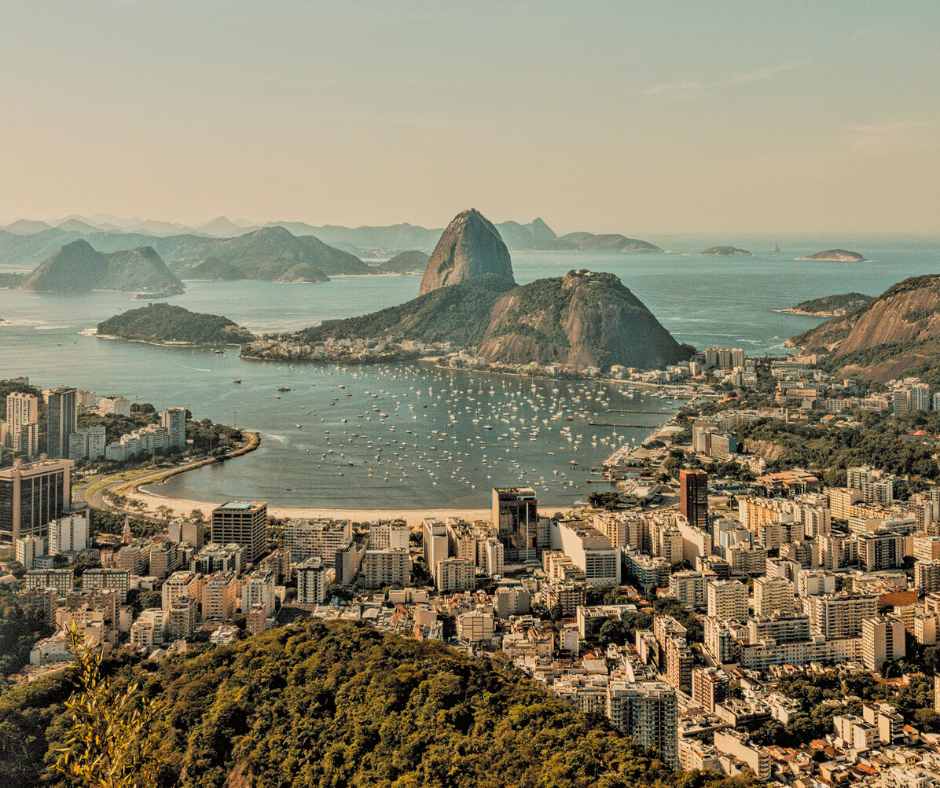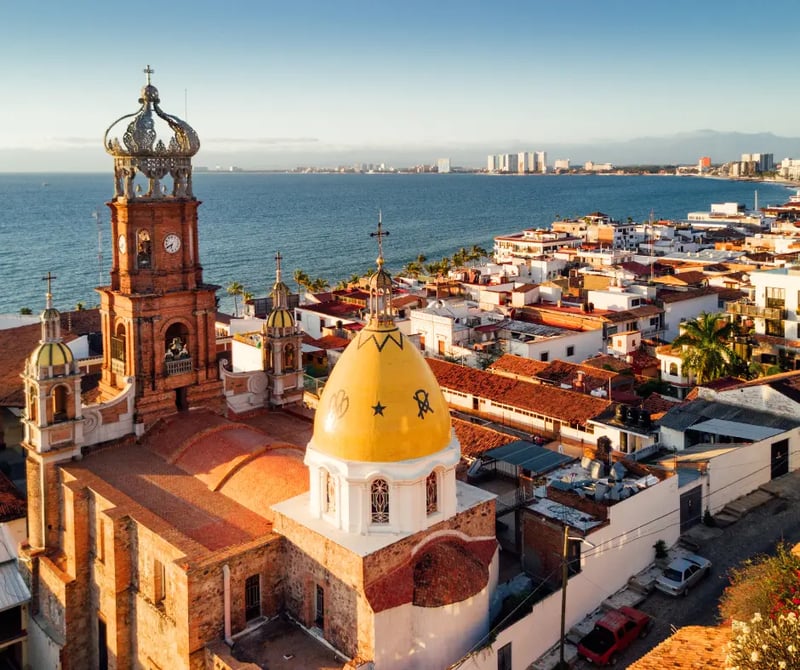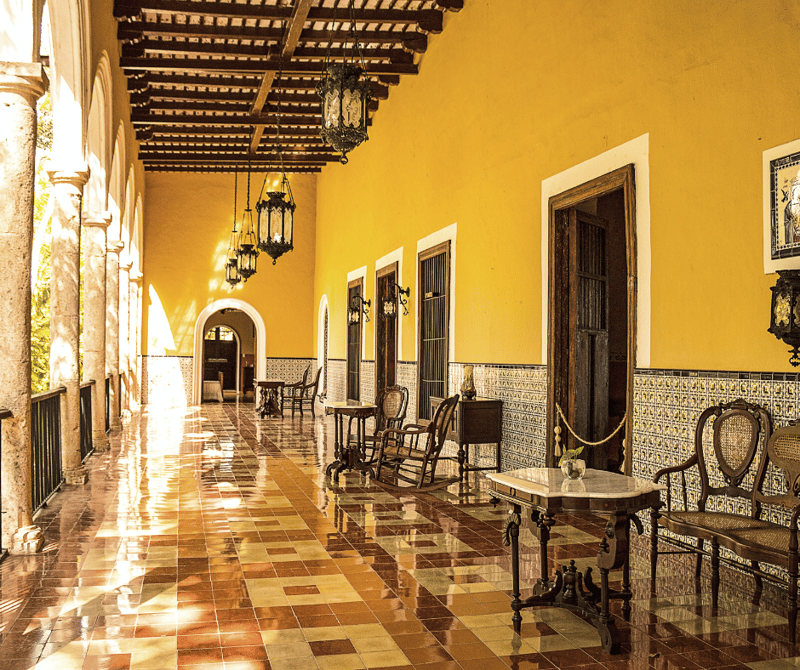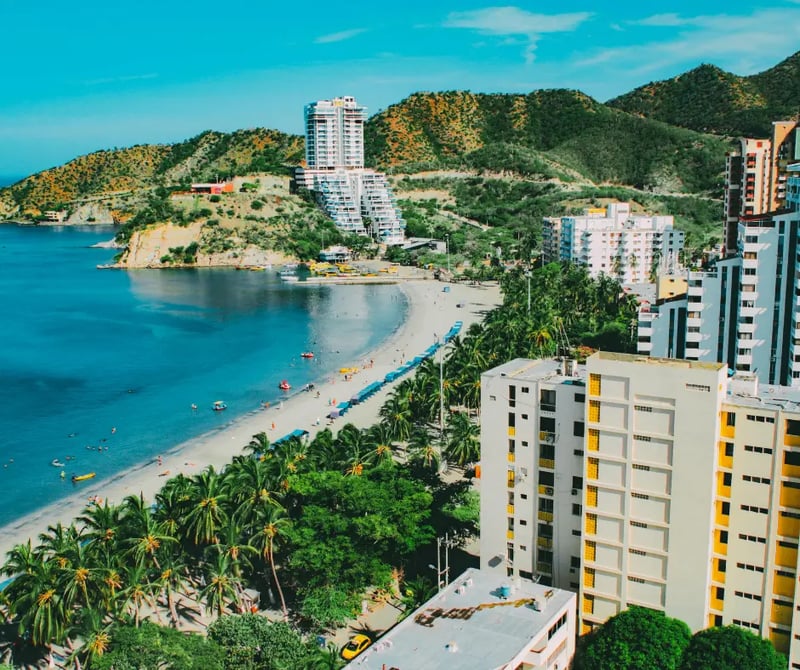


Mexico is the most popular digital nomad destination in the Americas, and arguably the easiest. Most nationalities get up to 180 days on arrival, no visa required. The food is extraordinary. The cost of living undercuts the US and Western Europe. And the choice of bases is unmatched on the continent: a world-class capital, colonial culture cities, Caribbean beach towns, Pacific surf villages, and safe colonial gems, each with a real remote-work scene.
That choice is also the first question to answer, because "Mexico" means very different lives depending on where you land. Mexico City is a cosmopolitan megacity at 2,240m; Playa del Carmen is a walkable Caribbean party town; Oaxaca is a culinary and cultural capital; Puerto Escondido is a surf village on the rise; Mérida is the safe, slow Yucatán city. This guide leads with that comparison, then covers the visa, the real 2026 costs, and how to make it work.
🌱 Travel health insurance for Mexico
Summary
- 🌱 Travel health insurance for Mexico
- 🎯 Mexico at a glance
- 🗺 Where to base yourself
- 💶 How much does it cost?
- 🛂 Entry requirements for Mexico
- 💻 Does Mexico have a digital nomad visa?
- ✈️ How to get to Mexico
- 🧑🏻💻 Where to work from
- 👥 Finding the community
- 🛜 Internet and SIM cards
- 🌤 When to come
- 🚌 Getting around
- 🚧 Safety and health
- 🎖 Must see
- ❓ Frequently asked questions
- 🎯 Conclusion
🎯 Mexico at a glance
| 🛂 Visa | Up to 180 days visa-free on arrival for most nationalities (officer sets the days) |
| 💻 Nomad visa | None. The route is the Temporary Resident Visa (economic solvency) |
| 💰 Residency income | ~$4,300–4,400/month or ~$73,000 savings (2026, rose sharply) |
| 💶 Monthly budget | $1,100 in Oaxaca to $2,600 in Mexico City |
| 🌤 Best time | November to April (dry season); highlands are year-round |
| 🏙 Top bases | Mexico City, Playa del Carmen, Oaxaca, Puerto Escondido, Mérida |
| 🛜 Internet | Excellent in big cities, patchier on the coast. Telcel has the best coverage |
| 🗣 Language | Spanish. English common in CDMX and Playa, less so elsewhere |
| 💱 Currency | Mexican peso (MXN). ~$1 = 18–19 MXN |
🗺 Where to base yourself
The single most important decision in Mexico is which city, so here is the honest rundown of the main nomad bases. A quick-compare table is in the at-a-glance above; this is the detail.
Mexico City (CDMX) is the undisputed remote-work capital of the Americas: a vast, cultured, endlessly walkable megacity at 2,240m, so the climate is spring-like year round rather than tropical. Roma Norte and Condesa are the nomad heartland, leafy, cafe-dense, walkable, packed with coworking and the biggest international community in the country. Juárez and Polanco are the upscale, central alternatives. The trade-offs are real: it is the priciest base, the altitude takes a few days, and the Roma-Condesa gentrification backlash (locals priced out by remote workers) is a genuine tension to be a respectful guest about. For scene, infrastructure and culture, nothing else in Mexico comes close.
 Sarah Kuhlemann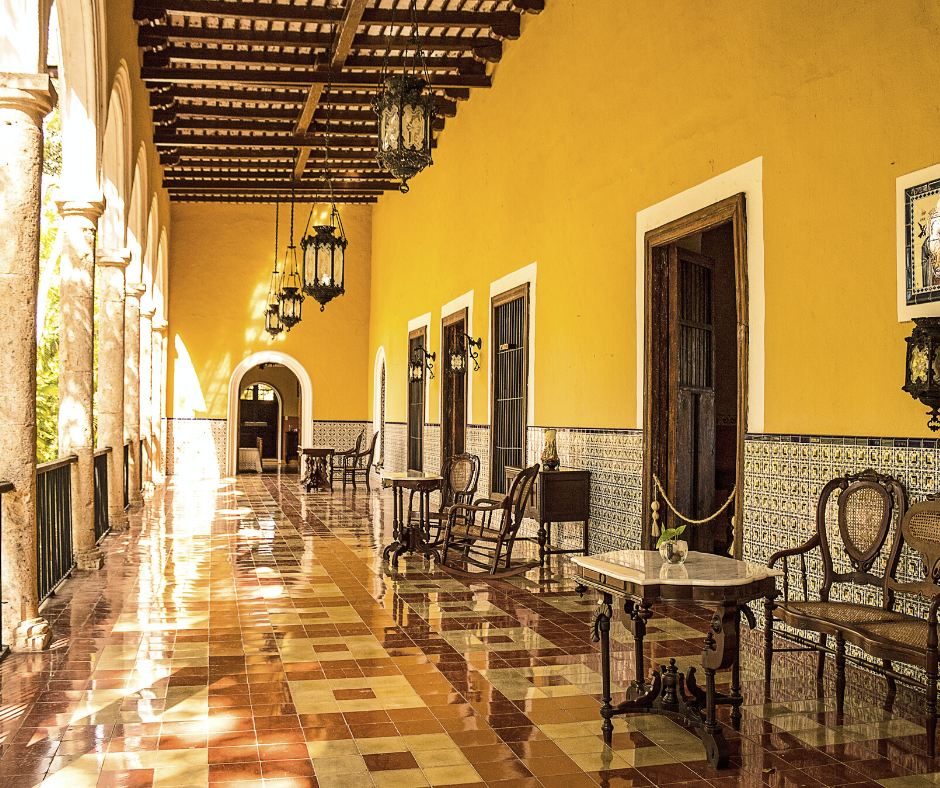
Playa del Carmen is the most popular dedicated nomad town: walkable, right on the Caribbean, with fast internet, a dense coworking scene and a huge transient international crowd. It is the easy, social, beach-life choice, two hours of flights from the US, English widely spoken. The flip side is heat and humidity, tourist saturation, sargassum seaweed on the beaches in season, and less of the "real Mexico" than inland cities. For Caribbean beach plus a ready-made nomad scene, it is the pick.
Oaxaca City is the cultural and culinary heart of Mexico, and a fast-rising nomad base: colonial streets, the best food scene in the country, mezcal, markets and a creative crowd, at a noticeably lower cost than CDMX or the coast. Spring-like highland climate. The nomad scene is smaller and more design-and-culture-led than Playa's party energy, and water shortages are a real local issue. For food, culture and value, it is hard to beat.
Puerto Escondido is the Pacific surf town on the rise, still (just) before peak popularity: world-class waves, a laid-back backpacker-nomad crowd, and prices below the Caribbean. Less developed, hotter, and the internet is improving but patchier than the big cities, so check your accommodation carefully. For surf and a younger, cheaper, beach-village feel, this is it.
Mérida is the safe, slow Yucatán option: consistently rated one of the safest cities in Mexico, a grand colonial center, big-city amenities with small-town calm, and a settled expat as much as nomad community. It is hot (seriously so, June to October) and quieter on the nomad-scene front, but for safety, culture and a more rooted stay, it is a favorite, and a base for the Yucatán's cenotes and ruins.
The other strong options: Sayulita (Pacific surf-and-yoga village near Puerto Vallarta, bohemian and busy), Guadalajara (Mexico's second city and tech hub, big and authentic, less touristy), San Miguel de Allende (beautiful colonial town, large older-expat scene), and Tulum (eco-chic, beautiful, but heavily commercialized, pricey and with real infrastructure and safety wobbles, so go in clear-eyed).
💶 How much does it cost?
| Per month | Oaxaca / Puerto Escondido | Mérida / Guadalajara | Playa del Carmen | Mexico City |
|---|---|---|---|---|
| Room or 1BR | $500–850 | $550–900 | $700–1,200 | $800–1,500 |
| Coworking | $80–130 | $90–140 | $100–160 | $110–180 |
| Food | $250–380 | $280–400 | $320–480 | $350–520 |
| Transport | $25–50 | $30–55 | $35–60 | $30–60 |
| Realistic total | $1,100–1,700 | $1,200–1,900 | $1,500–2,300 | $1,700–2,600 |
Mexico spans a wide range: Oaxaca, Puerto Escondido and the inland cities are genuinely affordable, while Mexico City and the Caribbean have climbed sharply, driven partly by the nomad influx itself. CDMX's Roma-Condesa is now priced closer to a mid-size US city than a Mexican one. Tacos from a street stall are still a euro or two, a comida corrida set lunch is $4 to $7, and domestic transport is cheap, but short-term furnished rentals in the nomad neighborhoods are where the cost concentrates, so a longer lease or a less central neighborhood stretches a budget a long way.
🛂 Entry requirements for Mexico
- Visa-free entry: most nationalities (US, UK, EU, Canada, Australia, New Zealand) get up to 180 days on arrival as a visitor. Note the officer sets the actual number of days on your FMM form, and it is increasingly often less than 180, so do not assume the full six months.
- FMM (tourist card): required, with a fee of around MX$860 (~$50) for stays over 7 days or arrivals by land.
- Working remotely on a tourist entry: not explicitly prohibited for a foreign employer, and extremely common, though border-running to reset the 180 days is increasingly scrutinized.
- Passport validity: for the duration of your stay.
- Covid requirements: none.
💻 Does Mexico have a digital nomad visa?
No, and it is worth stating plainly because "Mexico digital nomad visa" is a huge search term for a document that does not exist. State-level pilot ideas in Oaxaca and Quintana Roo never became a national product.
What remote workers actually use:
- The 180-day tourist entry (above), for stays up to six months. The simplest route, and what most nomads use, though border runs to extend are increasingly questioned.
- The Temporary Resident Visa (Residente Temporal), the real long-stay route, granted on economic solvency rather than employment.
The Temporary Resident Visa, 2026:
- Income requirement: this jumped significantly in 2026. Expect to show roughly $4,300 to $4,400 a month in net income over the past six months, OR an average savings balance of about $73,000 to $74,000 over the past twelve months. (Older guides still quote ~$2,600, that figure is out of date; Mexico rebased the calculation to its UMA index in 2025 and the bar rose sharply. Confirm the current figure with your consulate, as it changes annually.)
- Duration: issued for 1 year, renewable up to 4 years total, after which you can move to permanent residency.
- Apply at a Mexican consulate abroad (you cannot apply from inside Mexico), get a 180-day visa sticker, enter Mexico, then exchange it for your resident card at an INM office within 30 days (the canje), selecting "Canje" on your entry form, not tourist.
- Fee: around $54 at the consulate, plus the INM card fees in Mexico.
- No minimum-stay requirement, and it does not restrict how you earn as long as you are not employed by a Mexican company.
Tax note: holding the visa does not automatically make you a Mexican tax resident. Spend more than 183 days in Mexico in a calendar year, though, and you can become tax resident on your worldwide income, so track your days if you are here long-term.
Sarah Kuhlemann Sarah Kuhlemann
 Sarah Kuhlemann
✈️ How to get to Mexico
- Mexico City (MEX / NLU): the main hub, with flights from across the Americas, Europe and beyond. The new Felipe Ángeles (NLU) airport handles some routes; most international flights use Benito Juárez (MEX).
- Cancún (CUN): the gateway for the Caribbean (Playa del Carmen is about an hour by shuttle or ADO bus), and often the cheapest from the US and Europe.
- Other hubs: Guadalajara (GDL), Oaxaca (OAX), Mérida (MID), Puerto Escondido (PXM) and Puerto Vallarta (PVR for Sayulita) all have good domestic and some international links.
- Airport transfer: in CDMX use Uber or the official airport taxis; from Cancún, pre-booked shuttles or the ADO bus to Playa.
🧑🏻💻 Where to work from
Mexico City
- Público (Roma/Condesa and other locations): popular, design-led, strong community. (Note: read current reviews, one location had past issues, but the brand is a mainstay.)
- WeWork: multiple reliable locations across the city for those wanting professional infrastructure.
- Cafes: Roma Norte and Condesa are among the best cafe-working neighborhoods in the Americas, Cardinal, Blend Station and Café Nin are nomad staples.
Playa del Carmen
- Nest Coworking: one of Mexico's original nomad coworking spaces and still a big player.
- Bunker Coworking and Selina's workspace (where still operating, verify): central options with a social scene.
Oaxaca
- Convivio and Selina Oaxaca (still operating, verify): the main coworking options, plus an excellent laptop-friendly cafe scene (Cafebre, Muss Cafe).
Mérida, Guadalajara, Puerto Escondido
Each has a growing coworking scene (Mérida's Co'working and Cowork Lab, Guadalajara's strong tech-hub spaces, Puerto Escondido's Selina and beachside cafes). On the coast especially, choose accommodation with verified fiber and keep a backup, beach-town internet varies.
👥 Finding the community
Mexico has the largest and most accessible nomad community in the Americas, concentrated in Mexico City (the biggest and most international, centered on Roma Norte and Condesa), Playa del Carmen (the most transient and social, beach-and-party energy), and Oaxaca (smaller, creative, culture-led). Mérida, Guadalajara and Puerto Escondido have real but smaller scenes.
The way in is the usual Mexican mix: coworking spaces and their events, and the very active Facebook groups ("Digital Nomads Mexico City," "Expats in Playa del Carmen" and the like) that organize meetups, housing and social events. Spanish helps enormously and is more necessary outside the Roma-Condesa and Playa bubbles, and learning some is both practical and, given the gentrification tensions, a mark of being a respectful guest. For the general how-to, see our guide to making friends as a nomad.
Sarah Kuhlemann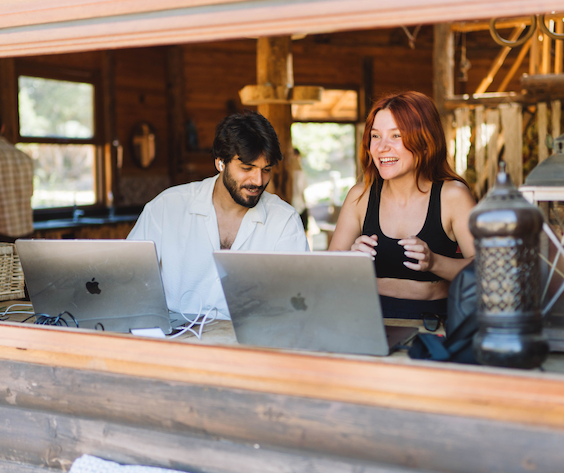 Sarah Kuhlemann
🛜 Internet and SIM cards
Internet is good to excellent in the major cities and more variable on the coast. Mexico City, Guadalajara and Mérida have widespread fiber and reliable coworking; Playa del Carmen is well connected for a beach town; Oaxaca is solid in the center. Puerto Escondido, Sayulita and the smaller coastal spots are improving but patchier, so verify your accommodation's connection and keep a mobile backup.
Telcel has by far the best coverage nationwide and is the safe default, especially for the coast and travel between cities; AT&T Mexico and Movistar are alternatives. A prepaid SIM is cheap and easy with your passport, and eSIMs are widely supported. Telcel's "Amigo" prepaid plans are the standard nomad choice.
🌤 When to come
| J | F | M | A | M | J | J | A | S | O | N | D | |
|---|---|---|---|---|---|---|---|---|---|---|---|---|
| Mexico City & highlands | ☀️ | ☀️ | ☀️ | ☀️ | ⛅ | 🌧 | 🌧 | 🌧 | 🌧 | 🌧 | ☀️ | ☀️ |
| Caribbean (Playa, Tulum) | ☀️ | ☀️ | ☀️ | ☀️ | ⛅ | 🌧 | 🌧 | 🌧 | 🌀 | 🌀 | 🌧 | ☀️ |
| Pacific (Puerto Escondido, Sayulita) | ☀️ | ☀️ | ☀️ | ☀️ | ☀️ | 🌧 | 🌧 | 🌧 | 🌧 | 🌧 | ⛅ | ☀️ |
☀️ best · ⛅ mixed · 🌧 wet · 🌀 hurricane risk
The dry season, roughly November to April, is the best window almost everywhere: sunny, warm, and the peak for the Caribbean and Pacific coasts. The highland cities (Mexico City, Oaxaca, Guadalajara) are comfortable year-round thanks to altitude, with a summer rainy season of afternoon downpours rather than washouts. On the Caribbean coast, watch hurricane season (roughly August to October) and the sargassum seaweed influx (worst April to August). The Yucatán and Pacific lowlands get seriously hot from May to September. December to April is high season and priced accordingly.
🚌 Getting around
- Uber and Didi: cheap, safe and the default in the cities (CDMX, Guadalajara, Mérida, Playa and more). The recommended way to get around, especially at night.
- Mexico City Metro and Metrobús: vast and cheap (a few pesos a ride), though crowded at peak; the Metrobús and EcoBici bikes are good for Roma-Condesa.
- ADO buses: the excellent, comfortable long-distance bus network, especially in the south and Yucatán (Cancún-Playa-Tulum-Mérida). First-class and reliable.
- Domestic flights: Volaris, VivaAerobús and Aeroméxico connect the country cheaply, essential given the distances (CDMX to the coasts is a flight, not a drive).
- Colectivos: shared vans, the cheap local way around the coast and between nearby towns.
- Driving: fine for exploring (the Yucatán especially), but not needed in the cities. Avoid driving at night on intercity roads.
🚧 Safety and health
- The honest picture: safety in Mexico is intensely regional, and the headlines about cartel violence are real but concentrated in specific states and areas that are not the nomad destinations. The cities in this guide, CDMX's central neighborhoods, Oaxaca, Mérida (one of the safest in the Americas), Playa, Puerto Escondido, are used daily by huge numbers of nomads and expats, and normal city precautions are what is called for, not fear.
- Practical rules: use Uber/Didi rather than street taxis, keep your phone out of sight, do not flash valuables, avoid isolated areas at night, and check your specific state against your government's travel advisory (they are issued state by state for Mexico, which is the right level of granularity). Tulum specifically has had safety and policing issues worth researching before a stay.
- Altitude: Mexico City (2,240m) can cause mild altitude effects for a day or two.
- Tap water: do not drink it anywhere; use filtered or bottled (widely available and cheap).
- Stomach bugs: give your system time to adjust; be sensible with street food (busy stalls with high turnover are your friend).
- Mosquitoes: dengue is present on the coasts and in the lowlands; repellent matters.
- Healthcare: genuinely good and affordable, with excellent private hospitals in the big cities (a major medical-tourism destination). Insurance still matters, especially on the coast and for evacuation. Emergency number: 911.
Staying active
- Surfing: Puerto Escondido (world-class and serious), Sayulita (beginner-friendly), and the Pacific coast generally.
- Diving and cenotes: the Riviera Maya's cenotes and reefs (Playa, Tulum, Cozumel) are world-famous.
- Hiking and ruins: Oaxaca's valleys, the volcanoes near CDMX, and ruins from Teotihuacán to Monte Albán to Chichén Itzá.
- Yoga and wellness: Tulum, Sayulita and Oaxaca are hubs.
🎖 Must see
- Mexico City: the historic center and Zócalo, Teotihuacán's pyramids, Frida Kahlo's Casa Azul, and the canals of Xochimilco.
- Oaxaca: Monte Albán, the mezcal route, and the Day of the Dead (late October to early November) at its spiritual home.
- The Yucatán: Chichén Itzá, the cenotes, and the colonial streets of Mérida.
- The Riviera Maya: Tulum's ruins over the Caribbean, Cozumel's reefs, and the beaches.
- The Pacific: Puerto Escondido's surf and the nearby lagoons, and the Oaxacan coast.
- Guanajuato and San Miguel de Allende: colorful colonial cities in the central highlands.
❓ Frequently asked questions
Does Mexico have a digital nomad visa?
No. "Mexico digital nomad visa" is a search term, not a real document. Remote workers use the 180-day tourist entry, or the Temporary Resident Visa (granted on ~$4,300 to $4,400/month income or ~$73,000 savings in 2026), which is the real long-stay route.
Which city is best for digital nomads in Mexico?
Mexico City for scene, culture and infrastructure; Playa del Carmen for Caribbean beach life and a ready-made community; Oaxaca for food, culture and value; Puerto Escondido for surf; Mérida for safety and calm. Most first-timers choose CDMX or Playa.
How much does it cost to live in Mexico?
From around $1,100 to $1,700 a month in Oaxaca or Puerto Escondido, up to $1,700 to $2,600 in Mexico City. The capital and the Caribbean have climbed sharply; inland and Pacific towns are far better value.
How long can I stay in Mexico?
Up to 180 days on a tourist entry for most nationalities, though the officer sets the actual days. For longer, the Temporary Resident Visa gives 1 to 4 years.
Is Mexico safe for digital nomads?
In the nomad cities, yes, with normal precautions. Cartel violence is real but concentrated in specific regions that are not the nomad destinations. Check advisories state by state, use ride apps, and Mérida in particular is among the safest cities in the Americas.
Is the internet good enough to work?
Excellent in the big cities (CDMX, Guadalajara, Mérida), good in Playa and central Oaxaca, patchier in the smaller coastal towns, so verify your accommodation and carry a Telcel SIM as backup.
🎯 Conclusion
Mexico is the most popular nomad base in the Americas because it delivers on nearly everything: a 180-day welcome, world-class food, two coastlines, deep culture, good value inland, and the biggest community on the continent. The one real decision is where to land, and that depends entirely on what you want: the megacity energy of CDMX, the Caribbean social scene of Playa, the culinary soul of Oaxaca, the surf of Puerto Escondido, or the safe calm of Mérida.
Pick your city, get the 180 days (or the Temporary Resident Visa if you are staying longer), budget honestly for the capital and the coast, learn some Spanish, and be a respectful guest in neighborhoods feeling the strain of the nomad boom. Do that and Mexico is tough to beat.
Sarah Kuhlemann Sarah Kuhlemann
 Sarah Kuhlemann