
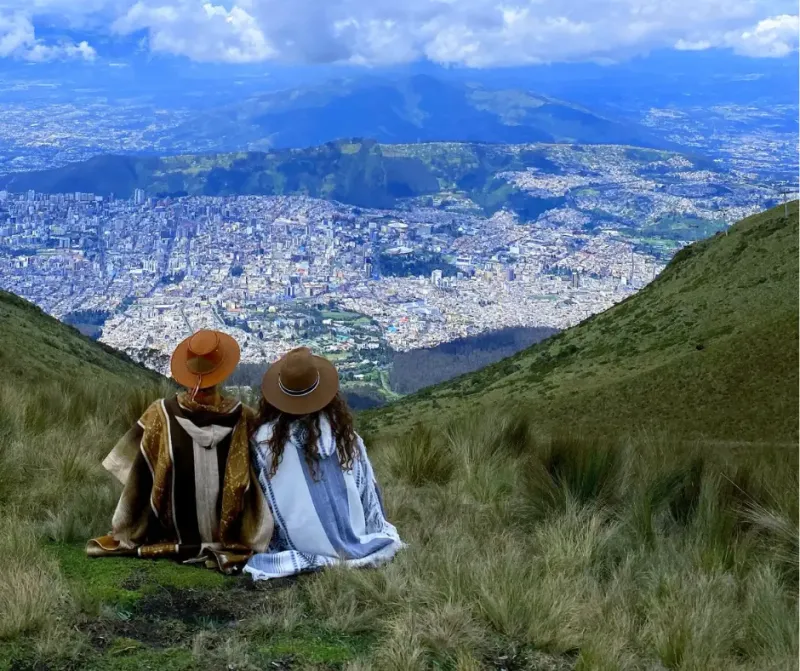
Did you know that Quito is not just the second-highest capital in the world but also just 1 km away from the Equator? You can stand in the northern hemisphere and step one foot into the southern hemisphere. But that is not all there is to Ecuador's superlatives. The summit of Mount Chimborazo is the closest point on Earth you can be to the sun.
And then there are the impressive Galápagos Islands, Amazonian rainforests, astonishing volcanoes, and well-preserved historic towns, such as Quito's center, which became a UNESCO World Heritage Site, along with Krakow in Poland, back in 1978. Ecuador has been voted expats' favorite country for the past two years due to its low cost of living and high quality of life.
🌱 Travel health insurance for Ecuador
🎯 Ecuador at a glance
| 🛂 Visa | 90 days visa-free for most nationalities, extendable once to 180 |
| 💻 Nomad visa | Visa Nómada: 2 years renewable, ~$1,446/month income, $320 fees |
| 💵 Currency | The US dollar. No currency risk, no exchange fees, exact budgeting |
| 💶 Monthly budget | $650 in Cuenca to $1,300 in Quito |
| ⚠️ Safety | Regional: highlands (Quito, Cuenca) calm; coastal ports carry advisories |
| 🌤 Best time | Highlands Jun–Sep, coast Dec–Apr, Galápagos year round |
| 🏙 Top areas | Cuenca, Quito, Olón, Loja |
| 🛜 Internet | 100+ Mbps fiber in cities; patchier on the coast, keep a 4G backup |
| 🗣 Language | Spanish. English common in Cuenca's expat scene, less so elsewhere |
🇪🇨 Entry requirements
- Visa-free entry: most nationalities enter visa-free for up to 90 days as tourists, extendable once by another 90 days. A small number of nationalities need a tourist visa in advance, so check the official list.
- Digital nomad visa: Ecuador's Visa Nómada grants two years of temporary residency, renewable once, open to all nationalities. See the visa section below.
- Health insurance: travel cover is recommended for tourists and is an official requirement for the nomad visa, valid for the whole visa period.
- Passport validity: at least six months.
💻 Ecuador's digital nomad visa (Visa Nómada)
Ecuador's Visa Nómada is one of the most accessible digital nomad visas in the world, and the dollar economy makes the numbers simple.
- Duration: two years of temporary residency, renewable once, so up to four years.
- Income requirement: about $1,446 a month (three times Ecuador's basic salary), shown over recent months. Low by global standards.
- Cost: around $320 in total fees.
- Open to all nationalities, working remotely for employers or clients outside Ecuador.
- Health insurance: valid cover for the full visa period is required.
- Cédula: with the visa you can obtain an Ecuadorian ID, useful for banking and local admin.
- Path onward: temporary residency time can count toward permanent residency later.
For the full step-by-step, the document list and the current figures, see our dedicated guide: Ecuador digital nomad visa: requirements and how to apply.
Do you even need it? For a stay of up to six months, the 90-day visa-free entry plus a 90-day extension covers you without any visa. The Visa Nómada is for those who want a longer, stable base, a cédula, and a path toward residency.
 Sarah Kuhlemann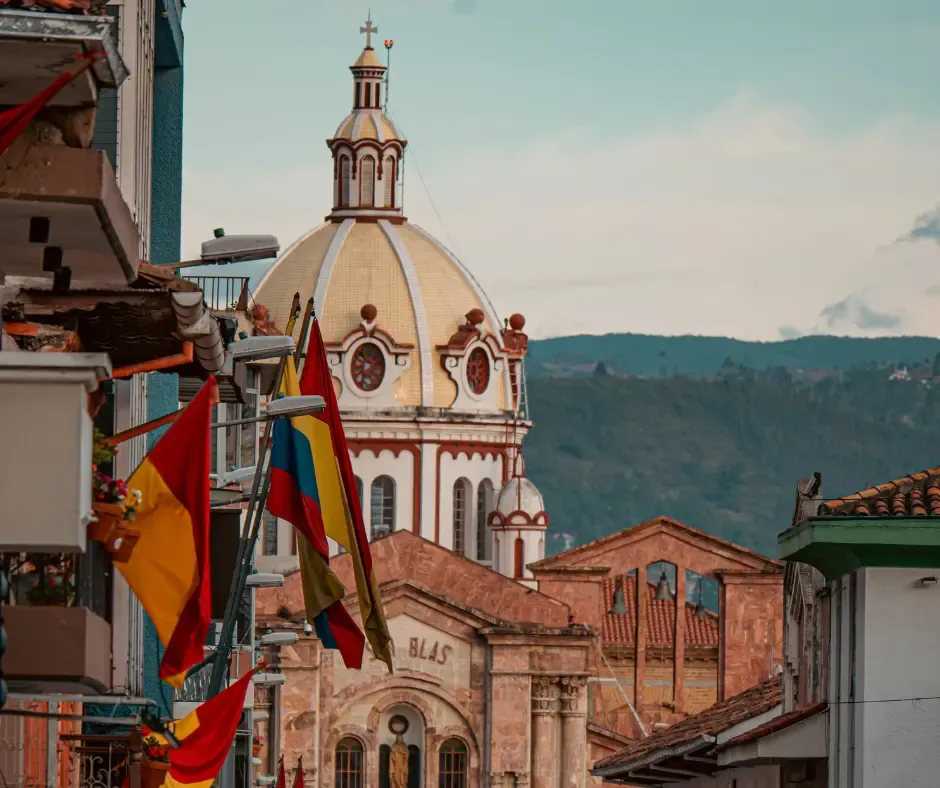
✈️ How to get to Ecuador
- Quito (UIO) and Guayaquil (GYE) are the main international airports, with non-stop flights to and from the US, Amsterdam, Madrid and across Latin America.
- Cuenca has a small airport with domestic flights only, connecting through Quito and Guayaquil.
- Galápagos: reached by air from Quito (via a technical stop in Guayaquil) or direct from Guayaquil, to Baltra or San Cristóbal, about two hours.
🗺 Where to base yourself
Quito is the capital, a UNESCO colonial city strung along a high Andean valley at 2,850 meters. La Floresta is the creative district and the nomad default: cafes, galleries, street art, walkable and central, with furnished one-bedrooms around $450 to $700. La Carolina and González Suárez offer modern apartments around the big park and along the ridge with skyline views, roughly $500 to $800. Cumbayá, a warmer valley suburb 20 minutes east, has newer housing, malls and a large expat community, good for longer stays and families but harder without a car. Give yourself a few slow days for the altitude on arrival.
Cuenca has become Ecuador's expat capital, with the largest English-speaking community in the country (an estimated 5,000 to 10,000 people), a UNESCO old town, spring-like weather year round, and a fast-growing nomad scene. El Centro, the colonial heart of cobblestone streets and galleries, has furnished one-bedrooms around $350 to $600. Ordoñez Lasso is the established expat corridor of modern condos west of the center. The Tomebamba riverside is quieter, a pleasant walk from the center with the university cafe scene nearby. Cuenca also hosts Cuenca Pioneers, Ecuador's flagship nomad program, running December 2026 to March 2027 (a 90-day residency for 100 remote workers, with coworking and community built in).
Olón is the coast's residential nomad favorite: a long swimmable beach, a malecón of restaurants and smoothie bars, no high-rises, and a growing mix of remote workers, families and long-term expats. Montañita's nightlife is ten minutes away when you want it, which is exactly why many prefer to sleep in Olón. Beach cottages near the malecón run $400 to $800.
Ecuador's other beach towns on the Ruta del Sol each have a character: Montañita for surf and nightlife (and the coast's most reliable work infrastructure), Ayampe for a tiny yoga-and-surf eco village (no ATM, bring cash), Puerto López for whale watching and Isla de la Plata, Salinas for full resort amenities, and Manta for city infrastructure right on the sea. One honest note: the coastal provinces of Manabí and Santa Elena currently carry a "reconsider travel" rating in the US advisory. Day-to-day life in the small beach towns is far calmer than that provincial rating suggests, but read the safety section below and check your own country's current advisory before a long stay.
The highland alternatives are worth knowing: Loja, a smaller, cheaper, less-discovered Cuenca with university-town energy and costs 20 to 30 percent lower; Cotacachi, a walkable Andean craft town with an established expat community; and Vilcabamba, the slow-living "valley of longevity" in the far south.
💶 How much does it cost?
| Per month | Cuenca / Loja | Quito | Coast (Olón) |
|---|---|---|---|
| Room or 1BR | $350–600 | $450–800 | $400–800 |
| Coworking | $80–140 | $100–160 | Fiber + cafes |
| Food | $200–320 | $220–350 | $220–360 |
| Transport | $20–40 | $25–50 | $30–60 |
| Realistic total | $650–1,100 | $800–1,300 | $750–1,250 |
Because Ecuador uses the US dollar, these are exact, with no exchange-rate guesswork. It is one of the cheapest good nomad bases in the Americas, cheaper than Colombia or Mexico's hubs. An almuerzo, the set lunch, runs $3 to $4. Local transport is famously cheap: a Quito metro ride is $0.45, a bus $0.35. Cuenca and Loja are the best value, Quito the priciest of the mainland bases, and the coast varies with the season.
Sarah Kuhlemann
🧑🏻💻 Where to work from
Quito
Coworking:
- Impaqto: two locations (La Carolina and La Floresta), central and easy to reach, with high-speed internet, ergonomic interiors, and a program of events, networking and mentorship. Memberships from around $125 a month.
- Playhouse: Ecuador's first international coliving and coworking space, in La Floresta, with desks, private rooms, dorms and a garden that hosts social events year round. A good choice if you want community built in.
Cafes: Café Galletti (two central locations, New York roastery style with stable wifi) and Coffee Factory by Parque La Carolina (USB ports at each table).
Cuenca
Coworking:
- Coworking Cuenca: the pioneer of the local scene, building a nomad community since 2017 from its space by the Yanuncay river, with community lunches, nomad-tailored programs and the most budget-friendly memberships in town.
- Impaqto Cuenca: the Cuenca outpost of Ecuador's biggest network, with a large community, regular events, and workspaces overlooking the Río Tomebamba. From around $125 a month.
- La Ofi: the premium option, launched 2022, with high-end desks, meeting rooms, call booths and an audiovisual content-creation space.
Cafes: Café de Ñucallacta (central, bakery goods, plenty of vegan and vegetarian options, laptop-friendly).
Olón and the coast
There is no dedicated coworking in Olón yet, and the setup residents actually use is: home fiber plus a mobile backup (a Claro or Movistar 4G plan for outages), malecón cafes for a change of scene outside meal hours, and Montañita, ten minutes away by bus, for guaranteed bandwidth on heavy call days, since its hostels and work cafes are built for exactly that.
👥 Finding the community
Ecuador's nomad and expat community is real, welcoming and unusually easy to plug into, and it clusters in three places with very different flavors.
Cuenca is the heart of it, home to the largest English-speaking expat community in the country. The coworking spaces are the fastest way in, especially Coworking Cuenca, which has been building the nomad scene since 2017 and runs community lunches and nomad-specific programs. The Cuenca Ecuador Expats Facebook group is enormous and active. Quito has a younger, more international scene centered on Playhouse and Impaqto in La Floresta. And the coast, around Olón and Montañita, has a tight community of remote workers, surfers and long-term expats that runs on local Facebook and WhatsApp groups.
One genuinely useful thing on the horizon: Cuenca Pioneers (December 2026 to March 2027) is built entirely around community, bringing 100 remote workers together for 90 days. For the general how-to, see our guide to making friends as a nomad.
Sarah Kuhlemann
🛜 Internet and SIM cards
Fiber is widely available in the cities, with 100+ Mbps connections common in Quito and Cuenca, and it is genuinely good. Coverage thins in remote areas and on parts of the coast, where a 4G backup plan is standard practice rather than a nice-to-have, especially in a place like Olón with no coworking to fall back on.
Claro has the widest coverage, with Movistar as the main alternative. A prepaid SIM with a data package costs a few dollars from any shop or the airport, and eSIMs are supported. Bring your passport to register. In smaller coastal and highland towns, ask locals which network works best, since it varies by valley.
🌤 When to come
| J | F | M | A | M | J | J | A | S | O | N | D | |
|---|---|---|---|---|---|---|---|---|---|---|---|---|
| Highlands (Quito, Cuenca) | 🌧 | 🌧 | 🌧 | 🌧 | ⛅ | ☀️ | ☀️ | ☀️ | ☀️ | ⛅ | 🌧 | 🌧 |
| Coast (Olón, Montañita) | ☀️ | ☀️ | ☀️ | ☀️ | ⛅ | ⛅ | ⛅ | ⛅ | ⛅ | ⛅ | ⛅ | ☀️ |
| Galápagos | ☀️ | ☀️ | ☀️ | ☀️ | ⛅ | ⛅ | ⛅ | ⛅ | ⛅ | ⛅ | ⛅ | ☀️ |
☀️ best · ⛅ mixed · 🌧 wet
Sitting on the equator, Ecuador has no summer or winter, only wetter and drier months, and altitude decides the temperature more than the calendar. The highlands (Quito, Cuenca) are mild year round, spring-like by day and cool at night, with the driest, sunniest stretch June to September. The coast is warmest and sunniest from December to April (the local "summer"), with the ocean at its calmest and warmest, and greyer, cooler garúa mist mid-year. The Galápagos is good year round, with December to May warmer and better for snorkeling, and June to November cooler with rich marine life.
🚌 Getting around
- Quito Metro: opened in December 2023, 15 stations over 22.5km, the fastest way across the city and, at 2,800 meters, the highest underground metro in the world. A ride is $0.45.
- Buses: cheap and everywhere, from $0.35 in the cities. Quito's Trolebús, Ecovía and Metrobús run on dedicated lanes. Intercity buses connect every major city; stick to daytime routes, especially in the highlands, and avoid overnight routes through coastal provinces.
- Ride apps and taxis: Uber operates in several cities in a legal grey zone and works fine; app-based registered taxis (or ordering by phone) are the cleaner option. Registered taxis are yellow with orange plates. Order rather than hail on the street in the big cities.
- Domestic flights: for Quito, Guayaquil and Cuenca, flying is currently the recommended option over long-distance buses. Short and affordable, with LATAM and Avianca.
- Car rental: available (Europcar, Hertz, Sixt). Highland highways are decent but mountain roads are narrow with steep drop-offs, so only for confident drivers, and not at night outside cities.
🚧 Safety and health
Ecuador's safety situation changed after 2022, and the honest picture is regional rather than national. Read this before you commit to a base.
- The regional split: violence linked to drug trafficking is concentrated heavily in the coastal provinces, especially around the ports of Guayaquil, Esmeraldas, Manta and the northern border with Colombia. The highland cities (Quito, Cuenca, Loja) have stayed far calmer, and Cuenca in particular ranks among the safest cities in the country.
- The advisories: the US State Department currently rates Ecuador at Level 3 (Reconsider Travel) overall, with higher-level warnings for specific provinces including Guayas, Manabí, Esmeraldas and the northern border zone, and lower risk for the highland tourist areas. Check your own country's current advisory, and note that a provincial rating does not always reflect day-to-day life in a small beach town.
- In practice: the nomad bases in this guide (Quito's central districts, Cuenca, and the small Ruta del Sol beach towns) are used daily by thousands of expats and remote workers. Take normal city precautions: use ride apps at night, keep your phone out of sight, do not display wealth, and avoid the port cities and northern border region unless you have a specific reason.
- Altitude: Quito (2,850m) and Cuenca (2,550m) can cause mild altitude effects for a day or two. Arrive slowly.
- Tap water: not reliably drinkable. Use filtered or bottled, which is cheap.
- Mosquito-borne illness: dengue is present on the coast and in the lowlands, not in the high cities. Repellent matters at the beach.
- Healthcare: good and inexpensive, with strong private hospitals in Quito, Guayaquil and Cuenca (Cuenca is a medical-tourism destination). Insurance still matters, including for evacuation from remote areas or the Galápagos.
- Emergency number: 911 nationwide.
Staying active
- Hiking: the Quilotoa crater lake loop, the Cotopaxi and Chimborazo volcanoes, and the Cuicocha lake near Cotacachi.
- Surfing: Montañita and Ayampe on the Ruta del Sol, with warm water and consistent breaks.
- Adventure: Baños on the Amazon's edge for waterfalls, canyoning, thermal baths and the "swing at the end of the world".
- Wellness: yoga and slow living in Vilcabamba and Ayampe, and thermal springs across the highlands.
🎖 Must see
- The Galápagos: the 18-island archipelago and its extraordinary wildlife, two hours by air. Budget for the $200 park fee (plus a $20 transit card) on top of flights and boats.
- Quito and Cuenca old towns: two UNESCO World Heritage colonial centers, among the best preserved in the Americas.
- Mitad del Mundo: the equator monument outside Quito, where you can stand on both hemispheres at once, about 30 minutes from the city.
- Ingapirca: Ecuador's most important Inca site, a day trip from Cuenca.
- Baños: the adventure capital on the Amazon's doorstep.
- Otavalo: the famous Saturday indigenous market north of Quito, combined easily with craft-town Cotacachi.
❓ Frequently asked questions
Is Ecuador safe for digital nomads?
It depends heavily on where. The highland cities (Quito's central districts, Cuenca, Loja) are calm and used daily by thousands of expats. The coastal port cities (Guayaquil, Esmeraldas, Manta) and the northern border carry real advisories after the security shift since 2022. Stick to the nomad bases in this guide, take normal precautions, and check current advisories.
Does Ecuador have a digital nomad visa?
Yes, the Visa Nómada: two years, renewable once, open to all nationalities, about $1,446 a month in income and $320 in fees. One of the most accessible anywhere. For stays under six months, visa-free entry plus an extension is enough.
Which city is best for digital nomads?
Cuenca for the biggest expat community, spring weather and value; Quito for a younger international scene and city infrastructure; Olón for beach life. Cuenca is where most nomads start.
How much does it cost to live in Ecuador?
Around $650 to $1,100 a month in Cuenca or Loja, $800 to $1,300 in Quito, and $750 to $1,250 on the coast. Prices are exact because Ecuador uses the US dollar.
Why does Ecuador use the US dollar?
Ecuador adopted the US dollar as its official currency in 2000 after an economic crisis. For nomads it means no currency risk, no exchange fees, and simple budgeting.
Is the internet good enough to work?
In Quito and Cuenca, yes, with 100+ Mbps fiber common. On the coast it is patchier, so a 4G backup plan is standard, especially in Olón where there is no coworking.
When is the best time to visit?
The highlands are mild year round, driest June to September. The coast is best December to April. The Galápagos is good all year.
🎯 Conclusion
Ecuador is one of the best-value, most straightforward nomad bases in the Americas: the dollar removes all currency friction, the visa is genuinely accessible, and the variety, Andes to Amazon to Pacific to Galápagos, is unmatched for a country this size.
Base yourself in Cuenca for community and value, Quito for city life, or Olón for the coast. Get the Visa Nómada if you want to stay long. Read the safety map by region rather than by headline, stick to the calm highland and small-town bases, and take the altitude slowly. Do that and Ecuador rewards you like few places its size can.
Sarah Kuhlemann Sarah Kuhlemann
 Sarah Kuhlemann
 Sarah Kuhlemann
 Sarah Kuhlemann