

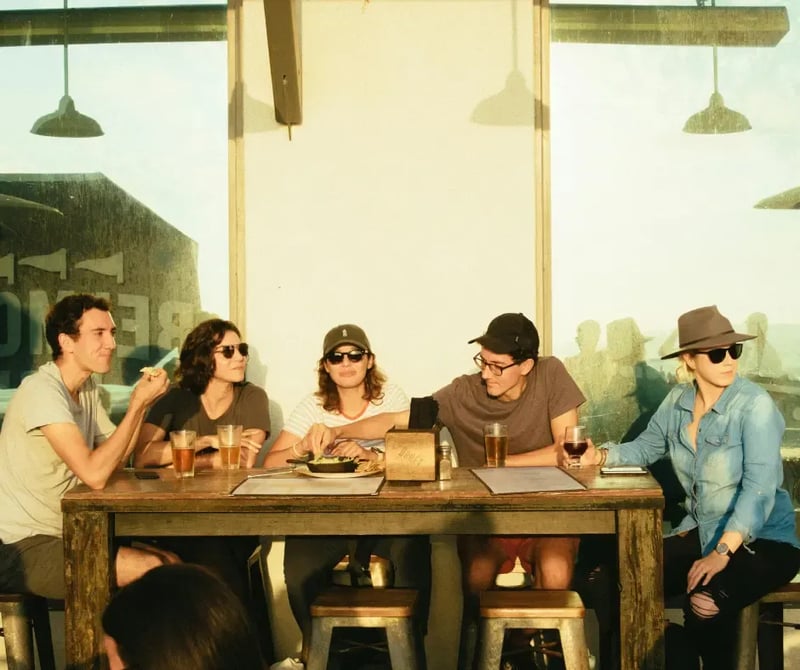
If you are searching for this, you have probably already tried the obvious things. You went to a coworking space. You showed up at a meetup. You had a pleasant conversation with someone at a hostel breakfast, exchanged Instagram handles, and never saw them again.
That is not a failure. It is the normal experience, and the reason is structural: most advice about making friends as a nomad is really advice about meeting people, which is the easy part. The hard part is what happens after.
So this article is organized differently. It starts with what works in your first 48 hours somewhere new, then what works over two weeks, then what is only possible if you stay. And it spends real time on the part most guides skip: how you turn someone you met on Tuesday into someone who texts you on Saturday.
I have been in this world since 2015, and I ran a coworking space in Vietnam for years. I have watched hundreds of people arrive alone and leave with friends, and hundreds arrive alone and leave alone. The difference was almost never how outgoing they were.
🌱 Worldwide travel health insurance for nomads
Summary
🎯 At a glance
| Method | How fast | Cost | Depth | Best for |
|---|---|---|---|---|
| Run club | Same day | Free | Medium | Anyone, any fitness level, no drinking |
| Timeleft dinner | Same week | €10 + meal | Medium | Arriving alone in a big city |
| Coworking day pass | Same day | €7–15 | Low | Testing a space before committing |
| City WhatsApp or Discord | Same day | Free | Low | Finding out what is happening tonight |
| Weekly class | 2–4 weeks | €10–20 per session | High | Introverts, anyone staying a month |
| Language exchange | 1–2 weeks | Free | High | Meeting locals, not just nomads |
| Coworking membership | 2–4 weeks | €80–200 per month | High | Regulars who want a table to sit at |
| Coliving | First day | €500–1,500 per month | High | Staying a month or more, wanting a group |
| Retreat or festival | First day | €300–2,500 | Medium to high | Compressing months into a week |
| Volunteering | 1–2 weeks | Free | High | Locals, and something that is not about you |
⚡ Your first 48 hours
These work immediately in almost any city and require no commitment.
Run clubs. The biggest shift in nomad social life in the past two years. Nearly every nomad city now has at least one weekly group run, usually free, usually followed by coffee, and usually full of people who arrived recently. Search the city name plus "run club" on Instagram. Lisbon, Bali, Medellín, Mexico City and Cape Town all have several. You do not need to be fast. Most groups have a walk-jog pace.
A coworking day pass. Not for the desk, for the lunch. Most community-focused spaces run a shared lunch or an afternoon break where introductions happen naturally. Choose one that describes itself as community-first rather than as offices. We have checked the ones that mean it in Asia and Latin America.
City WhatsApp and Discord groups. Every nomad city has a WhatsApp community, and increasingly a Discord. They are where the informal things get announced: someone organizing a hike on Saturday, a table at a bar tonight, a lift to the beach. Ask at your coworking space or coliving for the link. Nobody minds being asked.
Couchsurfing Hangouts and Bumble BFF. Both work for a same-day coffee. Hangouts shows you who is free nearby right now. BFF is dating-app mechanics for friendship, which sounds odd and works fine, particularly in bigger cities.
📆 Your first two weeks
These need you to show up more than once. That is the point.
One weekly class, chosen for repetition. Pick something that meets at the same time every week and that you will go back to. Padel, which has exploded across Spain, Portugal, and Latin America, and is played in fours with borrowed rackets, so you are matched with strangers by default. Dance classes, where partners rotate. Yoga studios with a regular morning crowd. Cooking classes. The activity matters less than the frequency. Five different events introduce you to fifty people once. One weekly class introduces you to ten people five times, which is how friendship actually forms.
Language exchange. Underrated and everywhere. In-person exchanges like Mundo Lingo run weekly in dozens of cities, and they are structurally social: the whole premise is talking to strangers. Tandem and HelloTalk work for finding a partner to meet for coffee. As a bonus, you meet locals, who are not leaving next month.
A coworking membership. Not the day pass this time. A month. Regulars notice regulars, and the shared lunch becomes a table you have a seat at.
Meetup.com, used narrowly. Skip the enormous generic nomad meetups, which are speed-dating without the structure. Look for the small recurring ones: a board game night, a photography walk, a book club. Recurring beats large.
🏡 If you are staying a month or more
Coliving. The fastest route to a group, because it removes the effort of arranging to see people. You have breakfast with them. We have checked the ones that build real communities in Europe's small cities, rural Europe, and Asia. Choose a community program, not the accommodation itself.
Retreats and events. A week at a nomad retreat or festival compresses months of social contact into days, and the people you meet there are actively looking for the same thing. Bansko Nomad Fest, in particular, has a reputation for fostering lasting friendships rather than contacts. Our events and retreats guides have the current calendar with prices.
Volunteering. A shift at a beach cleanup, an animal shelter, or a community kitchen puts you next to the same people repeatedly, doing something that is not about you. It also tends to skew local.
Local friendships. The hardest and the most durable. Nomad-to-nomad friendships share a structural flaw: both of you are leaving. Local friends do not have an expiry date, and they give you a version of a place no other nomad can. Language exchanges, sports, and volunteering are where they happen.
🔁 The part that actually matters
Everything above gets you into a room with people. None of it makes them your friends. This does.
Ask for the second meeting before the first one ends. Not "we should hang out sometime," which means nothing and both of you know it. A specific proposal: "Are you around Thursday? There is a run club at seven." The first conversation is easy. The second one is where friendship starts, and almost nobody asks for it. Be the person who does.
Choose repetition over novelty. Research on how friendship forms puts the threshold for casual friendship at around 50 hours of contact and for close friendship at over 200. You will never reach that going to a different event every night. You reach it by seeing the same people at the same place on the same day for several weeks. That is why the weekly class beats the festival, and why a coworking membership beats a day pass.
Go first. Most nomad conversations stay on travel and work because everyone is waiting for someone else to make it real. Ask a question that is not about where they have been. Say something that is not polished. Admit that you are finding something hard. The other person is usually relieved.
Stay long enough. This is the uncomfortable one. If you are changing city every two weeks, you are not failing to make friends. You are structurally preventing it, because you leave before the fiftieth hour. The single most effective thing you can do for your social life is to stay somewhere for two or three months. Treat that as a decision about your wellbeing, not a compromise on your travel.
⏱️ How long does it actually take?
Honest numbers from watching this happen for a decade:
- A conversation: the first day, if you go to any of the things in the first section.
- Someone to have dinner with: within a week, if you have asked for a second meeting.
- People who text you first: two to four weeks of repeated contact.
- A friend: six weeks to three months, and only if you stayed.
If that sounds slow, it is roughly the same timeline as in other places. The nomad problem is not that friendship takes longer on the road. It is that most nomads leave before it finishes.
🙋 If your situation is specific
You are an introvert. The first-48-hours list is not for you, and that is fine. Skip the big meetups entirely. Go straight to the weekly class, the language exchange, and the coworking membership, where the structure does the social work for you. One good conversation a week compounds.
You do not drink. A surprising amount of nomad socializing centers on bars. Run clubs, morning yoga, coworking lunches, hiking groups and Timeleft dinners all work without alcohol, and the people at them tend to be the ones who stay.
You are over forty. Coliving skews younger and hostel-adjacent. Coworking memberships, padel, language exchanges and volunteering skew older and more settled. Retreats vary widely, so check the age range before booking.
You are a woman traveling alone. Digital Nomad Girls has over 35,000 members and runs local meetups in most hubs. Women-only run clubs and hiking groups exist in many cities. And the coliving guides above note which spaces have a strong female community.
💔 When they leave
Every friendship you make this way carries a date on it. One of you is leaving, usually within weeks. Over time, that changes how much you let yourself invest, and it is worth understanding rather than pretending it isn't happening.
I have written about that separately, because it deserves the space: why nomad friendships stay shallow, and what builds depth. And for the friendships that survive the goodbye, how to maintain them across distance.
If loneliness is the thing you are actually dealing with right now, rather than logistics, start with the loneliness guide instead.
❓ Frequently asked questions
What is the fastest way to meet people in a new city?
A run club or a Nomadtable dinner, both in your first 48 hours. Neither requires knowing anyone and both are full of people who also arrived recently.
How do I turn acquaintances into friends?
Ask for a specific second meeting before the first one ends, then see the same people at the same place repeatedly. Friendship is built on frequency, not on one great conversation.
How long does it take to make friends as a nomad?
Someone to have dinner with in a week. People who text you first in two to four weeks. A real friend in six weeks to three months, and only if you stay that long.
Is it harder to make friends as an introvert?
Not if you choose the right methods. Skip the large meetups and go straight to structured, recurring things: a weekly class, a language exchange, a coworking membership.
Should I join a coliving?
If you are staying a month or more and want a ready-made group, yes. If you are over forty or want quiet, check the community programming and the age range first.
Why do I meet lots of people and still feel alone?
Because meeting people and building connection are different problems. We have written about that one separately: socially busy but lonely.
🎯 Conclusion
Making friends on the road is not harder than making friends anywhere else. It is the same process on a shorter clock, and most people leave before it finishes.
So: go to one thing in your first two days. Ask for a second meeting. Pick one weekly thing and keep going back to it. And stay somewhere long enough for the fiftieth hour to arrive. That is the whole method, and it works for introverts and extroverts alike.
 Sarah Kuhlemann
 Sarah Kuhlemann
 Sarah Kuhlemann
 Sarah Kuhlemann