
Sri Lanka, known as Ceylon until 1972, produces some of the finest teas in the world, and it is the only country where you can see the largest land mammal (the elephant) and the largest marine mammal (the blue whale) on the same day.
For digital nomads, the island has quietly become one of Asia's best value bases: a surf coast in the south that has grown a real work scene around Weligama, Ahangama and Hiriketiya, a cost of living far below Bali's, and, since February 2026, an official digital nomad visa. The trade offs are real too: internet that needs a plan B, a fragile power grid, and a dengue season worth taking seriously. This guide covers all of it.
🌱 Travel health insurance for Sri Lanka
🎯 Sri Lanka at a glance
| 🛂 Visa | Tourist ETA required, free since May 2026 for 40 nationalities, 30 days on arrival |
| ⏳ Max stay | Extendable in stages up to 270 days for about $450 in fees |
| 💻 Nomad visa | New since February 2026: 1 year, renewable, $500 per year, $2,000 per month income required |
| 💶 Monthly budget | €700 to €1,400 on the south coast, one of Asia's cheapest quality bases |
| 🌤 Best time | December to April (south and west), May to September (Arugam Bay in the east) |
| 🏝 Top areas | Weligama, Ahangama and Hiriketiya (south coast), Arugam Bay, Colombo |
| 🛜 Internet | ~32 Mbps fixed / ~46 Mbps mobile medians. Pick places with backup power |
🛂 Entry requirements for Sri Lanka
- Tourist ETA: Everyone needs an Electronic Travel Authorization (ETA) before arrival, applied for online at the official portal eta.gov.lk, and beware of lookalike websites that charge extra. Since May 2026 the ETA is free of charge for citizens of 40 countries, among them most European countries, the UK, the US, Canada and Australia. Other nationalities pay the standard fee.
- Stay length: The tourist ETA gives you 30 days from arrival with double entry, and this is where Sri Lanka gets generous. You can extend in stages at the Department of Immigration (online at eservices.immigration.gov.lk or in person in Battaramulla, Colombo): up to day 90 for $100, to day 180 for another $150, and to day 270 for another $200 (fees for most Western nationalities). Nine months in the country for about $450 in fees, without ever needing a residence visa.
💻 Sri Lanka's new digital nomad visa (since February 2026)
After years of announcements, Sri Lanka launched a real digital nomad visa in February 2026, listed officially as a residence visa category by the Department of Immigration and Emigration. The essentials:
- Length: Up to 1 year, renewable.
- Cost: $500 per applicant per year.
- Income requirement: A minimum of $2,000 per month, earned exclusively from outside Sri Lanka.
- The practical perks: As a residence visa holder you can sign rental leases, open a local bank account, and enroll children in private and international schools, the things a tourist ETA cannot do.
- Worth it? Honest math: the tourist route costs about $450 for 9 months with zero paperwork beyond extensions. The nomad visa makes sense if you want a full year, the resident perks, or a clean legal basis for remote work rather than a tourist gray area.
Apply through the Residence Visa Division of the Immigration Department. And a warning: several visa blogs circulate wrong numbers for this program (a $1,500 income bar, a 5-year version). The official schedule says $500 per year and $2,000 per month, trust the government page.
✈️ How to get to Sri Lanka
Bandaranaike International Airport (CMB), north of Colombo, is the gateway, with direct flights from London, the Gulf hubs, Singapore, Kuala Lumpur, Bangkok, and Sydney. From the airport, the south coast is a 2.5 to 3.5 hour taxi ride (about €50 to €70) via the Southern Expressway, or a scenic coastal train from Colombo Fort.
🗺 Where to base yourself
- The south coast (Weligama, Ahangama, Hiriketiya) is Sri Lanka's nomad heartland: surf bays, specialty cafés and a string of real coworking and coliving spaces along 30 km of coast. Weligama is the busiest and most beginner-friendly, Ahangama is the fast-growing middle with the strongest café scene, and Hiriketiya is the small jungle horseshoe bay for slow living. Season: December to April.
- Arugam Bay on the east coast is the counter-season answer: one of Asia's famous surf points, with a backpacker-turned-nomad scene that runs from May to September, exactly when the south coast gets its monsoon.
- Colombo is the practical city option: real infrastructure, proper coworking, private hospitals and the immigration department. Most nomads pass through rather than stay, but Colombo 3 to 7 are livable, leafy districts with the island's best food scene.
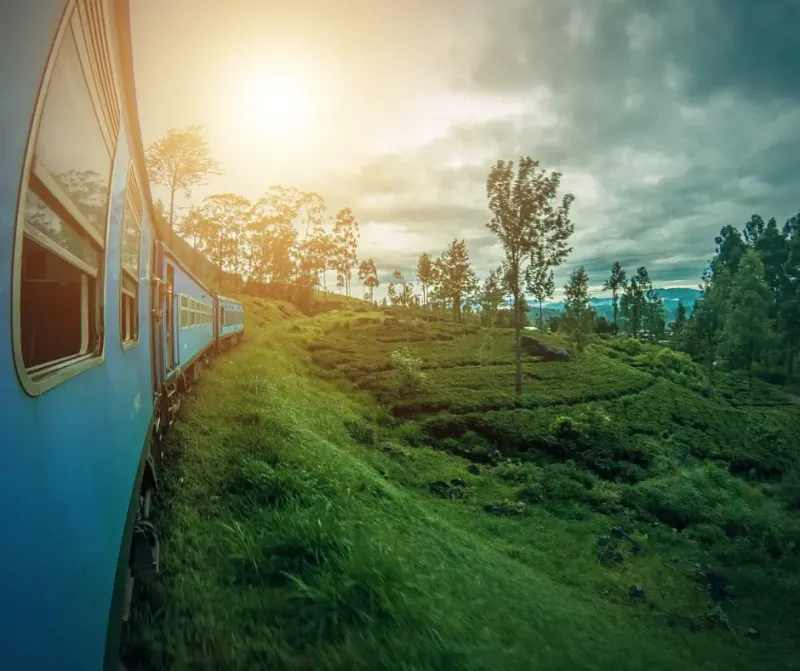
- The hill country (Kandy and Ella) is for a cooler working chapter between coasts: tea plantations, 15 to 25 degrees year-round, and the famous scenic railway. Café working territory rather than coworking territory.
💶 How much does it cost?
| Per month | Colombo | South coast (Weligama, Hiri) |
Arugam Bay (May-Sep) |
|---|---|---|---|
| Room or 1BR | €200-500 | €300-700 | €250-600 |
| Coworking | €65-100 | €90-110 | on request |
| Food | €200-350 | €250-400 | €200-350 |
| Transport | €30-60 (PickMe) | €100-150 (scooter) | €100-150 (scooter) |
| Realistic total | €600-1,100 | €800-1,400 | €700-1,200 |
Street food and local rice and curry cost €2 to €4, a café meal in the surf towns €5 to €9, a cappuccino about €2. The south coast runs on scooters (about €6.50 per day, €100 to €150 per month negotiated) and tuk-tuks. Colombo apartments are the bargain few nomads use: a one-bedroom outside the center averages under €200 per month.
 Sarah Kuhlemann
🧑🏻💻 Where to work from
South coast
- Outpost Weligama: The anchor coworking of the surf coast, right on Weligama Bay: two air-conditioned rooms, standing desks, call booths, SLT fiber and a pool. Unlimited monthly pass $99, with coliving rooms upstairs.
- NETS Cowork and Colive in Ahangama: 8 ensuite rooms around a pool with an air-conditioned coworking space, private call booths, solar backup power and 24-hour access.
- Verse Collective in Dikwella, next to Hiriketiya: a beachfront café, hostel and coworking hybrid with around 100 Mbps, phone booths and a 24/7 generator.
- Nomadico Hiriketiya: The coliving option, a 7-room jungle-side villa with an upper-floor workspace, desk in every room and backup power, run by the operator behind coliving houses in Madeira, Tarifa and a dozen other places. From €490 shared or €750 private per 4 weeks in season.
- Dots Bay House in Hiriketiya: not a formal coworking but the bay's laptop-friendly hangout, with a restaurant, yoga shala and events calendar.
Arugam Bay (May to September)
- Nomads Colive and Work: The east coast's dedicated nomad space, an air-conditioned coworking room with generator backup, plus a sister coliving on Koggala Lake near Ahangama for the opposite season. Current rates on their site.
Colombo
- Hub9: The capital's established coworking since 2016, two locations (Colombo 7 and 8), 24/7 access and fiber. Dedicated desk about €65 per month, day pass about €5.
- Likuid Spaces: Premium coworking at One Galle Face Tower and Charles Place in Colombo 3, with 24/7 smart access.
👥 Finding the community
- Sri Lanka Foreigners, Expats and Digital Nomads is the big national Facebook group for housing leads and meetups, and Expats in Colombo covers the capital.
- On the south coast, community happens offline: the coworking spaces above run events, surf mornings and community dinners, and the scene is small enough that a week at Outpost or Nomadico plugs you in.
🛜 Internet and SIM cards
Here is the honest picture: Sri Lanka's median fixed broadband is around 32 Mbps and mobile around 46 Mbps and climbing fast. Fiber from Dialog and SLT covers Colombo and the south coast tourist strip, and every serious nomad venue runs a generator or solar backup, because the national grid, while past the 2022 crisis, still has fragile days. Starlink is live in Sri Lanka since July 2025 (about €39 per month plus hardware), which some villas and colivings now use as backup. For focused work, base yourself somewhere that advertises its backup power, not just its wifi speed.
A prepaid SIM is one of the world's cheapest: Dialog's 30 day tourist plans run about €3.60 for 20 GB to €6.40 for 50 GB, and Mobitel's tourist packs are similar. Counters for both sit in the arrivals hall at Colombo airport around the clock.
🌤 When to come
| JAN | FEB | MAR | APR | MAY | JUN | JUL | AUG | SEP | OCT | NOV | DEC | |
|---|---|---|---|---|---|---|---|---|---|---|---|---|
| South | ☀️ | ☀️ | ☀️ | ⛅ | 🌧 | 🌧 | ⛅ | ⛅ | 🌧 | 🌧 | 🌧 | ☀️ |
| East | 🌧 | ⛅ | ⛅ | ☀️ | ☀️ | ☀️ | ☀️ | ☀️ | ☀️ | ⛅ | 🌧 | 🌧 |
| Hills | ☀️ | ☀️ | ☀️ | ⛅ | 🌧 | ⛅ | ⛅ | ⛅ | 🌧 | 🌧 | 🌧 | ⛅ |
☀️ best time · ⛅ mixed · 🌧 monsoon
Sri Lanka runs on two monsoons, which is a feature, not a bug: when the southwest monsoon soaks the south coast (roughly May to September), the east coast is dry and Arugam Bay is in full season, and vice versa. One coast is almost always working. The south coast sweet spot is December to April, the hill country is coolest and driest January to April, and October to November bring inter-monsoon downpours island-wide.
🚌 Getting around
- PickMe: Sri Lanka's homegrown super app and the default way to move: tuk-tuks, bikes, cars and food delivery, bookable with cash or card in Colombo, Kandy, Galle and the southern towns. Uber works in Colombo but with fewer drivers.
- Scooters and tuk-tuks: The south coast standard. Scooters rent for about €6.50 per day and less monthly. For the full experience, tuktukrental.com rents self-drive tuk-tuks from $14 per day, including insurance and license paperwork.
- Trains: The Kandy-Ella line is one of the world's most scenic rail journeys. Reserved seats open 30 days ahead on the official Sri Lanka Railways portal and sell out fast in season, while unreserved class always works if you don't mind standing. Note: in 2026, line works have temporarily shortened parts of the route, so check the current status when booking.
- Buses: Everywhere, constant and almost free (a city ride costs about €0.15). Crowded and fast-moving, an experience of its own.
🚧 Safety and health
- Advisory level: The US advisory has Sri Lanka at Level 2 (exercise increased caution), the same band as France or Italy. The 2022 economic crisis is over, fuel and power supplies have normalized for years, and daily life for visitors is calm.
- Dengue is the real topic: 2026 is a heavy dengue year with over 90,000 cases across the island, including the Western Province and the southern nomad coast. Use a repellent daily, especially at dawn and dusk, and see a doctor promptly for any high fever.
- Tap water: Not for drinking. Filtered or bottled only.
- Healthcare: Colombo's private hospitals (Lanka Hospitals, Asiri, Durdans, Nawaloka) offer good English-speaking care at low cost. On the south coast, clinics handle the small stuff, and Colombo is 2 to 3 hours away for anything serious. Private health insurance is essential.
- Roads: Traffic is the biggest everyday risk. Ride defensively on the scooter, wear the helmet.
🎖 Must see
- Sigiriya: The 5th-century rock fortress rising out of the jungle, Sri Lanka's icon. Foreigner ticket about $35, go at opening time to beat heat and crowds.
- The Kandy to Ella train and Nine Arches Bridge: The tea country classic. The bridge itself is free.
- Temple of the Tooth, Kandy: Buddhism's most sacred Sri Lankan site, foreigner entry LKR 3,000 (about €8).
- Safari: Udawalawe is the value pick with near-guaranteed elephants and lower fees; Yala has leopards and the fame, at around $90 to $100 all in per person.
- Whale watching in Mirissa: Blue whales between November and April, peak December to March, tours from about $35 to $80.
- Galle Fort: The Dutch colonial old town on the south coast, an easy sunset trip from any surf base.
❓ Frequently asked questions
Does Sri Lanka have a digital nomad visa?
Yes, since February 2026. It is a residence visa for up to 1 year, renewable, costing $500 per year, with a required income of $2,000 per month from outside Sri Lanka. It also lets you sign leases and open a bank account.
How long can I stay on a tourist visa?
Up to 270 days. The free 30 day ETA extends in stages (to 90, 180 and 270 days) for about $450 in total fees at the Immigration Department.
Where do digital nomads live in Sri Lanka?
The south coast between Weligama, Ahangama and Hiriketiya from December to April, and Arugam Bay on the east coast from May to September. Colombo is the practical stopover, the hill country the cool escape.
Is the internet good enough for remote work?
With a plan, yes. Fiber covers the nomad coast, mobile data is improving fast and costs almost nothing, and the good coworking spaces all run backup power. Pick accommodation with a generator or Starlink backup if your work is call heavy.
How expensive is Sri Lanka for a nomad?
One of Asia's cheapest quality bases: €700 to €1,400 per month on the south coast depending on how you live, less in Colombo. A local meal is €2 to €4 and a 30 day 30 GB SIM under €5.
When is the best time to go?
December to April for the south and west coasts, May to September for Arugam Bay in the east. Between the two monsoons, one coast is almost always in season.
Sarah Kuhlemann Sarah Kuhlemann
 Sarah Kuhlemann