
This guide is the honest, sourced version: who actually qualifies, the income rule and how it is calculated (so this stays right when the figure moves), the two-step application, the real costs and timeline, and the tax question, which is more nuanced than the "10% tax haven" headlines suggest.
🌱 Health insurance for Bulgaria's digital nomad visa
Good to know: the digital nomad visa requires private health insurance with coverage of at least €30,000 for the full stay, and it is a practical necessity regardless. Bulgaria's public system is not something a new arrival should rely on.
How to choose your health insurance?
Choose Genki Native if you have no access to a national health care system in your home country. It is comprehensive cover built for people whose base has moved, which is what a year-plus in Bulgaria means.
Choose Genki Traveler if you have access to a national health care system elsewhere, or already hold other comprehensive cover, and confirm it meets the €30,000 requirement.
Summary
- 🌱 Health insurance for Bulgaria's digital nomad visa
- 🇧🇬 Does Bulgaria have a digital nomad visa?
- 📌 At a glance: visa facts
- 👩🏽💻 Who can apply?
- 💶 The income requirement, and how it is calculated
- 📊 The 10% tax: the real draw, and the real nuance
- ✏️ How to apply, step by step
- ⏳ How long does it take and what does it cost?
- 🔁 Renewal and what comes after
- 🌏 Bulgaria vs. the regional alternatives
- 🏡 Living in Bulgaria
- ❓ Frequently asked questions
- 🎯 Conclusion
🇧🇬 Does Bulgaria have a digital nomad visa?
Yes, and unlike some much-hyped programs elsewhere, this one is genuinely open for business. Bulgaria introduced a temporary-residence basis for digital nomads under Article 24k of the Foreigners in the Republic of Bulgaria Act. The implementing regulations were approved by the Council of Ministers on 11 December 2025, and applications have been accepted since 20 December 2025.
It is worth being precise about the name: "digital nomad visa" is the common term, but the route is really a Type D long-stay visa (the entry document) followed by a digital nomad residence permit (the thing that lets you stay). Both steps are covered below.
📌 At a glance: visa facts
| Legal basis | Art. 24k, Foreigners in the Republic of Bulgaria Act (regs Dec 2025) |
| Status | Open — applications accepted since 20 December 2025 |
| Who it is for | Non-EU/EEA/Swiss remote workers earning from outside Bulgaria |
| Income requirement | 50× gross minimum monthly wage ≈ €31,010/year (2026) |
| Duration | 1 year, renewable once (1+1, two years max) |
| Health insurance | Required, €30,000 minimum cover |
| Application fee | ~€100 (Type D visa) + residence-permit/ID fees (~€150–300) |
| Processing | Type D visa at consulate, then residence permit ~2–4 weeks |
| Route | Type D visa abroad → residence permit within 14 days of arrival |
| Tax | Flat 10% if tax resident (183-day rule); not automatic |
| Leads to permanent residency? | No (switch categories after year two) |
👩🏽💻 Who can apply?
The visa is for third-country nationals (outside the EU, EEA and Switzerland) who work remotely and earn their income from outside Bulgaria. There are three accepted profiles:
- Remote employees of a company registered outside the EU/EEA/Switzerland.
- Business owners or shareholders holding more than 25% of a company registered abroad.
- Independent professionals / freelancers with at least one year of relevant experience, working for foreign clients.
The hard restriction, and it matters: you cannot work for Bulgarian companies or provide services to clients in Bulgaria on this visa. All qualifying income must come from abroad. If you want to serve local clients, this is the wrong route.
💶 The income requirement, and how it is calculated
This is the number everyone comes for, and the honest way to give it is to explain the formula, because the headline figure moves every year.
The requirement is 50 times Bulgaria's gross minimum monthly wage, proven over the preceding calendar year. For 2026, the minimum wage is €620.20, so: 50 × €620.20 = €31,010 a year (about €2,585 a month).
Because it is pegged to the minimum wage, the figure rises when the wage does, so always confirm the current year's number before applying rather than trusting a fixed euro amount in an older guide. You prove it with bank statements, pay slips, an employment contract, freelance invoices or business-ownership records covering the previous twelve months.
📊 The 10% tax: the real draw, and the real nuance
Bulgaria's flat 10% income tax is the lowest in the EU, and it is the single biggest reason people choose this visa over, say, Spain's or Portugal's. But the honest picture has a condition most "10% tax haven" headlines skip.
The 10% applies to Bulgarian tax residents. Holding the visa does not automatically make you one. You generally become a Bulgarian tax resident if you spend more than 183 days in the country in a calendar year, or your centre of vital interests is there. Stay under that, keep your life and ties elsewhere, and you may still be taxed where you currently are.
So the visa is a route to the 10% rate, not an automatic grant of it, and if you do become resident, Bulgaria taxes your worldwide income at that rate, and your home country's rules still matter until you properly break residency there. This is worth proper advice rather than a blog's say-so. See our guides to tax residency and the 183-day rule and how digital nomad taxes actually work before you count on the 10%.
✏️ How to apply, step by step
Stage 1: the Type D visa (from abroad)
- Gather and legalize your documents (below), apostilled and translated into Bulgarian where required.
- Apply for a Type D long-stay visa at the Bulgarian embassy or consulate in your country of residence. You cannot do this stage from inside Bulgaria.
- Pay the visa fee, around €100.
- The Type D visa lets you enter Bulgaria to complete stage two.
Stage 2: the residence permit (in Bulgaria)
- Enter Bulgaria on the Type D visa.
- Apply for the digital nomad residence permit at the Migration Directorate within 14 days of arrival (and before the visa's authorized stay expires).
- Pay the residence-permit and ID-card fees (roughly €150–300 combined).
- Processing takes about two to four weeks, after which you receive the one-year permit.
Documents you will need
- Valid passport.
- Proof of income for the past 12 months (≥ €31,010).
- Proof of remote-work status: employment contract, business-ownership records, or freelance evidence with 1+ year experience.
- Health insurance with ≥ €30,000 cover.
- Proof of accommodation in Bulgaria.
- Clean criminal record certificate, apostilled and translated.
⏳ How long does it take and what does it cost?
- Type D visa fee: ~€100 at the consulate.
- Residence permit + ID card: ~€150–300 in Bulgaria.
- Apostilles and translations: varies by country, budget €100–300.
- Processing: the consulate stage varies by mission; the in-country residence permit is ~2–4 weeks. Budget roughly one to two months end to end, dominated as always by document legalization rather than the decision itself.
🔁 Renewal and what comes after
The permit is issued for one year and can be renewed once, for a maximum of two years (1+1). It does not lead directly to permanent residency, after the second year you would need to switch to another residence category (for example company or freelance routes) to stay longer. So treat it as a solid two-year base, not a path to a Bulgarian passport.
🌏 Bulgaria vs. the regional alternatives
| Country | Income requirement | Duration | Tax draw |
|---|---|---|---|
| Bulgaria | ~€31,000/year | 1+1 (2 yrs) | 10% flat (lowest in EU) |
| Romania | ~€4,000/month (~€48,000/yr) | 1 year, renewable | 10% on qualifying nomad income |
| Croatia | ~€2,870/month (~€34,400/yr) | up to 18 months | No income tax on the DNV |
| Greece | ~€3,500/month (~€42,000/yr) | 1 year, renewable | 50% tax break scheme (separate) |
Bulgaria has the lowest income bar of the regional nomad visas and the lowest standing tax rate, a genuinely strong combination. Croatia's visa is tax-free but shorter and non-renewable; Romania and Greece set higher income floors. The trade-off is Bulgaria's 1+1 cap, Croatia aside, it is less of a long-term settlement route than a two-year base.
 Sarah Kuhlemann
 Sarah Kuhlemann

🏡 Living in Bulgaria
Where you base yourself shapes the experience more than the paperwork does. Sofia is the capital and best all-round base, Bansko the famous nomad mountain town, and Plovdiv the cultural choice, all at the EU's lowest costs. Our Bulgaria for nomads guide covers the cities, costs and community in full, and for the Bansko scene specifically, the Bansko Nomad Fest first-timer's guide. For how the new Schengen status shapes a European year, see our coliving in Europe guide.
Sarah Kuhlemann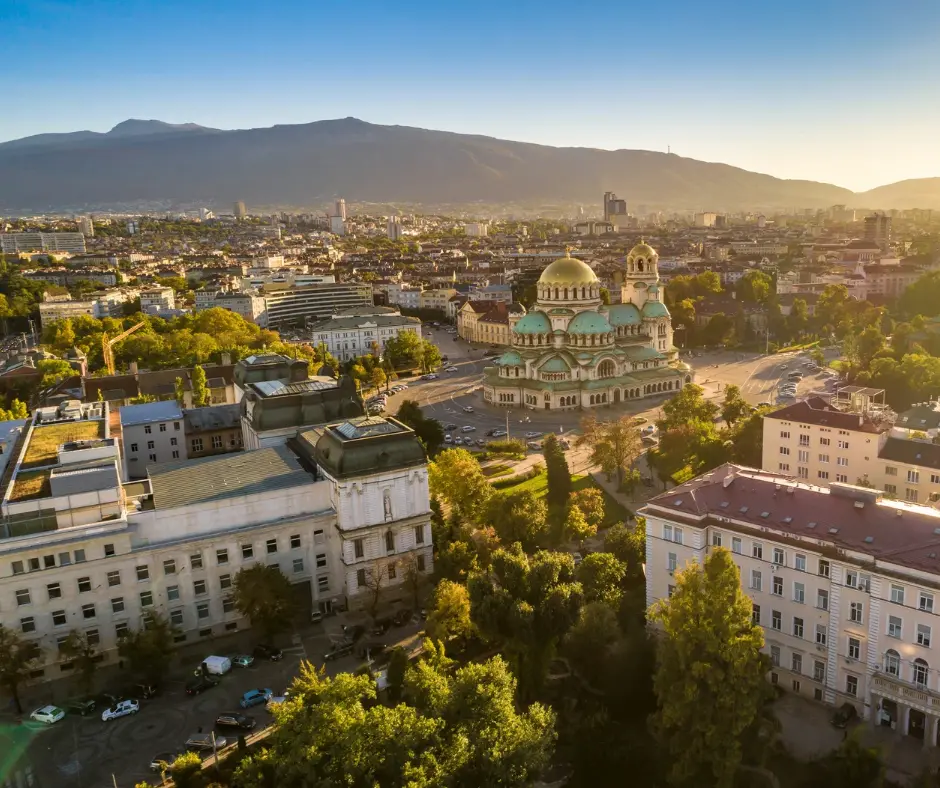
❓ Frequently asked questions
Is Bulgaria's digital nomad visa actually open?
Yes. It was introduced under Article 24k of the Foreigners Act, the implementing regulations were approved on 11 December 2025, and applications have been accepted since 20 December 2025. It is a live, operational program, not a proposal.
How much income do I need?
Fifty times Bulgaria's gross minimum monthly wage, proven over the previous year. For 2026 that is about €31,010 a year (roughly €2,585 a month). Because it is pegged to the minimum wage, confirm the current figure before applying.
Do I really pay only 10% tax?
Only if you become a Bulgarian tax resident (generally by spending more than 183 days a year there). The 10% flat rate is the lowest in the EU, but holding the visa does not grant it automatically, and residency has its own consequences. Take tax advice.
Can I work for Bulgarian clients?
No. Your income must come from outside Bulgaria (and outside the EU/EEA/Switzerland for the qualifying categories). The visa is strictly for remote work for foreign employers or clients.
How long can I stay?
One year, renewable once, for a maximum of two years. It does not lead directly to permanent residency; after two years you would switch to another residence category.
How do I apply?
In two stages: a Type D long-stay visa at a Bulgarian consulate abroad (~€100), then, within 14 days of arriving in Bulgaria, the digital nomad residence permit at the Migration Directorate (~€150–300, about 2–4 weeks).
🎯 Conclusion
Bulgaria's digital nomad visa is one of the most quietly attractive in Europe in 2026: a low income bar by regional standards, the EU's lowest tax, the euro, Schengen, and a real nomad community already in place. For a non-EU remote worker who earns from abroad and clears the ~€31,000 bar, it is a strong two-year base.
Just go in clear-eyed on the two things the hype skips: the 10% rate depends on actually becoming tax resident, with all that entails, and the visa caps at two years rather than opening a path to permanent residency. Match it to your plan, get the documents legalized early, and Bulgaria is tough to beat on value anywhere in the EU. Start with our Bulgaria for nomads guide for where to land.
Sarah Kuhlemann Sarah Kuhlemann
 Sarah Kuhlemann