
Albania is the Mediterranean country most nomads still skip, and that is changing fast. It sits between Greece, Montenegro, Kosovo and North Macedonia, with an Adriatic and Ionian coastline that rivals its neighbors, mountains that turn wild within an hour of the capital, and Greek, Roman, Byzantine, Venetian and Ottoman layers in its towns, food and architecture.
For remote workers, three things stand out. US citizens can stay a full year without a visa, most other nationalities get 90 days, and Albania sits outside Schengen, so time here does not count against your Schengen clock. There is a real long-stay route for remote workers, the Unique Permit. And Tirana has turned into a genuine coworking city. The honest caveats: the lek is at record strength, so Albania is no longer the bargain it was a few years ago, and public transport outside the cities takes patience. This guide covers where to base yourself, what it really costs in 2026, and how the visa side works.
🌱 Travel health insurance for Albania
Summary
- 🌱 Travel health insurance for Albania
- 🎯 Albania at a glance
- 🗺 Where to base yourself
- 💶 How much does it cost?
- 🛂 Entry requirements for Albania
- 💻 Visas for a longer stay
- ✈️ How to get to Albania
- 🧑🏻💻 Where to work from
- 👥 Finding the community
- 🛜 Internet and SIM cards
- 🌤 When to come
- 🚌 Getting around
- 🚧 Safety and health
- 🎖 Must see
- ❓ Frequently asked questions
- 🎯 Conclusion
🎯 Albania at a glance
| 🛂 Visa | 90 days in any 180 visa-free for EU, UK, Canadian, Australian and most other Schengen-exempt passports. US citizens: up to one year |
| 💻 Nomad visa | Yes: the Unique Permit for digital mobile workers, applied for online via e-Albania |
| 🇪🇺 Schengen | Not in Schengen or the EU, so days here do not count toward your Schengen 90/180 |
| 💶 Monthly budget | Around €750 in Shkodër or Korçë to €1,550 in Tirana's Blloku |
| 🌤 Best time | May to June and September to October. The Alps June to September |
| 🏙 Top bases | Tirana, Sarandë, Vlorë and the Riviera, Durrës, Shkodër, Korçë |
| 🛜 Internet | Good fiber and mobile data in Tirana and the big towns, patchier on the Riviera and in the mountains |
| 🗣 Language | Albanian. English common among younger people in Tirana, Italian and Greek widely understood |
| 💱 Currency | Albanian lek (ALL). €1 ≈ 92 ALL (October 2026) |
🗺 Where to base yourself
Albania is small, but the bases feel very different: a fast-growing capital, a Riviera that is packed in August and half-closed in February, and quieter towns in the north and southeast. Here is the honest rundown.
Tirana is where almost every nomad starts, and the only city with a real coworking scene and year-round community. It is loud, colorful, sociable and changing quickly, with cafe culture on every corner and the mountains on the doorstep. Blloku, the former communist-elite quarter, is the liveliest and most expensive neighborhood, full of bars, cafes and coworking, and within walking distance of the center. The area around Kopshti Botanik, the botanical garden, is greener and calmer and works well for families. 21 Dhjetori is the local, budget-friendly neighborhood for coffee culture and markets. Don Bosko and Astiri, north of the center, are cheaper again, with low-rise houses, local shops and small restaurants.
Sarandë is the southern Riviera town opposite Corfu, with a palm-lined promenade, the beaches of Ksamil next door and the ruins of Butrint 20 minutes away. It is the easiest coastal base to reach (the ferry from Corfu is short) and has the most going on outside summer. In July and August it is crowded and prices jump.
Vlorë and the Riviera villages are the other coastal options. Vlorë is a proper city with a long seafront and services year-round. Himarë is a smaller, slower town that stays alive in the shoulder season, while Dhërmi is a summer beach and party spot that largely shuts down from November to April.
Durrës, 40 minutes from Tirana, is the country's main port and a beach city with a Roman amphitheater in the center. It is cheaper than Tirana and handy for combining city and sea, though the beachfront is built up.
Shkodër in the north is a flat, bike-friendly city by a lake and the gateway to the Albanian Alps, Theth, Valbonë and Lake Koman. Korçë in the southeast is cooler, elegant and known for its cafe culture and restored old bazaar. Both are good value for a slower month, with small scenes and very few coworking options.
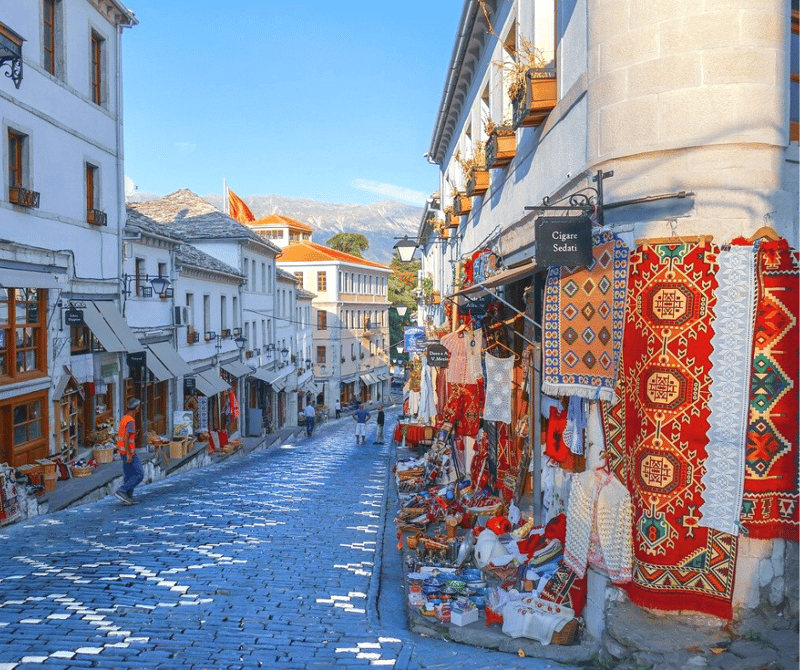
Berat and Gjirokastër, the two UNESCO-listed Ottoman towns, are better for a few days than for a working month, but they belong on any Albania route.
💶 How much does it cost?
| Per month | Shkodër / Korçë | Sarandë / Vlorë (off-season) | Tirana |
|---|---|---|---|
| Room or 1BR | €300–500 | €400–650 | €550–850 |
| Coworking | Cafes, €0–100 | Cafes, €0–100 | €150–185 |
| Food | €280–380 | €300–420 | €400–500 |
| Transport | €10–25 | €20–40 | €15–30 |
| Realistic total | €750–1,050 | €850–1,250 | €1,230–1,550 |
Albania is still cheaper than most of Europe, but less so than its reputation suggests. Two things have pushed prices up: record tourism years, which have lifted rents in Tirana and on the coast, and an unusually strong lek. A euro bought about 140 lek in 2013 and buys around 92 today, so everything priced in lek costs noticeably more in euros. In Tirana, a central one-bedroom averages around €740, and Blloku is what pushes a month toward the top of the range. On the Riviera, the off-season figures above can double in July and August, and many places only rent short-term in summer. A coffee is still €1 to €2, a byrek from a bakery under a euro, and a local dinner €8 to €15.
 Sarah Kuhlemann
🛂 Entry requirements for Albania
- Visa-free entry: citizens of the EU, the UK, Canada, Australia and most other countries that can enter Schengen without a visa can stay up to 90 days in any 180-day period. EU citizens can enter with a national ID card.
- US citizens: can stay up to one year without a visa or residence permit, according to the US State Department. After that year, you need to leave and stay outside Albania for at least 90 days before a new visa-free year starts. To stay longer without leaving, apply for a residence permit.
- Schengen, US or UK visa holders: nationals who normally need a visa can enter visa-free with a valid multiple-entry Schengen, US or UK visa that has already been used in the issuing country, or with a residence permit from one of those countries. The Ministry for Europe and Foreign Affairs lists every nationality and condition.
- Not part of Schengen: Albania is not in the EU or the Schengen area, so days spent here do not count toward the Schengen 90/180 rule. Many nomads use it as a Schengen break.
- Travel health insurance: not required for visa-free entry, but worth having. Because Albania is not in the EU, the EHIC does not apply, and private clinics expect you to pay up front. If you apply for the Unique Permit, health insurance valid in Albania for the whole permit period is a requirement. Genki's health insurance covers you in Albania.
- Passport validity: at least three months beyond your entry date.
💻 Visas for a longer stay
Albania has a long-stay route built for remote workers, which puts it among the countries with digital nomad visas: the Unique Permit for digital mobile workers, introduced with the 2021 law on foreigners. It combines residence and the right to work for employers or clients outside Albania in one permit, and it is applied for online through the e-Albania portal.
The documents consistently asked for are an employment or service contract with a company or clients abroad, proof of accommodation in Albania, health insurance valid in Albania for the permit period, and a clean criminal record from your home country, usually apostilled and translated. The permit is first issued for up to a year and can be renewed. Income thresholds and fees quoted online vary a lot, so check the current requirements on e-Albania or with an Albanian consulate before you apply.
One tax note: staying in Albania for more than 183 days in a tax year can make you tax resident there, so a permit is worth thinking through beyond the visa side. Our guide to the 183-day rule and its exceptions explains how this works. For the wider picture, see our digital nomad tax guide.
Sarah Kuhlemann
✈️ How to get to Albania
- Plane: Tirana International Airport (TIA) is the only airport with passenger flights, with low-cost connections to cities across Europe. The new airport in Vlorë is built but had no scheduled passenger flights as of autumn 2026, so do not plan around it. From TIA, the Rinas Express bus or a taxi gets you to central Tirana in 20 to 30 minutes.
- Ferry: from Italy, ferries run from Bari, Brindisi, Ancona and Trieste to Durrës and Vlorë. From Greece, the short crossing from Corfu to Sarandë is the easiest way into the south.
- Bus: international buses, including FlixBus, connect Tirana with Skopje, Podgorica, Pristina and northern Greece. Skopje to Tirana takes around seven hours.
Sarah Kuhlemann
🧑🏻💻 Where to work from
Tirana
- Coolab (Rruga e Dibrës, 10 minutes' walk from the center): the most social coworking in the city, with a steady program of events from cooking classes to burek workshops. A day is €13, a shared desk €150 a month and a dedicated desk €180.
- Innospace (Blloku): bright, quiet and well run, with a terrace and 24-hour access on the monthly pass. A day is 1,500 lek (about €16) and a month 17,000 lek (about €185).
- Social Hub (Rruga e Kavajës, close to the center): open desks, private booths and an attached cafe. A day pass is €10, a week €50 and a dedicated desk €170 a month.
- Dutch Hub (Bulevardi Dëshmorët e Kombit, near Blloku): one of the largest workspaces in Tirana, with views over the city from the tenth floor. It is more shared offices than social coworking, so it suits meetings and private offices better than meeting people.
Cafes in Tirana
- Nouvelle Vague: on a quiet, shaded street with outdoor seating, good for strategy sessions and calls. Plugs are rare, but there are a few inside.
- Trinity Bar & Restaurant: comfy seating with plugs and good coffee. It can get noisy at times.
Outside Tirana
Coworking is thin outside the capital. In Sarandë, Vlorë, Shkodër and Korçë, most nomads work from cafes or their accommodation, so ask your host for a speed test before you book and keep a mobile data backup.
👥 Finding the community
Albania's nomad community is concentrated in Tirana, and the coworking spaces are the way in. Coolab's events are the easiest place to meet people in your first week, and Social Hub and Innospace both have a regular crowd of remote workers. In summer, part of the scene moves to the Riviera, especially Sarandë and Himarë. Beyond that, Facebook and Telegram groups for expats and remote workers in Tirana are where housing tips, meetups and day trips get organized. For the general how-to, see our guide to making friends as a nomad.
Sarah Kuhlemann Sarah Kuhlemann
 Sarah Kuhlemann

Local customs worth knowing
- Yes means no: many Albanians nod to say no and shake their head to say yes. Expect some confusion at first.
- Xhiro: the early evening walk, when whole neighborhoods head out to stroll, chat and see each other. Join in.
- Raki: the national spirit, offered for good days, bad days, weddings and everything in between. Strong, and worth trying once.
- Volume: conversations are loud and animated. People raising their voices are usually just catching up.
- Hospitality: Albanians are curious and welcoming, and many have traveled little, so people will want to know where you are from and what you think of Albania. A handshake and a few words of Albanian go a long way.
- Scarecrow dolls: the stuffed figures hanging on many houses are there to bring luck and keep away bad luck. Do not make fun of them.
🛜 Internet and SIM cards
Internet is good in Tirana and the larger towns, with fiber in most apartments and coworking spaces and fast mobile data. On the Riviera and in the mountains it is patchier, so check your accommodation's connection before you commit to a month.
Vodafone and One are the two mobile operators, both with affordable prepaid data packages. You can buy a SIM at Tirana airport or any shop with your passport, and eSIMs are widely supported. Albania is outside the EU, so EU roaming does not apply.

Stay connected wherever you go: Get 7 days of free global data and a discounted monthly rate through Pangia Pass. But their best-ever discount won't last, so grab it soon.
🌤 When to come
| J | F | M | A | M | J | J | A | S | O | N | D | |
|---|---|---|---|---|---|---|---|---|---|---|---|---|
| Tirana & inland | 🌧 | 🌧 | ⛅ | ☀️ | ☀️ | ☀️ | 🥵 | 🥵 | ☀️ | ☀️ | 🌧 | 🌧 |
| Riviera (Sarandë, Vlorë, Himarë) | 🌧 | 🌧 | ⛅ | ⛅ | ☀️ | ☀️ | 🥵 | 🥵 | ☀️ | ☀️ | 🌧 | 🌧 |
| Albanian Alps (Theth, Valbonë) | ❄️ | ❄️ | ❄️ | ❄️ | ⛅ | ☀️ | ☀️ | ☀️ | ☀️ | ⛅ | ❄️ | ❄️ |
☀️ best · ⛅ mixed · 🌧 wet · 🥵 hot · ❄️ cold or snow
Albania has mild, rainy winters and hot, dry summers. May to June and September to October are the sweet spots almost everywhere: warm sea, comfortable cities and normal prices. July and August are hot inland (Tirana regularly passes 35°C) and the Riviera is at its most crowded and expensive. From November to March the coast goes quiet and many beach businesses close, while Tirana keeps going all year. The Alps are a summer destination: the Valbonë to Theth trail is usually walkable from June to September.
🚌 Getting around
Public transport in Albania is cheap but informal, and it takes patience. Honestly, it is not for me, but if you have more tolerance, here is how it works.
- Furgon: shared minibuses connect towns and villages, showing the destination on a sign behind the windshield. Timetables and fares are loose, so agree the price before you get in. You can usually flag one down if it is not full.
- Intercity buses: larger buses run between Tirana and the main towns from Tirana's bus terminals. Tirana to Sarandë takes about five to six hours.
- City transport: Tirana has a cheap city bus network, and the center is walkable. For taxis, use a licensed company such as Speed Taxi, which has its own app, or agree the fare up front.
- Trains: the rail network is barely usable for travelers, so plan around buses and cars.
- Car rental: the best way to explore the coast, the south and the mountains, and affordable. Roads have improved a lot, but driving styles are assertive and mountain roads are narrow, so avoid driving at night. Avis, Europcar and Hertz all operate here, alongside local agencies.
🚧 Safety and health
- General safety: Albania is a safe country for visitors, with low violent crime. Pickpocketing happens in busy places, so keep normal city awareness.
- Roads: the bigger day-to-day risk is traffic. Take care crossing streets in Tirana and on mountain roads.
- Google Maps: good for a rough idea, less reliable for exact addresses. Confirm with your host or driver.
- Tap water: do not drink it. Use bottled or filtered water.
- Air quality: moderate overall, with traffic pollution in central Tirana.
- Healthcare: the public system is basic. Private clinics and hospitals in Tirana are good, but you pay up front, which is where insurance matters. Emergency number: 112.
Staying active
- Hiking in the Albanian Alps: the trek from Valbonë to Theth takes six to eight hours, links two remote mountain villages and is one of the most beautiful walks in the Balkans. John's blog has a good itinerary, and Feride wrote about why the Valbona pass ranks among the world's great hikes.
- Lake Koman: the ferry through narrow, fjord-like gorges is one of the classic journeys in the country.
- Coastal walks: from Dhërmi, a 4 km walk leads to Gjipe Beach (5 km from the village of Vuno), or go by kayak or boat.
- Benja thermal baths: natural hot springs near Përmet, three to four hours' hike from the town.
- Dajti mountain: the Dajti Ekspres cable car takes you from the edge of Tirana to the top in about 15 minutes, with hiking trails and the best view over the city.
🎖 Must see
- Tirana: Bunk'Art, two museums in Cold War bunkers that tell the story of the communist regime, and the Pyramid, built for dictator Enver Hoxha and now reopened as a youth and tech hub.
- Berat and Gjirokastër: two UNESCO-listed Ottoman towns, Berat with its white houses stacked up the hillside and Gjirokastër with its stone roofs, fortress and Cold War tunnel.
- Butrint: Greek, Roman and Venetian ruins in a lagoon landscape near Sarandë.
- Rozafa Castle: the hilltop fortress above Shkodër, with a tragic legend and a great view over the lake.
- The Riviera: the coastline from Vlorë to Sarandë, over the Llogara Pass, with Himarë, Dhërmi and Ksamil's islets along the way.
- Festivals: the annual Kala festival in Dhërmi is on my bucket list. If you are in Tirana in June, look out for the DEA Open Air International Film Festival.
❓ Frequently asked questions
Does Albania have a digital nomad visa?
Yes, in practice. The Unique Permit for digital mobile workers lets you live in Albania while working for employers or clients abroad. You apply online through e-Albania with a foreign work contract, proof of accommodation, health insurance and a clean criminal record. Check current income and fee requirements before applying.
How long can I stay in Albania without a visa?
Most visa-exempt nationalities, including EU, UK, Canadian and Australian citizens, get 90 days in any 180-day period. US citizens can stay up to one year, then need to spend 90 days outside Albania before a new visa-free year starts.
Does time in Albania count toward Schengen?
No. Albania is not part of the EU or Schengen, so days here do not count toward the Schengen 90/180 rule, which is why many nomads use it as a Schengen break.
How much does it cost to live in Albania?
Around €1,230 to €1,550 a month in Tirana, €850 to €1,250 on the Riviera outside summer, and €750 to €1,050 in smaller cities like Shkodër or Korçë. The strong lek and record tourism have made Albania pricier than a few years ago.
Which city is best for digital nomads in Albania?
Tirana, by a distance. It has the coworking spaces, the community and services all year. Sarandë and Vlorë work well for a coastal month in spring or autumn, and Shkodër suits hikers heading for the Alps.
Do I need health insurance for Albania?
Not for visa-free entry, but it is strongly recommended, because the EHIC does not apply outside the EU and private clinics expect payment up front. For the Unique Permit, health insurance valid in Albania is required.
🎯 Conclusion
Albania gives remote workers a lot for a small country: a visa-free year for Americans, a Schengen-free 90 days for most others, a real permit for longer stays, a capital with a lively coworking scene, and a coastline and mountains that most of Europe has not discovered yet. It is not the rock-bottom bargain it was, and getting around takes patience, but the value and the welcome are still hard to match.
Base yourself in Tirana for the community, take the Riviera in May, June or September, head north for the Alps in summer, and bring good health insurance for the gaps the public system leaves.
Where to travel next? Countries close to Albania.
Sarah Kuhlemann Sarah Kuhlemann
 Sarah Kuhlemann