
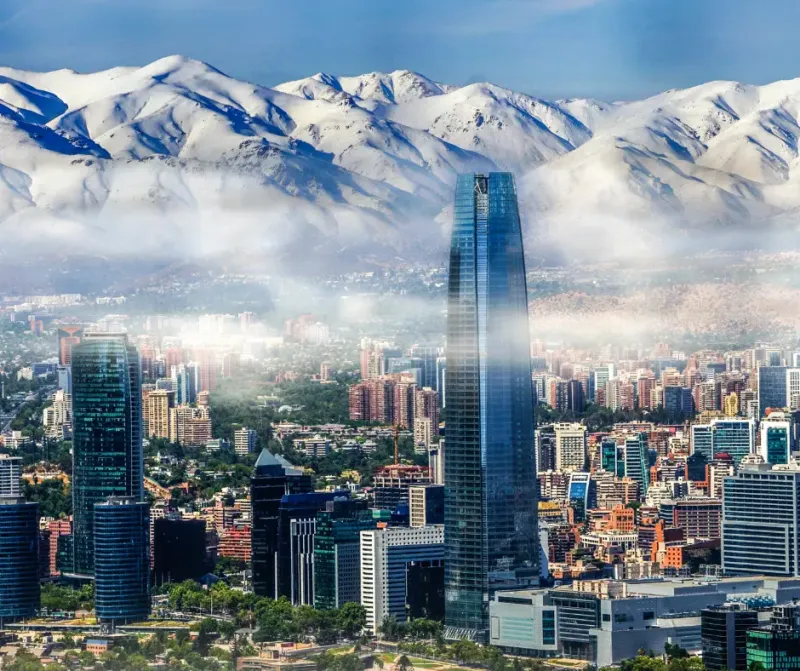
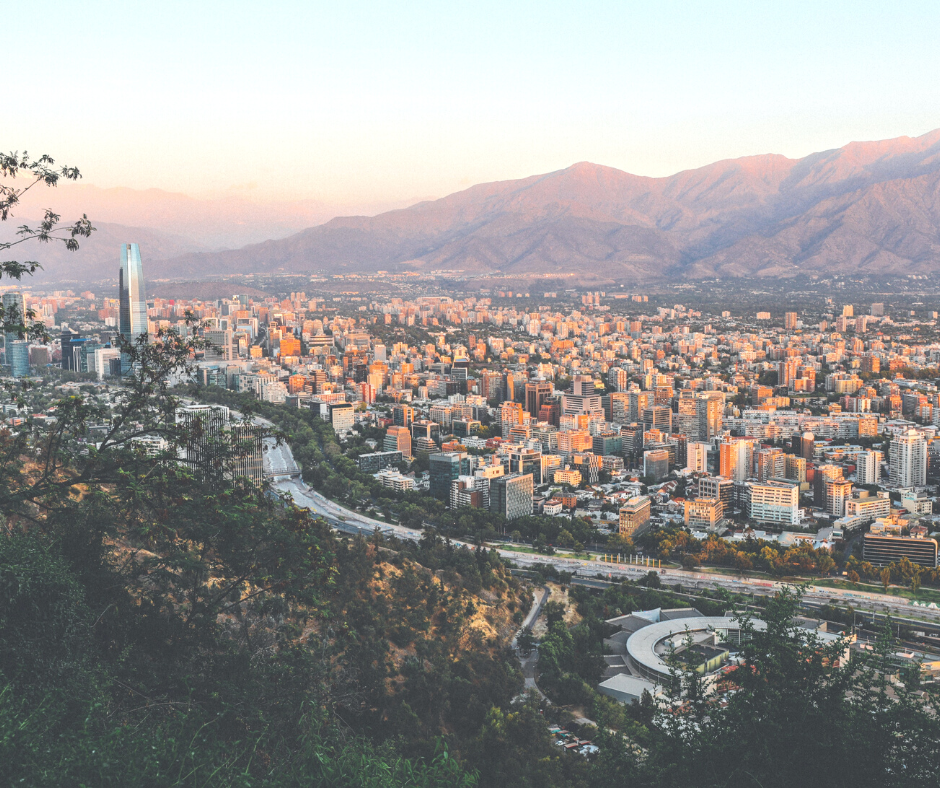
Santiago is the most underrated big city base in Latin America. You get a modern metropolis with the region's best metro and some of the fastest home internet in the world, and the Andes standing right behind the skyline, close enough that you can ski a world-class resort in the morning and take your afternoon calls from a cafe in Providencia.
And because the seasons are reversed, Santiago works exactly when Europe doesn't: the southern summer runs from December to February. This guide covers where to stay, what it really costs in 2026, where to find the community, and the honest answer to the visa question.
🌱 Travel health insurance for Santiago de Chile
🎯 At a glance
| 🛂 Visa | 90 days visa free for most Western nationalities, extendable once by 90 days (about €87) |
| 🪪 Long stay | No digital nomad visa. Rentista residence is the realistic route for passive income earners |
| 💶 Monthly budget | From €1,000 (Ñuñoa, frugal) to €1,900 (Las Condes, comfortable), typical €1,200 to €1,500 |
| 📅 Best time | October to November and March to April. Ski season June to September |
| 🧑🏻💻 Top areas | Providencia, Ñuñoa, Barrio Italia, Las Condes |
| 📶 Internet | Among the world's top 5 for fixed broadband, fiber everywhere |
🇨🇱 Entry requirements for Chile
- Visa: Citizens of around 90 countries, including the EU, UK, US, Canada, Australia, and New Zealand, enter visa-free for up to 90 days as tourists (Permanencia Transitoria). You can extend once for another 90 days for USD 100 (about €87), to be applied for online via the official migration portal before your first 90 days expire. That gives a maximum of about 180 days per entry.
- Working as a tourist: Working remotely for employers or clients outside Chile is tolerated in practice on a tourist entry. Working for Chilean companies is not allowed.
- Documents: A passport valid for your stay and proof of onward travel can be requested. Keep the small PDI entry slip you receive at immigration. You may need it when leaving or extending.
Does Chile have a digital nomad visa?
No. You will find websites claiming Chile launched a digital nomad visa in 2023, but the official list of temporary residence subcategories from Chile's migration service (SERMIG) contains no digital nomad or remote work category as of 2026. A nomad visa was discussed in political terms but never implemented. The real options are the 90-plus-90-day tourist route above, or a temporary residence subcategory such as Rentista if you qualify (see Long stay below).
✈️ How to get to Santiago
- Plane: Santiago's airport is Arturo Merino Benítez International (SCL), with direct flights to Madrid, several US hubs, and destinations across Latin America.
- Airport to Providencia or Las Condes (40 to 60 minutes): Uber costs roughly €14 to €21, an official fixed-rate taxi €19 to €28, the Transvip shared van about €8.50 per person, and the Centropuerto bus about €2.30 to the metro network if you travel light.
💰 How much does it cost to stay in Santiago?
| 🏙️ Providencia | 🌳 Ñuñoa | 🏢 Las Condes | |
|---|---|---|---|
| Rent (1BR) | €480–780 | €475–665 | €780–1,130 |
| Coworking | €85–190 | €85–190 | €90–190 |
| Food | €300–450 | €280–400 | €350–500 |
| Transport | €35–45 | €35–45 | €35–45 |
| 💶 Total | €1,200–1,500 | €1,000–1,300 | €1,500–1,900 |
Estimates for a solo nomad staying a month with a furnished apartment, regular eating out, and a coworking membership, based on mid 2026 prices. Chile is not the cheapest country in South America, but for what Santiago offers in terms of infrastructure, it is fair value.
🏘 Where to stay in Santiago
- Providencia: The nomad default, and for good reason. Walkable, leafy, full of cafes, coworking spaces, and metro stations, with a big share of the city's furnished rentals. If it's your first time in Santiago, start here.
- Barrio Italia: Technically the southern edge of Providencia, and the city's creative quarter: design shops, antique galleries, and courtyard cafes. Great atmosphere, slightly fewer work-friendly cafes than central Providencia.
- Ñuñoa: One metro line further out, more local and residential, noticeably cheaper, with a lively plaza scene around Plaza Ñuñoa. The best value base for living like a santiaguino.
- Las Condes (El Golf): The polished business district nicknamed Sanhattan, home to most expat corporate life, WeWork, and the priciest apartments. Comfortable and very safe, but more office towers than character.
- A word on Centro and Bellavista: Central and cheap, with real character and nightlife, but pickpocketing is a genuine problem and nights ask for more attention. Fine to visit, weaker as a base.
🧑🏻💻 Where to work from in Santiago
Coworking spaces
- Launch Cowork: The most nomad-friendly setup in town, with several locations in Providencia and one in Las Condes. Fully online signup, a free trial day, and published prices: from about €85 per month for 30 hours to about €192 for unlimited 24/7 access to all locations.
- iF Italia: Chile's biggest coworking ecosystem, in the heart of Barrio Italia, with a strong startup and events community. Also runs iF El Golf in Las Condes. Pricing on request.
- Co-Work LatAm: Twelve locations across Santiago including Providencia and Las Condes, with a multi-city hot desk plan that also covers Medellín and Montevideo, handy if Santiago is one stop on a Latin America route. Pricing on request.
- WeWork: Three buildings along the Las Condes business axis (El Golf, Apoquindo, Vitacura) for those who want the global standard. Pricing on request.
Coffee shops
- UNCLUB Café (Providencia): Plenty of outlets, vegan options, and a crowd that comes to work.
- La Pastora Coffee House (Providencia): Single-origin roasts and an explicitly remote worker-friendly setup.
- Café Público (Lastarria, at the GAM cultural center): Spacious, reliable wifi, and tolerant of long laptop sessions.
- COFI (several branches): A small local specialty chain where nobody bothers you for working.
- Barrio Italia is full of beautiful courtyard cafes, better for a relaxed afternoon than a call-heavy workday.
🫂 Where to find community in Santiago
- Facebook groups: The most active entry points are Santiago Chile English Speaking Expats, Expats in Chile Network, and Gringos in Chile. Apartment hunting happens in the large room and flat finder groups. Current WhatsApp group invites are usually pinned inside these groups, ask there rather than hunting for links.
- Language exchanges: Spanglish Party has run a Spanish English exchange night every Tuesday since 2009, one of the easiest first evenings in the city. Weekend social and language events run regularly too.
- InterNations: The Santiago chapter hosts official monthly events, plus hiking and professional networking groups, making it the strongest option for the expat side of the audience.
- Coworking communities: iF Italia's events calendar and workshops make it the coworking with the strongest community, and Launch's multi-location membership makes it easy to meet people across neighborhoods.
🚇 How to get around
- Metro: Santiago's metro is widely considered the best in Latin America: seven lines, clean, safe, and still expanding. A ride costs €0.70 to €0.85 depending on the time of day, buses are a flat €0.75, and transfers within two hours are integrated. Get a Bip! card (about €1.50) at any station.
- Ride apps: Uber works everywhere and is the practical choice at night.
- Walking and cycling: Providencia, Barrio Italia, and Ñuñoa are genuinely walkable, and the Mapocho river bike path connects Providencia with Las Condes.
🎖 Must see and weekend escapes
- Cerro San Cristóbal: The city's hill park with the classic Andes over skyline view, best after a day of rain clears the air.
- Valparaíso: The wildly painted port city, 1.5 hours by bus, the classic first weekend trip, doable as a day trip.
- Cajón del Maipo: Andean canyon an hour away with hiking, hot springs, and the El Yeso reservoir.
- Ski season, June to September: This is Santiago's superpower. Valle Nevado and La Parva are about 1.5 hours from town, El Colorado even closer. Nowhere else can you take morning calls in a capital city and ski world-class terrain the same afternoon. The 2026 season runs into early October.
- Wine country: The Maipo and Casablanca valleys are within an hour's drive for weekend tastings.
💡 Good to know
- Internet: Chile ranks among the top five countries in the world for fixed broadband speeds, and home fiber costs only €13-€24 per month. For video call reliability, Santiago beats most of Europe.
- SIM card: Movistar prepaid is the easiest for visitors (about €5 for a big data package, passport registration in official stores). Entel has the best coverage if you plan to travel to the Atacama or Patagonia. Travel eSIMs like Airalo and Holafly work without registration hassle.
- Currency: The Chilean Peso (CLP). As of mid 2026, €1 is roughly 1,050 CLP. Cards are accepted almost everywhere in Santiago.
- Language: Chilean Spanish is famously fast and slang-heavy. Even solid Spanish speakers need an adjustment week. English works in Las Condes business circles, less so elsewhere, which is exactly what the language exchanges are for.
- Climate: Mediterranean. Hot dry summers (December to February, 30°C days), mild winters (June to August, around 15°C days, cold nights) with occasional smog episodes. The sweet spots are October to November and March to April.
- Tap water: Safe to drink in Santiago. The mineral content is high, so sensitive stomachs may prefer filtered water the first weeks.
- Earthquakes: Chile is one of the most seismically active countries on Earth and simultaneously one of the best-prepared, with strict building codes. Know your building's assembly point, and during shaking: drop, cover, hold.
🚧 What to avoid
- Phone snatching in Centro and on public transport: The most common crime tourists meet. Keep your phone off cafe tables in the center and hold bags on the metro.
- Bellavista late at night: Great nightlife, but take an Uber home rather than walking.
- Demonstration zones: Protests around Plaza Baquedano and the Alameda flare up with little notice, especially around dates like September 11 and October 18. Not dangerous if you simply avoid them, follow local news.
- Leaving valuables in parked cars: Car break-ins are common. Never leave a laptop visible.
- The smog weeks: In deep winter (June to July), air quality can dip badly for days. If you're sensitive, time your visit for spring or autumn.
🚴🏻♀️ How to stay healthy
Stay active
- The Andes are your gym: Skiing in winter, hiking in Cajón del Maipo and the hills above town the rest of the year.
- Parks and running: Parque Bicentenario and the Mapocho River path are the default running spots, and Cerro San Cristóbal is the hill workout.
Healthcare
Santiago has some of the best private healthcare in Latin America. Clínica Alemana was ranked among the world's top hospitals in 2026, the only Chilean clinic in the global top 150, and Clínica Las Condes is its long-standing top-tier peer. English-speaking doctors are common at both. As a visitor, you pay out of pocket or through your travel health insurance, which is exactly the setup Genki Traveler covers.
⚓️ Long stay
Chile has no digital nomad visa, but there are real routes if the city grows on you:
- Tourist route: 90 days visa-free plus a 90-day extension (about €87), so up to about 6 months per entry.
- Rentista temporary residence: The main long-stay route for location-independent people, aimed at those with recurring passive income of roughly €900 to €1,300 per month (pensions, rental income, dividends, freelance invoices generally do not qualify). Two years, renewable, with a path to permanent residence. Applications run through the official SERMIG online portal. Processing takes months, so plan ahead.
- Mercosur route: Citizens of Argentina, Brazil, Uruguay, Paraguay, and Bolivia get an easy two-year residence under regional reciprocity.
- Tax note: Spending more than 183 days per year in Chile can make you tax-resident for worldwide income. Get local advice before committing to a long stay.
- Health insurance: For stays up to the tourist maximum, travel health insurance like Genki Traveler covers you at Santiago's excellent private clinics. If Chile becomes a longer chapter without a home country system behind you, look at Genki Native.
❓ Frequently asked questions
Does Chile have a digital nomad visa?
No. Despite what some websites claim, Chile's official migration service lists no digital nomad category as of 2026. Most nomads use the 90-day visa-free entry plus a 90-day extension, and long-stayers with passive income apply for Rentista residence.
How much does a month in Santiago cost?
A realistic budget is €1,200 to €1,500 for a solo nomad with a furnished one bedroom in Providencia, a coworking membership, and regular eating out. Ñuñoa brings it closer to €1,000, Las Condes pushes it toward €1,900.
Is Santiago safe for digital nomads?
Reasonably, with city smarts. The US advisory rates Chile Level 2 (exercise increased caution). The eastern neighborhoods where nomads live (Providencia, Ñuñoa, Las Condes) are markedly safer than the center, where phone snatching is the main risk.
When is the best time to be in Santiago?
October to November and March to April for the weather. December to February if you're escaping the northern winter. June to September if you ski, the Andes resorts are 1.5 hours from town.
 Sarah Kuhlemann
 Sarah Kuhlemann
 Sarah Kuhlemann