
Argentina quietly launched a digital nomad visa in 2022, and for a remote worker who wants a legal year in Buenos Aires it is one of the simpler routes in the Americas: no fixed income floor, fast processing, and no Argentine tax on your foreign income.
It also has a hard limit that the visa-agency sites ranking for it tend to soften, because it is easier to sell an application than to explain a dead end. This visa maxes out at 360 days and leads nowhere: it does not convert to permanent residency and it does not count toward Argentina's famously fast citizenship. If a long-term future in Argentina is the goal, a different visa is the smarter first move.
This guide covers the real rules for 2026, what it costs, how to apply, and, honestly, who it suits and who should skip it.
🌱 Health insurance for Argentina's digital nomad visa
Good to know: valid health insurance is a required document for this visa, and a practical necessity regardless. Digital nomad visa holders are not enrolled in Argentina's public health system, so private cover is expected for the full stay. Argentina's private healthcare is excellent and among the best in Latin America, but you need your own policy to access it.
How to choose your health insurance?
Choose Genki Native if you have no access to a national health care system in your home country. It is comprehensive cover built for people whose base has moved, which is what a year in Argentina means.
Choose Genki Traveler if you have access to a national health care system elsewhere, or already hold other comprehensive cover, and confirm it is valid in Argentina for the full stay.
Summary
- 🌱 Health insurance for Argentina's digital nomad visa
- 🇦🇷 What is the Argentina digital nomad visa?
- 🛂 Do you even need the visa?
- ⭐️ Key benefits of the visa
- 📌 At a glance: visa facts
- 👩🏽💻 Who can apply?
- 💶 The income requirement: nothing official
- ✏️ Step-by-step application process
- ⏳ How long does it take?
- 💶 Argentina digital nomad visa cost breakdown
- 📚 Tax implications
- 🏦 Banking and financial logistics
- 🏡 Living in Argentina as a digital nomad
- 🏥 Healthcare
- 🌏 Argentina vs. other nomad visas
- 🔁 What happens after 360 days? The Rentista route
- ❓ Frequently asked questions
- 🚀 Resources and tools
- 🎯 Conclusion
🇦🇷 What is the Argentina digital nomad visa?
The official name is the Residencia Transitoria como Nómada Digital (Transitory Residence as a Digital Nomad), created by Disposición DNM 758/2022 under Article 24(h) of Argentina's Migration Law 25,871. It is a temporary residence for foreigners from visa-exempt countries who work remotely for clients or employers based outside Argentina.
The defining features:
- It grants 180 days, extendable once for another 180, for a maximum of 360 days (one year).
- It is a transitory residence, which is the key legal point: it does not lead to permanent residency or citizenship. Decreto 366/2025 confirmed this transitory-residence classification in 2025, and separately introduced a health-insurance requirement for foreign visitors.
- Your work and income must come from outside Argentina.
- Foreign-sourced income is not taxed in Argentina on this status (within the stay limits below).
It exists because Argentina, and Buenos Aires especially, already had a large population of remote workers living on tourist stamps, and the government created a cleaner legal channel for them, without pretending it is a path to settling permanently.
🛂 Do you even need the visa?
Often, no, and it is worth saying so plainly before you spend on an application.
Most Western nationalities (US, UK, EU, Canada, Australia, New Zealand) enter Argentina visa-free for 90 days, extendable once by another 90 at a Migraciones office, for up to 180 days per entry. Many nomads simply do that, or reset with a ferry hop to Uruguay.
The digital nomad visa is worth it when you want a clean legal basis for a longer stay (up to a year), you want to sign a proper lease or set up local services more easily, and you want your remote-work status formally recognized. It is not worth it if you are staying only a few months, in which case the visa-free entry plus extension already covers you.
⭐️ Key benefits of the visa
💸 No Argentine tax on foreign-sourced income (within the day limits)
📄 No published income floor, unusually flexible for freelancers with variable income
⚡ Fast processing, typically two to six weeks
🇦🇷 Live legally in one of the safest countries in Latin America (US Level 1 advisory)
🏙️ A formal basis to rent and settle in Buenos Aires, one of the world's great cities
📌 At a glance: visa facts
| Official name | Residencia Transitoria como Nómada Digital |
| Legal basis | Disposición DNM 758/2022 (Migration Law 25,871, Art. 24h) |
| Who it is for | Visa-exempt foreigners, remote work for foreign clients/employers |
| Income requirement | No official minimum; ~$2,000–2,500/month expected in practice |
| Duration | 180 days, extendable once (360 days max) |
| Renewal condition | Present in Argentina at least 50% of the initial 180 days |
| Total government fee | ~$25 in-country via RaDEX (ARS 32,000, half for Mercosur), or ~$200 via consulate |
| Processing | 2 to 6 weeks |
| Enter within | 90 days of approval |
| Platform | RaDEX / TIE 24H (online), or in-country at Migraciones |
| Health insurance | Required, full duration |
| Tax on foreign income | Not taxed (until tax residency triggers) |
| Leads to residency/citizenship? | No |
👩🏽💻 Who can apply?
Three conditions matter most:
- A visa-exempt nationality. The route is only for nationals of countries that already enter Argentina without a tourist visa (US, UK, EU, Canada, Australia, New Zealand, and many more). If your passport needs a tourist visa for Argentina, this is not open to you.
- Remote work for foreign clients or employers. Employees, freelancers, and business owners all qualify, as long as the income comes from outside Argentina. You cannot take Argentine clients or local employment on this visa.
- The documents (below), including a clean criminal record and health insurance.
💶 The income requirement: nothing official
This is where the visa-agency sites mislead, and where the honest answer helps.
Argentina's government pages do not publish a minimum income figure for this visa. The law (Disposición 758/2022) requires proof of remote work and sufficient funds, but sets no specific number. Sites that confidently state you need "$1,000" or "$1,500" or "$2,500" are quoting their own estimates, not an official floor.
In practice, applicants are generally expected to show around $2,000 to $2,500 a month from foreign sources, evidenced through contracts, client or employer letters, and bank statements. Six months of consistent deposits is the safe baseline, because inconsistent income, big gaps, or only a month or two of activity is one of the most common reasons a file stalls.
So: there is no hard number to hit, which is genuinely flexible for freelancers with variable income, but you do need to demonstrate real, steady foreign earnings. Show more rather than less, and expect to supply extra proof if an officer asks.
✏️ Step-by-step application process
Before you apply: preparation checklist
- Valid passport (or listed Mercosur document).
- Signed application with your personal details and a description of the remote work you will do.
- A short CV covering your experience and education.
- Proof of remote activity: contracts, an employer or client endorsement, or income/fee receipts.
- At least one professional reference.
- Bank statements, ideally six months, showing consistent foreign income.
- Criminal record certificate (foreign, apostilled and translated; and an Argentine one from the Registro Nacional de Reincidencia if applying in-country).
- Proof of accommodation/address in Argentina.
- Health insurance valid in Argentina for the stay.
- The government fee, around $25 in-country via RaDEX, or ~$200 via a consulate.
Foreign documents need an apostille (or legalization) and a sworn Spanish translation.
Detailed application walkthrough
- Confirm your nationality is visa-exempt and that all your income is from foreign clients or employers. If either fails, this is the wrong visa.
- Choose your channel: the TIE 24H electronic route from abroad (you get email proof to show the border inspector), or an in-country transitory-residence filing at Migraciones once you are in Argentina.
- Prepare and legalize the documents: the apostille and sworn translation of your criminal record take the longest, so start there.
- File on RaDEX (the online platform) and pay the official fees: around ARS 32,000 (~$25) filed in-country via RaDEX, or 120 UC + 80 UC (~$200) via a consulate. Pay only the official tasas on the government fee chart.
- Processing takes two to six weeks.
- Enter Argentina within 90 days of approval.
- File the extension (prórroga) before your first 180 days expire if you want the second 180, proving income from the first period and that you spent at least 50% of it physically in Argentina.
Common mistakes and honest warnings
- Believing a quoted income "minimum." There is no official floor; show real, consistent foreign income rather than chasing a number an agency invented.
- Treating it as a path to residency. It is a 360-day dead end. If you want to stay, plan the Rentista in parallel (below).
- Ignoring the 50% presence rule. Heavy travel during the first 180 days can disqualify your extension. Migraciones checks.
- Booking the RaDEX appointment late. Slots in Buenos Aires are tight; apply the moment your document pack is ready.
- Serving Argentine clients. The work must be for counterparties abroad. Local income needs a different visa.
- Leaving apostilles and translations to the last minute. They routinely take longer than the visa decision itself.
⏳ How long does it take?
The decision itself is quick by international standards: two to six weeks once your file is complete. As with every visa in this series, the real timeline is dominated by preparation, the criminal-record apostille, the sworn translations, and securing a RaDEX appointment, rather than by the processing. Budget one to two months from starting to approval, and remember you must then enter Argentina within 90 days.
💶 Argentina digital nomad visa cost breakdown
- In-country via RaDEX (the common route): around ARS 32,000 (~$25), roughly half for Mercosur nationals. What most nomads actually pay.
- Via a consulate (the UC route): 120 UC migration + 80 UC consular, around $200 total (1 UC ≈ $1).
- Extension (prórroga): a further fee (charged in UMSM units) if you take the second 180 days.
- Apostille and sworn translations: varies by country, typically $100 to $300.
- Health insurance: for the full stay.
By the standards of the region this is mid-priced, cheaper than many European nomad visas, and the fees are not the real barrier. The document logistics are.
📚 Tax implications
The headline is good: Argentina does not tax foreign-sourced income on this visa, within the stay limits, which is one of its genuine attractions.
The nuance is tax residency. You generally become an Argentine tax resident if you spend more than 183 days in the country in a year, or hold a 12-month continuous immigration permit. Since the digital nomad visa can run to 360 days, a full-year stay can cross that line, at which point Argentina's tax rules on worldwide income can come into play. In practice many nomads on this visa stay under the threshold or keep income offshore, but if you intend to use the full 360 days, take local tax advice rather than assuming the "no tax" headline holds for the entire period.
And, as always, your home country's obligations continue regardless. US citizens keep FEIE, FBAR and FATCA duties; the Argentine treatment does not touch them.
🏦 Banking and financial logistics
- The currency is the peso (ARS), and after the 2026 reforms the old official-versus-blue-dollar gap has largely closed, rates converged to within a few percent, so you no longer need the parallel market to get fair value.
- Cards now work normally for foreigners, and you can pay in pesos without hunting for a cueva. Still carry some cash for small vendors.
- Wise and Revolut are the standard tools for receiving foreign income; a local account is possible with the residence but not essential.
- Rents are often quoted in US dollars, especially furnished nomad rentals, so budget in dollars.
For the full money picture, including why Buenos Aires is no longer the bargain it was, see our Argentina for nomads guide.
 Sarah Kuhlemann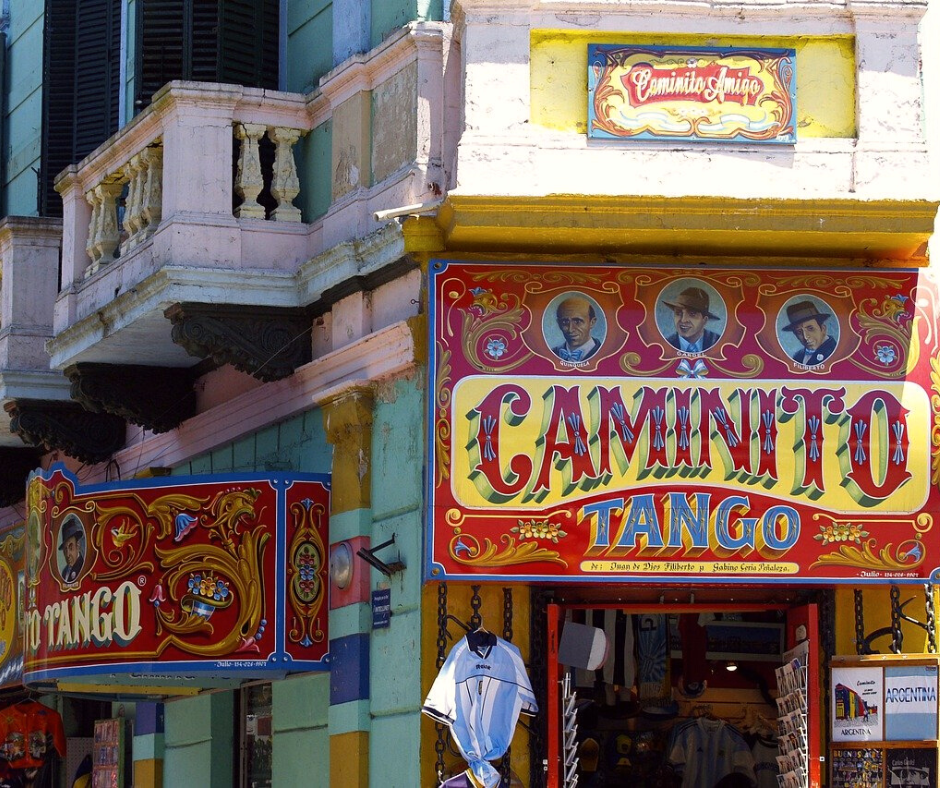
🏡 Living in Argentina as a digital nomad
Most nomads base in Buenos Aires (Palermo for the scene, Villa Crespo or San Telmo for value), with Córdoba, Mendoza and Bariloche as alternatives. Our Argentina for nomads guide covers the cities, neighborhoods, costs and coworking in full.
One honest note carried from that guide: the blue-dollar bargain that made Argentina legendary among nomads ended in 2026. Buenos Aires is still cheaper than Western Europe or North America, but budget realistically at $1,500 to $2,200 a month rather than the near-free figures old blog posts promise.
🏥 Healthcare
Argentina has some of the best healthcare in Latin America, with excellent private hospitals in Buenos Aires (Hospital Alemán, Hospital Italiano) at low cost. As a nomad-visa holder you are outside the public system, so your required insurance is what gives you access. A private prepaga plan runs roughly $50 to $150 a month locally, or use comprehensive international cover. Genki Native suits a long Argentine base; Genki Traveler covers shorter stays. Emergency number: 911.
🌏 Argentina vs. other nomad visas
| Country | Income requirement | Duration | Leads to residency? |
|---|---|---|---|
| Argentina | None published (~$2,000–2,500 in practice) | 360 days max | No |
| Costa Rica | $3,000/month | 1 year, renewable to 2 | No |
| Brazil | ~$1,500/month | 1 year, renewable to 2 | No |
| Colombia | ~$1,000/month (3× min wage) | Up to 2 years | Counts toward residency |
Argentina's visa stands out for having no fixed income floor, which is genuinely friendlier to variable-income freelancers than the others. Where it falls short is the ceiling: 360 days and no path forward, whereas Colombia's counts toward residency. Argentina is the choice for a flexible year, not a foothold for settling.
Sarah Kuhlemann
🔁 What happens after 360 days? The Rentista route
This is the part to plan for, because the digital nomad visa simply ends.
When your 360 days are up, you leave or switch categories, and for anyone wanting to stay, the Rentista visa is the route that matters. It requires proof of stable passive income (commonly cited around $1,000 to $2,000 a month), and crucially:
- It is a temporary residence that leads to permanent residency.
- After just two years of legal residency, you can apply for Argentine citizenship, one of the fastest naturalization timelines in the world, and an Argentine passport is genuinely valuable.
So the strategic move for a long-term future is not to renew the nomad visa (you cannot beyond 360 days anyway), but to establish Rentista residency, which the nomad year does not count toward. If Argentina might become home, some people skip the digital nomad visa entirely and start on Rentista. The nomad visa is the better choice only if a single flexible year is genuinely all you want.
❓ Frequently asked questions
How much income do you need for the Argentina digital nomad visa?
There is no official published minimum. The law requires proof of remote work and sufficient funds, but no fixed number. In practice, applicants show around $2,000 to $2,500 a month from foreign sources, with six months of consistent bank statements as the safe baseline.
How long can you stay?
180 days, extendable once for another 180, for a maximum of 360 days (one year). The extension requires you to have spent at least half of the first 180 days physically in Argentina.
Does it lead to permanent residency or citizenship?
No. It is a transitory residence that maxes out at 360 days and does not count toward residency or citizenship. For that, the Rentista visa is the route, it leads to citizenship in as little as two years.
Do I pay tax in Argentina?
Not on foreign income during a normal stay. But a full 360-day stay can trigger tax residency (over 183 days or a 12-month permit), so take advice if you plan to stay the whole year. Home-country obligations continue regardless.
How much does it cost and how long does it take?
Around $25 in-country via RaDEX, or ~$200 via a consulate, processed in two to six weeks. Preparation, apostilles and translations take longer than the decision.
Do I even need it?
Not for short stays, most Western nationals get 90 days visa-free, extendable to 180. The visa is for a longer legal year with a clean basis to rent and settle.
🚀 Resources and tools
- Official application: Argentina's RaDEX platform and the TIE 24H electronic entry route, via Migraciones (Dirección Nacional de Migraciones).
- Legal basis: Disposición DNM 758/2022, under Migration Law 25,871.
- Criminal record: the Registro Nacional de Reincidencia for the Argentine certificate.
- The country in depth: our Argentina for nomads guide for cities, costs and the 2026 money situation.
- The long game: research the Rentista visa if you want a path to residency and citizenship.
🎯 Conclusion
Argentina's digital nomad visa is a good option for exactly one thing: a flexible, legal year in one of the world's great cities, with no rigid income bar and no local tax on your foreign earnings. For a year in Buenos Aires, it does the job cleanly and cheaply.
Just go in knowing its edges. There is no official income floor, so ignore the numbers the agency sites invent, but do show real, steady foreign income. And it is a 360-day dead end by design: if Argentina might become home, the Rentista visa and its two-year path to citizenship is the smarter first move. Match the visa to your actual plan, and Argentina rewards you with a year you will not forget.
Neville Mehra Sarah Kuhlemann
 Sarah Kuhlemann
 Sarah KuhlemannSarah Kuhlemann