

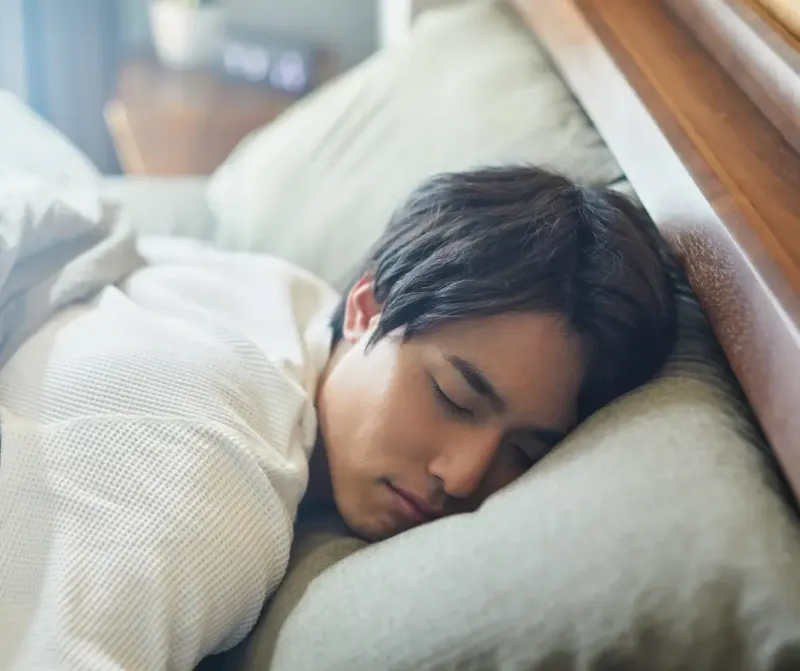
Sleep is the habit every other habit depends on, and nomad life attacks it from every side. New beds every month, time zones that reset your body clock, thin walls, bright screens, and a karaoke bar you did not see on the listing. If your energy has felt off on the road, this is the first place to look.
This article covers how to sleep well anywhere: the habits that protect your sleep while everything around it changes, how to set up any room for a good night, why travel hits sleep so hard, and how to tell when bad sleep is a symptom of something bigger.
A ruffled mind makes a restless pillow - Charlotte Brontë.
🌱 Travel health insurance for digital nomads
😴 How to sleep well anywhere
The habits below work in any accommodation, which is the point. Your bedroom changes monthly, your rhythm does not have to.
Protect the rhythm first.
- Go to bed and wake up at the same time, even when the city outside changes. Your body clock, the circadian rhythm, runs on repetition, and it is the one piece of sleep infrastructure that travels with you.
- Nap early, nap short, or not at all. Anything over 30 minutes or after mid-afternoon borrows sleep from the coming night.
- Get daylight in the morning. Light is the strongest signal your body clock has, and a morning walk sets it better than any supplement.
Wind down like you mean it.
- Build a small evening routine: calming music, light reading, a good-night meditation, or a body scan. If you have never done a body scan, try it guided once, after that you can run it yourself.
- Keep heavy conversations and work out of the last hour. Your brain needs a runway.
- Put the phone at the other end of the room. You cannot doomscroll what you cannot reach, and you have to get up to stop the alarm, which kills the snooze habit as a bonus.
Watch the chemistry.
- Caffeine stays in your system for hours, so make the last coffee at least 8 hours before bed.
- Alcohol close to bedtime makes you fall asleep faster and sleep worse. No judgment about the evening glass of wine, just know the trade.
- Stay hydrated during the day, then taper off before bed, or your bladder becomes the alarm clock.
- Exercise helps your sleep, but finish about 3 hours before bed so your body temperature and heart rate can come down.
🛏️ Set up any room for sleep
You cannot renovate an Airbnb, but three levers work everywhere:
Light. Your body produces melatonin, the hormone that makes you sleepy, when light fades. Room light and screen light suppress it. Dim the room in the last hour, switch every device to its built-in night mode, and if the curtains are hopeless, a sleep mask weighs nothing and fixes it.
Temperature. Your body needs to cool down to fall asleep, and extreme room temperatures work against it. The sweet spot is 15 to 19 degrees Celsius, which sounds cold and works. In tropical places, that means the aircon or a fan is a sleep tool, not a luxury.
Noise. Research on travelers confirms what your last stay near a construction site taught you: noise measurably degrades sleep. Check the map before you book, and if there is a bar within fifty meters, ask the host directly. Earplugs and a white noise app are the backup plan that fits in any pocket.
🌍 Why travel hits your sleep so hard
Some of your bad nights are not your fault. Research on travelers shows that new, changing environments alone reduce sleep quality, that the effect is stronger for morning people than for night owls, and that travelers who like their accommodation sleep measurably better than those who do not. If you have any history of poor sleep, a better room is not an indulgence, it is treatment.
Time zones are the bigger hammer. Every intercontinental flight knocks your circadian rhythm out of sync, and the fix is boring and effective: shift your schedule toward the destination a few days before flying, and travel slowly when you can.
 Sarah Kuhlemann
And one that nobody connects to sleep: long working hours predict worse sleep quality along with higher rates of anxiety and depression. If your hours have crept up, your nights already know.
🧠 When it is more than bad sleep
Sleep and mental health run in both directions, and it is often hard to say which started it.
If you struggle to fall asleep, worry is a common driver. Anxiety keeps the mind scanning long after the light goes off, and it is one of the most frequent companions of insomnia.
If you fall asleep fine but keep waking up, that pattern often travels with depression. About 75 percent of adults with depression also experience insomnia, and treating the depression usually improves the sleep. People with bipolar disorder often see sleep change with their phases, from sleeping badly to barely wanting sleep at all.
None of this means a bad month of sleep is a diagnosis. It means that if your sleep has been broken for a long time and the habits above do not move it, the honest next step is talking to a professional rather than buying another gadget. Genki Native Premium covers mental health care, including talk therapy and psychiatric visits, subject to a 6-month waiting period and prior approval. And if loneliness or burnout is what keeps your mind loud at night, our guides on loneliness and the seven nomad challenges are written for exactly that.
I love sleep. My life has the tendency to fall apart when I'm awake, you know? - Ernest Hemingway
📚 Book tips
I asked the Genki team for their favorite sleep resources:
- Why We Sleep by Matthew Walker: Marc and I are big fans. Alexey Guzey documented a list of factual errors in the book, worth knowing, and it remains a fascinating read.
- The Sleep Revolution by Arianna Huffington: recommended by our team member Laura.
- Headspace: Peter and Mehrdad both swear by its sleep meditations and sleepcasts.
- Good-night stories: my sister uses them to fall asleep, they give the brain something gentler to hold than the day's leftovers.
❓ FAQ
How do I sleep well when the bed changes every month?
Keep the rhythm constant even though the room is not: same bedtime, same wake time, same evening routine. Then fix the three room levers on arrival night, light, temperature, and noise, with a sleep mask, the aircon or fan, and earplugs as your portable toolkit.
What is the best temperature for sleeping?
Between 15 and 19 degrees Celsius. Your body has to cool down to fall asleep, so in hot climates the air conditioning is part of your sleep setup, not a luxury.
Why can I not fall asleep even though I am exhausted?
Usually because your body is tired but your mind is still on: late screens, late caffeine, late work, or plain worry. Move all four away from bedtime, and if worry is the stubborn one, that is worth taking seriously rather than pushing through.
How do I fix my sleep after a long flight?
Start living on the destination's clock immediately: daylight in the morning, meals at local times, no long naps. Shifting your schedule a few days before you fly softens the landing. Our jet lag guide covers the full playbook.
Sarah Kuhlemann Sarah Kuhlemann
 Sarah Kuhlemann
 Sarah Kuhlemann