
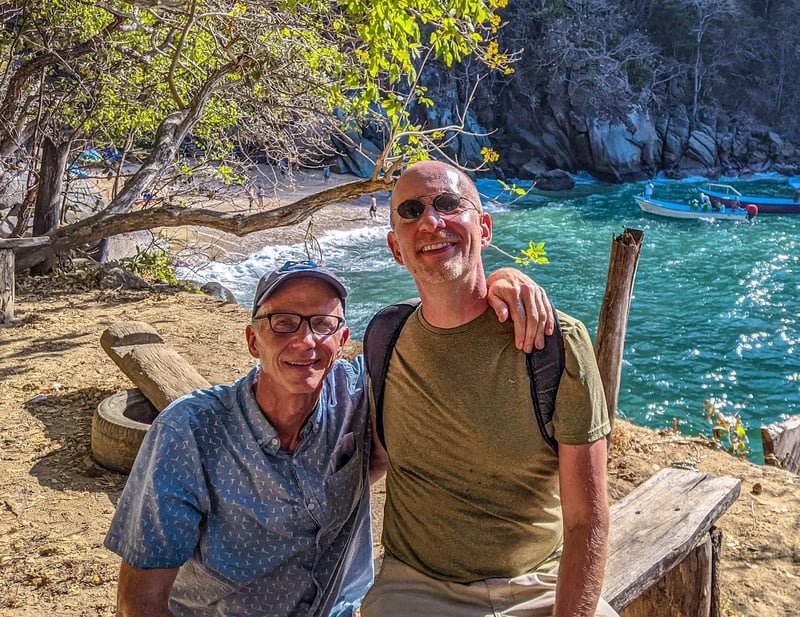
This guest post is contributed by Brent Hartinger, screenwriter, author, and nomad of nine years. Together with his husband, Michael, he writes the popular newsletter Brent and Michael Are Going Places about their travels around the world. Genki has been their trusted insurance along the way because the best adventures deserve the best backup.
Summary
Some of the best experiences of my life have happened while traveling. But some of the worst experiences of my life have been being sick while traveling.
Even being physically uncomfortable while away from home can make travel much less fun. Who wants to be out experiencing the world when you’re tired, constipated, or just out of sorts?
Fortunately, I’ve been traveling continuously for nine years now, and I’ve learned a few things about staying healthy on the road.
The most important lesson is that, when it comes to health, everything is related. Getting a good night’s sleep helps you stay physically active, which helps you eat better, which helps your digestion, which helps you get a good night’s sleep!
This is true everywhere, of course, but it’s especially important while traveling.
Here’s how I stay feeling good no matter where in the world I am.
😴 How I get a good night’s sleep
The single most important aspect of staying healthy while traveling might also be the most difficult: consistently getting a good night’s sleep.
After all, you’re in unfamiliar locations and climates, often in noisy city centers, on a variety of different — often crappy — beds (with equally crappy pillows). And you might also be dealing with jet lag!
But even with all this working against you, it’s not hopeless.
Here’s my strategy:
- I turn off any media devices an hour before I go to bed, and I read a book for at least 15 minutes every morning before I look at my device.
- When booking a room or apartment, I pay close attention to the size and quality of the bed, searching reviews and asking questions of the host, and also asking about any noise issues.
- If the pillows are bad, I simply buy new ones, especially if I’m staying longer than a week.
- On difficult nights, I used to use sleeping aids like Unisom and melatonin — and this is still an option before a particularly early flight.
- But these days, if I don’t fall asleep right away, I do ten rounds of four-seven-eight breathing: inhaling for four seconds, holding it for seven and exhaling for eight, counting out the numbers. Then I count backward from 300 by threes. I might have to do this twice, but I almost always drift off.
🍎 How I eat well
Okay, sure, you might be on vacation, and part of vacation is enjoying yourself. But exactly what part of the vacation do you most want to enjoy? Because if everything is related, health-wise, then you’re going to pay for eating too much rich food — or simply too much food.
Here’s how I pace myself:
- If I know I’m going to have a “decadent” meal, I eat lighter and healthier the rest of the day. And honestly, I never waste that decadent meal on breakfast, because I find fresh fruit, oatmeal, and cheese better than boring ol’ bacon and eggs anyway.
- Since restaurant food is usually fairly rich, I never eat more than one meal a day out (and hopefully not even that). And rather than a restaurant salad (with nutrient-less lettuce and a rich dressing), I order a side of veggies — preferably steamed. Also, if I don’t like a dessert, I simply don’t eat it, saving my occasional “sweet” allotment for something wonderful.
- Fried food always sounds good in theory, but I always end up feeling terrible afterward and regretting it. So I usually give it a pass. And honestly, unless you’re eating fish-and-chips in England, do you really want fried food in an exotic location anyway?
- When buying groceries, if I buy “junk” (like a bag of chips), I always balance it with at least three nutritious, equally-easy-to-eat snacks (like a bag of cut veggies, some rice cakes, and a jar of mixed nuts).
💦 How I stay hydrated
This one is a challenge for me. On the one hand, staying hydrated is really important for overall health — and even slight dehydration can cause a headache, affect your mood, increase anxiety, and impair your memory.
On the other hand, when traveling, the “bathroom” situation is almost always unpredictable, and I have a bladder that is not my friend. So for me, avoiding an embarrassing travel accident or even an urgent search for a bathroom takes precedence over always staying fully hydrated.
But I still pay close attention to my overall hydration.
Here’s everything I do:
- I start almost every day with a full glass of water (before drinking tea or coffee). But I also plan my day so there will almost certainly be a bathroom at some destination in the next two hours.
- Throughout the day, I may drink less than usual, but I also monitor my thirst and the color of my pee — making sure it’s still pale yellow. I drink water as needed.
- I limit alcohol and caffeine (which are both diuretics), and also sugary drinks and salty food, which all increase the possibility of dehydration.
- And when I get back to my apartment or hotel room in the afternoon or evening, I immediately drink a large quantity of water — hopefully, early enough that I won’t end up peeing all night. But if I do have to get up, I use the method I mentioned above to fall back asleep again.
🏋🏻♀️ How I stay in shape
On a shorter trip, I give myself permission to discontinue my regular workouts. Besides, I’m probably so busy that I get plenty of exercise just by walking.
But if I’m on a trip longer than a week, I think it’s important to maintain my regular workout schedule: thirty minutes of weightlifting and sit-ups, and forty minutes of aerobic exercise at least every other day.
Here’s how I do it:
- I try to book hotels or Airbnbs with a fitness center. If that’s not an option, I get a membership at a local gym (but I never pay the outrageous “guest” membership fees. Instead, I simply visit nearby gyms, explaining that I’m visiting for a month or two, and I ask about any specials or discounts. There’s almost always a gym with a much more reasonable rate.)
- If there’s really no gym available — or if there’s a worldwide pandemic — I also travel with a jump rope and resistance bands, which I use for a HIIT workout in a nearby park, and I also run stairs, including the stairwell in any building where I’m staying.
⚙️ How I stay “regular”
Somewhere between 30% and 70% of travelers experience diarrhea during or directly after an international trip, and almost everyone gets constipated at some point.
When you travel, everything is working against your digestive system: your diet, your schedule, and maybe even your altitude. You’re also more stressed than usual.
Worse, I have IBS, so travel was definitely a challenge for me. But after nine years of being on the move, this is a dragon I have (mostly) slayed.
Here’s how:
- Remember when I said that when it comes to being healthy, everything is related? Indeed, if you sleep and eat well, stay active, and remain hydrated, you’re 90% of the way to keeping your digestive system within normal parameters, especially after the first week or so.
- I take a daily fiber supplement, and I always carry Pepto Bismol pills and Imodium.
- And when it comes specifically to food poisoning, I wrote an entire article devoted to helping you prevent it.
🤒 How I avoid getting sick
Finally, what about simply avoiding various minor illnesses: colds and flus and the like?
Plenty of people swear by different concoctions: Airborne tablets or vitamin C supplements.
But I’m very rarely sick, and here’s how I do it:
- I still wear a mask in airports, airplanes, and other particularly crowded areas. And on a plane, I immediately turn on the air vent above my seat.
- I frequently — some might say obsessively — thoroughly wash my hands.
- I take a daily vitamin.
- And once again, since everything is related, I try to sleep and eat well, stay active, and remain hydrated, which — duh — I also think are the most important things anyone can do to avoid getting sick.
☂️ International Health Insurance with Genki
Genki Native
- Who is this for: Digital nomads, expats, and other long-term travelers who want complete health cover.
- Region of cover: Worldwide (limited in USA).
- Period of cover: No maximum, you can stay covered life-long if you wish. The minimum is one month, and you pay monthly.
- Home country: Genki Native is available for people from every country (even nomads without any legal residence). You can choose to have limited or full cover in your country of citizenship.
- Genki Native Basic: Genki Native Basic covers necessary medical treatment (inpatient and outpatient treatments) at any licensed doctor or hospital up to €1,000,000 per year. That includes accidents and emergencies, as well as common illnesses and injuries.
- Genki Native Premium: Genki Native Premium covers necessary medical treatment (inpatient and outpatient treatments) at any licensed doctor or hospital up to €3,500,000 per year. Genki Native Premium also covers preventive care/check-ups, plus dental, vision, maternity, mental health, and also includes full cover in your country of citizenship.
- Monthly costs: Genki Native costs €189 per month (example price for Genki Native Basic for someone aged 24 with €0 deductible). The price depends on your age, chosen deductible, and the result of a medical questionnaire.